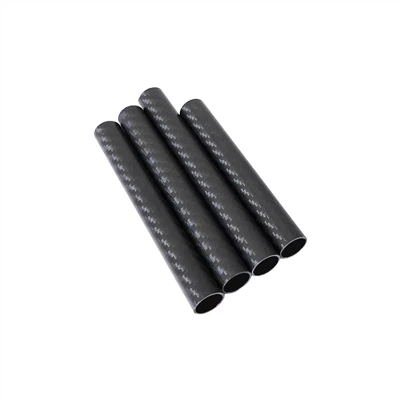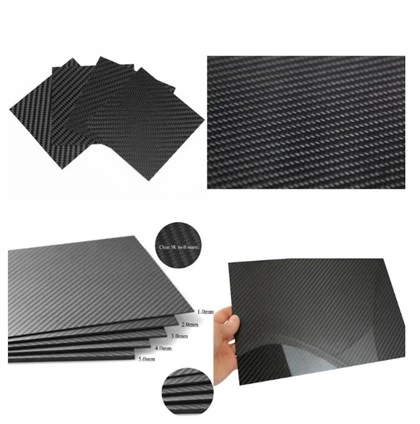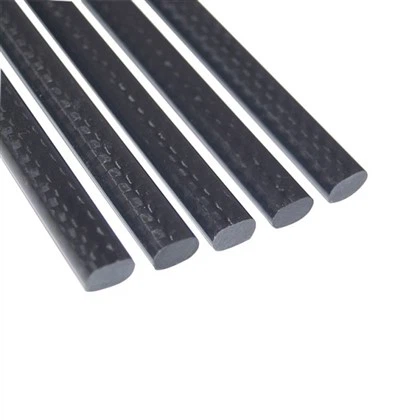
In high-performance composite materials, achieving higher structural durability and load-bearing capacity with the lowest possible mass is a core objective continuously pursued in engineering design. Carbon fiber tubing has gradually gained a significant position in this field due to its superior performance. The strength-to-weight ratio (specific strength) of a material is a key parameter for measuring its structural efficiency and directly determines its application value in lightweight structures. For carbon fiber tubing, specific strength is not only a technical indicator but also the fundamental reason why it can replace traditional metal materials such as steel and aluminum alloys in high-performance engineering fields.
How is the strength-to-weight ratio of carbon fiber tubing calculated compared to traditional metals?
Taking commonly used structural steel ASTM A36 steel as an example, its tensile strength typically ranges from 400 to 550 MPa, with a density of approximately 7.85 g/cm³. In contrast, standard carbon fiber tubes made from Toray T700 carbon fiber can achieve tensile strengths exceeding 3500 MPa, while their density is only 1.55–1.60 g/cm³. In terms of specific strength, carbon fiber composites can typically achieve 8–10 times the strength of structural steel, with the exact value depending on the layup structure and fiber volume fraction.
In aerospace and automotive engineering, every extra kilogram of mass translates to increased fuel consumption, reduced efficiency, and higher lifecycle costs. Therefore, achieving extreme lightweight while meeting the requirements of strength and stiffness is the basic strategy for high-performance structure design. By using carbon fiber tubes, engineers can achieve bending and tensile stiffness comparable to or even better than traditional steel structures while significantly reducing their own weight. From the perspective of structural integrity analysis of composite materials, this "low mass-high load-bearing" characteristic stems from the synergistic mechanism in which the fiber bears the main load and the resin matrix is responsible for load transfer and stabilizes the fiber position.
Contrast with traditional materials
| Material Property | Structural Steel (A36) | Aluminum Alloy (6061-T6) | Standard Carbon Fiber Tubes (T700) |
| Density (g/cm³) | 7.85 | 2.70 | 1.60 |
| Tensile Strength (MPa) | 450 | 310 | 3500 - 4900 |
| Tensile Modulus (GPa) | 200 | 69 | 230 - 240 |
| Specific Strength (kN·m/kg) | 57 | 115 | 2187 |
| Corrosion Resistance | Low | Moderate | Excellent |
Which industries can benefit most from the unique properties of carbon fiber tubes?
The aerospace industry is one of the earliest sectors to achieve large-scale application of carbon fiber tubing, with the core driving force being the continuous reduction of aircraft empty weight. In commercial aviation, every reduction in structural mass directly translates into improved fuel efficiency, increased range, or increased payload, thereby significantly improving the economics of the entire life cycle operation.
The new generation of composite material passenger aircraft, exemplified by the Boeing 787 Dreamliner, has composite materials (primarily carbon fiber reinforced composites) accounting for over 50% of its fuselage structure. This high strength-to-weight ratio allows designers to optimize the fuselage layout without sacrificing structural safety margins, enabling features such as larger windows and higher cabin pressurization levels, thereby enhancing passenger comfort. The combination of lightweight materials and high rigidity is one of the key factors contributing to the performance leap of this generation of aircraft.
In the automotive industry, especially in high-performance racing cars and supercars, carbon fiber tubing is widely used in monocoque structures, driveshafts, suspension control arms, and roll cage systems. For example, in Formula One racing cars, the chassis and energy absorption structures extensively utilize carbon fiber composite materials. Its advantages lie not only in significantly reduced mass but also in excellent energy absorption performance. Under controlled failure modes, composite materials can effectively dissipate impact energy through mechanisms such as delamination and fiber breakage, while avoiding excessive increases in the vehicle's overall inertial mass.
The demand for carbon fiber tubing has also increased significantly in the industrial automation sector. For high-speed robotic arms, the equivalent moment of inertia of moving parts directly determines their acceleration/deceleration capabilities and cycle time. By replacing metal arm segments with carbon fiber tubing, mass can be significantly reduced while maintaining structural rigidity, thereby achieving higher dynamic response speed and better positioning accuracy. This mass-stiffness optimization has direct implications for improving productivity per unit time.
In medical engineering, carbon fiber composites are widely used in imaging bed boards, surgical support structures, and prosthetic components due to their excellent radiation permeability. The material exhibits extremely low X-ray interference, along with high specific strength and corrosion resistance, making it an ideal choice for structural components in imaging equipment.
Furthermore, telescopic carbon fiber tubing has revolutionized structural design in the imaging equipment industry. Lightweight, high-rigidity tripods, jib arms, and stabilization systems enable photographers to maintain high stability and low vibration response while carrying equipment for extended periods. This widespread application across multiple fields, including aerospace, automotive, industrial automation, and medical, demonstrates that the high strength-to-weight ratio of carbon fiber tubing is not limited to specific engineering scenarios but represents a structural advantage with universal engineering value.
How do manufacturing processes such as pultrusion and consumable winding affect the performance of carbon fiber tubes?
The manufacturing process of carbon fiber tubes directly determines their fiber volume fraction, porosity, and layup orientation, thus significantly affecting the final specific strength and overall mechanical properties. Different molding routes exhibit fundamental differences in terms of structural anisotropy control and cost structure.
Pultrusion
Pultruded carbon fiber tubes are produced through continuous production by drawing a continuous bundle of carbon fibers through a resin impregnation zone and then curing it in a heated mold. The fibers in this process are primarily aligned axially (0°), resulting in excellent axial tensile and flexural stiffness. However, due to the lack of sufficient circumferential and ±45° reinforcement layers, their crush resistance, shear resistance, and torsional resistance are relatively limited. Pultruded carbon fiber tubes are suitable for long, straight components and offer significant advantages in terms of cost and consistency.
Prepreg coils
Roll-forming processes are typically used for small-diameter, high-precision tubing. Prepreg carbon fiber fabric is wrapped around a mandrel according to a designed layup sequence and cured under controlled temperature and pressure. This method allows for the stacking of multi-directional layups (0°, ±45°, 90°, etc.) within a single wall thickness, achieving quasi-isotropic or directionally reinforced structures. Multi-directional reinforcement significantly improves overall structural integrity, giving the tubing balanced strength and stiffness in the axial, circumferential, and torsional directions.
In summary, the performance of carbon fiber tubes is not solely determined by fiber grade, but rather by the synergistic optimization of the material system, layup design, and molding process. In high-performance applications, structural design and manufacturing precision are equally important.
Conclusion
The strength-to-weight ratio of carbon fiber tubing holds a fundamental position in engineering design. It directly determines the mass efficiency of a structural system and is a key factor in improving vehicle dynamic response, optimizing aircraft fuel economy, enhancing robot dynamic performance, and improving the safety of medical equipment. At the structural mechanics level, the synergistic effect of low density and high bond energy enables the material to achieve higher load-bearing capacity and stiffness output per unit mass.
Regardless of the discussion comparing the performance of different grades of materials, or in the engineering implementation of high-modulus carbon fiber tubes, the core objective remains the same: to achieve higher structural performance and system efficiency with lower material consumption and quality constraints.
Contact us
To learn more about our carbon fiber tubes and how they can elevate your structural projects, contact us at sales18@julitech.cn or WhatsApp (+86 18822947075). Our team of experts is ready to help you optimize your structural design with state-of-the-art carbon fiber solutions.