In the realm of motorsport and motorcycle safety, protective gear often defines the line between "thrill" and "disaster." Among numerous options such as thermoplastics, fiberglass, and various composite materials, carbon fiber helmets have gradually established themselves as the benchmark in the high-end protection field. However, given their high cost and highly rigid structural characteristics, many riders and safety professionals still question whether carbon fiber helmets are truly a safer choice, or merely overpriced products marketed as lightweight.
To objectively evaluate the protective performance of carbon fiber helmets, we must move beyond marketing claims and delve into the principles of materials science, impact dynamics, and rigorous safety certification systems. This article will begin by examining structural integrity and energy management mechanisms, comparing the performance differences with helmets made of traditional materials, systematically analyzing the performance of carbon fiber under collision conditions, and addressing core questions regarding its safety.
What makes carbon fiber helmets unique?
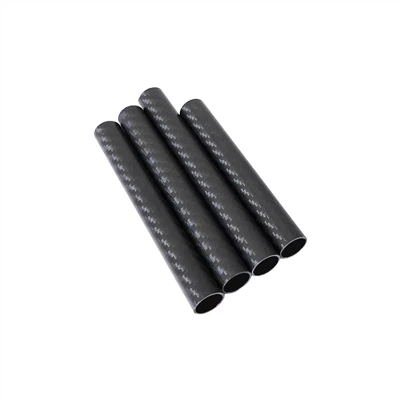
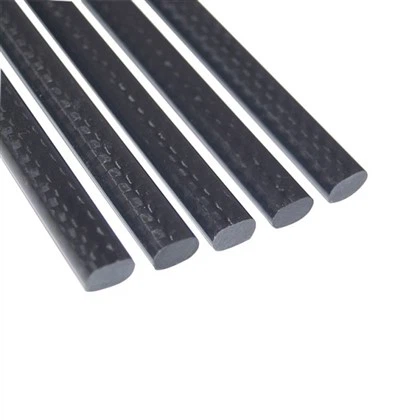
To assess the safety of carbon fiber helmets, it is essential to first understand their material system and molding process. Carbon fiber, also known as graphite fiber, is essentially a high-performance fiber-reinforced material. Its most notable characteristics are its extremely high specific strength and specific stiffness. Under the same mass conditions, its strength can reach about five times that of steel, and its stiffness is about twice that of steel, while maintaining extremely low density.
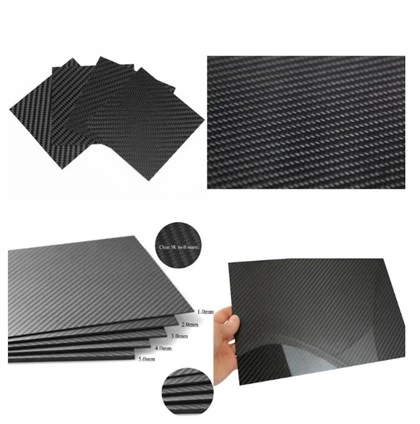
In helmet manufacturing, carbon fiber is typically laid up in the form of a fabric and impregnated with a resin system (mostly epoxy resin) to form a carbon fiber reinforced polymer. It is then cured in a high-temperature, high-pressure environment, with autoclave molding being a common process to ensure thorough resin impregnation, eliminate air gaps, and achieve dense interlayer bonding. The resulting shell possesses excellent strength-to-weight ratio and structural integrity.
Unlike polycarbonate helmets, which are injection molded, carbon fiber helmets are typical laminated structures. This layered design allows engineers to target specific areas with structural reinforcement by adjusting the layup direction, number of layers, and fiber orientation. This directionally controllable mechanical property is called "anisotropy," meaning that the material exhibits different strength and stiffness characteristics in different directions.
It is this engineerable laminated system that enables carbon fiber helmets to achieve highly refined structural optimization, striking a balance between weight control and mechanical performance-a level of performance that is typically difficult to achieve with low-cost, isotropic materials.
How do carbon fiber helmets perform in high-impact crash tests?
During a collision, the primary function of the helmet shell is to increase the stress-bearing area and prolong the stress duration, dispersing the concentrated load over a wider area, thus allowing the inner lining system to absorb energy effectively. Carbon fiber composites excel in this stage. Their high tensile strength and high modulus properties enable the shell to maintain structural continuity upon initial impact, preventing dangerous instantaneous breakage or large-area fragmentation. Simultaneously, the fiber layup in the laminated structure can distribute the load in the in-plane direction, achieving lateral diffusion and transforming localized impact into a more controllable overall stress distribution.
The perception that "rigidity equals brittleness" often stems from a misunderstanding of the failure mechanisms of composite materials. Modern carbon fiber helmets employ optimized resin matrix and layup designs, enabling the shell to maintain high stiffness while possessing calculable microscopic deformation capabilities. This controlled elasticity is crucial-if the shell has no deformation capability, the peak impact acceleration will act directly on the head, leading to higher biomechanical risks. A well-designed structure aims to regulate the load transfer path, rather than simply maximizing stiffness.
Furthermore, safety isn't just about the outer shell. Carbon fiber helmets are safe because they almost exclusively use multi-density EPS liners. The combination of a high-strength carbon fiber shell and a high-quality liner creates a safety system that manages both linear acceleration and control rotational acceleration.
The following is a comparison of the physical stress that different helmet materials can withstand
| Feature | Polycarbonate (Thermoplastic) | Fiberglass Composite | Carbon Fiber Helmets |
| Tensile Strength | Moderate (approx. 55-75 MPa) | High (approx. 1500-2500 MPa) | Ultra-High (approx. 3500+ MPa) |
| Weight | Heavy (1600g - 1800g avg) | Moderate (1400g - 1600g avg) | Lightweight (1100g - 1350g avg) |
| Impact Dispersion | Localized Flexing | Good Dispersion | Excellent Lateral Dispersion |
| Penetration Resistance | Moderate | High | Very High |
| Failure Mode | Cracking/Deformation | Delamination/Cracking | Controlled Crushing/Delamination |
Do carbon fiber helmets fail or deteriorate faster than those made of other materials?
No, carbon fiber itself is highly chemically inert; it will not oxidize, rust, or naturally degrade over time. From a materials science perspective, as long as no mechanical damage occurs, its fiber strength can remain stable for a long period. Therefore, the claim that "carbon fiber will age and become brittle" is inaccurate. However, helmets are not made of a single material, but rather a composite structure composed of multiple materials, including carbon fiber fabric, an epoxy resin matrix, and an expanded polystyrene (EPS) lining. The key factors determining the service life are mainly the resin matrix and the energy-absorbing lining system.
Are carbon fiber helmets worth the money for street riders?
Is a carbon fiber helmet worth the money? While it might sound like a budget issue, it's actually a safety one. Riders who buy cheap, heavy helmets may be less willing to wear them on short trips, or the discomfort might distract them. Carbon fiber helmets offer superior comfort through reduced weight and improved aerodynamics, encouraging continued use. Furthermore, the manufacturing process of carbon fiber helmets involves rigorous quality control. The hand-laying of fibers (the layup process) requires skilled technicians. This human oversight ensures that potential defects are detected during production. In contrast, injection-molded helmets are mass-produced with fewer individual checks. For daily commuters or track day enthusiasts, the return on investing in a carbon fiber helmet is reduced fatigue, improved protection, and the peace of mind that comes with wearing race-proven technology.
Conclusion
Is a carbon fiber helmet worth the money? While it might sound like a budget issue, it's actually a safety one. Riders who buy cheap, heavy helmets may be less willing to wear them on short trips, or the discomfort might distract them. Carbon fiber helmets offer superior comfort through reduced weight and improved aerodynamics, encouraging continued use. Furthermore, the manufacturing process of carbon fiber helmets involves rigorous quality control. The hand-laying of fibers (the layup process) requires skilled technicians. This human oversight ensures that potential defects are detected during production. In contrast, injection-molded helmets are mass-produced with fewer individual checks. For daily commuters or track day enthusiasts, the return on investing in a carbon fiber helmet is reduced fatigue, improved protection, and the peace of mind that comes with wearing race-proven technology.
Contact us
Want to improve your cycling safety? Try wearing a carbon fiber helmet for protection. If needed, you can choose Dongguan Julitech Composite Materials Technology Co., Ltd. We are a professional manufacturer of carbon fiber products. Contact us at sales18@julitech.cn.