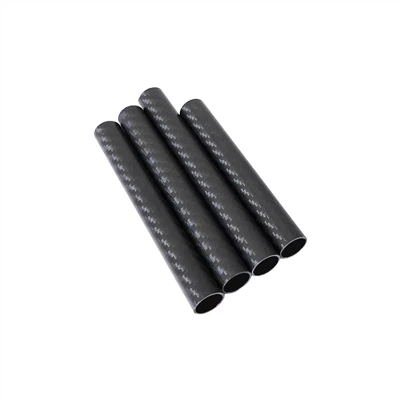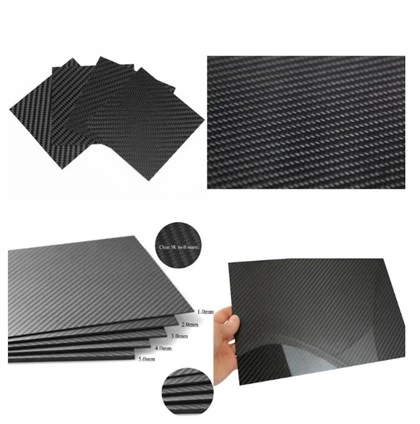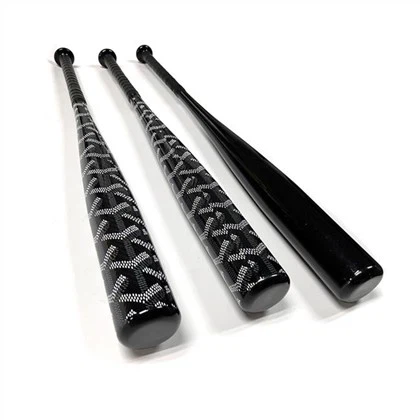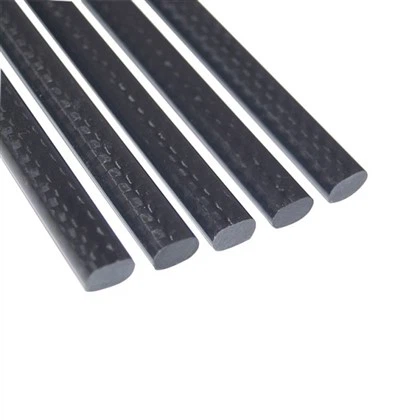
Made from pultruded and wound fibers of molten basalt, basalt fiber tubing offers significant advantages over steel tubing. If you need a lighter, stronger material that can withstand extreme environments, it's time to consider alternatives to traditional steel.
Five core advantages over steel
Incredible Strength-to-Weight Ratio
This is arguably the most significant advantage. Basalt Fiber Tubes possess an extraordinary strength-to-weight ratio that steel cannot hope to match.
Tensile Strength: Basalt fiber itself boasts a tensile strength roughly 2.5 times higher than that of common structural steel. This means it can withstand significantly more stress before pulling apart.
Density: Basalt Fiber Tubes are approximately 75% lighter than steel. Their density is around 2.1 g/cm³, while steel's is about 7.85 g/cm³.
What does this mean in practice? Imagine replacing a heavy steel support beam with a basalt fiber equivalent. The new beam would be so light you could potentially lift it by hand, yet it would bear a comparable or even greater load. This is a game-changer for logistics, installation, and overall structural design. The use of these lightweight structural tubes reduces dead load on buildings, allows for faster assembly with less heavy machinery, and dramatically cuts transportation costs. Many projects utilizing Basalt Fiber Tubes report significant savings in labor and equipment rental simply due to the ease of handling.
Absolute Immunity to Corrosion
The Achilles' heel of steel is its vulnerability to oxidation-rust. In moist, saline, or chemically aggressive environments, steel begins to degrade, compromising its structural integrity and necessitating costly maintenance, protective coatings, or premature replacement.
The corrosion resistance of basalt fiber is absolute. Being a chemically inert, non-metallic material, Basalt Fiber Tubes simply do not rust or corrode.
Marine Environments: For piers, seawalls, docks, and offshore platforms, steel is in a constant battle with saltwater. Basalt Fiber Tubes are completely unaffected, guaranteeing a much longer service life with virtually zero maintenance.
Chemical Plants: In facilities where exposure to acids, alkalis, and other corrosive agents is common, steel pipes and supports require special, often expensive, coatings. Basalt Fiber Tubes provide an inherently resistant solution from the start.
Superior Thermal and Electrical Insulation
Steel is an excellent conductor of heat and electricity. While useful in some applications, it is a significant drawback in many others.
Thermal Insulation: Steel components can create "thermal bridges" in building envelopes, allowing heat to escape in the winter and enter in the summer, leading to poor energy efficiency. The extremely low thermal conductivity of Basalt Fiber Tubes makes them a superb insulator, preventing this energy loss and improving the overall R-value of a structure. Furthermore, Basalt Fiber Tubes maintain their properties at both cryogenic temperatures and extreme heat (up to 700°C), whereas steel can become brittle or lose strength.
Electrical Insulation: Basalt Fiber Tubes are non-conductive and non-magnetic. This makes them the only logical choice for applications near high-voltage equipment, in telecommunications infrastructure, or within medical facilities like MRI rooms where magnetic interference cannot be tolerated. Using steel in these scenarios would be impractical or dangerous.
The insulating properties of Basalt Fiber Tubes open up a range of basalt fiber tube applications where steel is simply not a viable option.
Enhanced Durability and Fatigue Resistance
While steel is strong, it can be susceptible to fatigue and failure under repeated stress cycles. Basalt Fiber Tubes exhibit excellent fatigue resistance, maintaining their structural integrity over millions of cycles.
A key aspect, particularly in construction, is the comparison of basalt fiber rebar vs steel. Basalt fiber's coefficient of thermal expansion is very similar to that of concrete. When steel rebar is used, it expands and contracts at a different rate than the surrounding concrete during temperature changes. This creates internal stress, leading to micro-cracks and eventual spalling. Because Basalt Fiber Tubes and rebar expand and contract in harmony with concrete, they create a far more durable and long-lasting composite structure, free from these internal stresses.
A More Sustainable and Eco-Friendly Choice
In today's environmentally conscious world, the manufacturing footprint of a material is a critical consideration. The production of basalt fiber is significantly more eco-friendly than that of steel.
The practical advantages of basalt fiber tubes in many industries
Construction & Infrastructure
The most prominent application is as a replacement for steel rebar in concrete . It's used in bridges, tunnels, highways, and foundations, especially those in corrosive environments. Basalt Fiber Tubes are also used as lightweight structural profiles and for retrofitting and strengthening existing structures.
Automotive & Transportation
In the quest for lightweighting to improve fuel efficiency, Basalt Fiber Tubes are used for chassis components, support beams, and in high-temperature applications like exhaust system hangers, where their heat resistance is a major benefit.
Marine & Coastal
From building corrosion-proof docks and retaining walls to manufacturing durable boat hulls and components, Basalt Fiber Tubes are the ideal material for anything exposed to saltwater.
Energy & Utilities
Used for utility poles that are lighter and more weather-resistant than steel or wood, as well as for non-conductive supports in power substations. The inherent strength of Basalt Fiber Tubes also makes them suitable for manufacturing robust wind turbine blades.
Conclusion
Although steel has always been a reliable material, it is proven that basalt fiber tubes are increasingly becoming the best choice for many applications. They combine the characteristics of being lightweight, stronger, corrosion-resistant and more sustainable, providing smart solutions for innovative engineers, architects and designers. By choosing basalt, you can not only build stronger and more durable projects, but also invest in a more efficient and environmentally friendly future.
Contact Us
Would you like to try this new type of composite material? Contact Dongguan Juli Composite Material Technology Co., Ltd., focusing on composite materials for more than ten years, contact us via sales18@julitech.cn or via WhatsApp +86 18822947075 for expert advice and high-quality solutions.