Against the backdrop of ever-evolving automotive personalization, car owners' choices regarding vehicle details are undergoing significant changes. The accessories market is no longer limited to exterior decoration but is gradually extending towards materials science and performance engineering. The continued growth in demand for carbon fiber license plate frames is a prime example of this trend. Previously, these high-performance composite materials were primarily used in supercars and aerospace; now, with mature manufacturing processes and cost optimization, ordinary consumers can upgrade from traditional plastic or metal brackets to higher-specification solutions. It's worth emphasizing that this change is not merely visual but stems from the advantages of carbon fiber materials in terms of strength, weight, and durability.
What makes carbon fiber license plate frames superior?
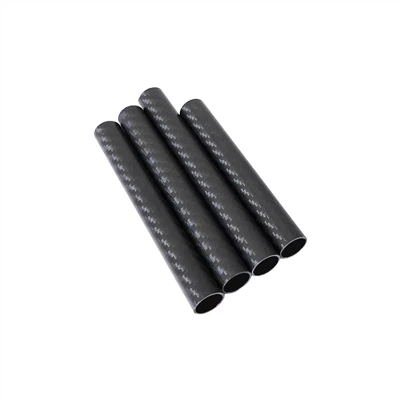
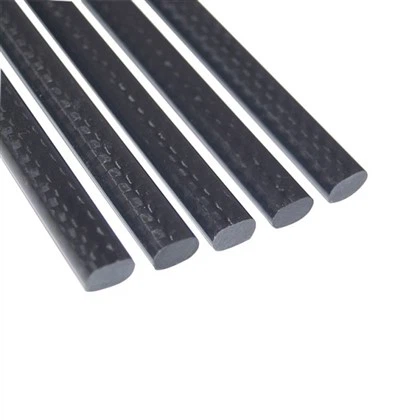
To understand why carbon fiber license plate frames are gradually replacing traditional materials, it's essential to first understand the basic composition of carbon fiber reinforced polymer (CFRP). Unlike injection-molded plastics or stamped steel used in common license plate frames, carbon fiber license plate frames are composed of microscopic carbon crystalline fibers arranged according to specific stress directions. These fibers typically have a diameter between 5 and 10 micrometers, are first woven into a fabric, and then composited with a thermosetting resin.
The core reason for choosing carbon fiber license plate frames lies in their superior strength-to-weight ratio. Carbon fiber boasts an extremely high strength-to-weight ratio, an advantage particularly crucial in high-performance engineering. Although a single license plate frame accounts for a tiny percentage of the overall vehicle weight, the "lightweight" concept emphasizes the cumulative effect of optimizing the weight of each component. This is why modification enthusiasts tend to choose carbon fiber license plate frames.
Furthermore, high-quality carbon fiber license plate frames are typically manufactured using an autoclave process, which involves curing the composite material under high temperature and pressure. This process not only significantly improves the material's density and chemical stability but also effectively suppresses dimensional changes caused by thermal expansion. In contrast, traditional plastic license plate frames are prone to deformation due to heat from the exhaust system or prolonged exposure to strong sunlight, while metal license plate frames may experience fatigue issues under vibration and load cycles. Carbon fiber license plate frames, on the other hand, maintain excellent dimensional stability under extreme conditions such as high temperature, strong light, and continuous mechanical stress, making them a more technologically advantageous choice for both everyday driving and track use.
Table 1: Comparison of physical properties of license plate frame materials
| Property | Carbon Fiber Composite | Stainless Steel (304) | ABS Plastic |
| Density (g/cm³) | ~1.60 | ~7.90 | ~1.04 |
| Tensile Strength (MPa) | 3500+ | 505 | 40 |
| Young's Modulus (GPa) | 230 | 193 | 2.3 |
| Corrosion Resistance | Excellent (Chemical inertness) | Good (Subject to pitting) | Poor (UV degradation) |
| Thermal Expansion | Very Low | Moderate | High |
What are the real advantages of carbon fiber license plate frames in terms of durability and environmental resistance?
When car enthusiasts invest in auto parts, durability is often a top consideration. One frequently asked question is: How do these license plate frames perform in long-term weathering compared to chrome or plastic materials? This question highlights the real advantages of carbon fiber license plate frames in terms of corrosion protection and UV aging.
One of the most compelling features of carbon fiber license plate frames is their natural rust resistance. Even chrome-plated metal license plate frames can still be affected by electrochemical corrosion in real-world use, especially in areas where de-icing salt is used extensively in winter. Once the surface coating is damaged by flying stones or debris, the internal metal oxidizes rapidly, producing not only noticeable rust but potentially even staining the vehicle's bumper. In contrast, carbon fiber license plate frames are essentially non-metallic composite materials; neither the fibers themselves nor the resin matrix exhibit rusting issues, making them particularly reliable in harsh climates or high-salinity coastal environments.
More importantly, the durability of carbon fiber license plate frames extends beyond corrosion resistance; it also lies in their superior UV resistance. While early carbon fiber products did suffer from epoxy resin aging and yellowing due to UV radiation, modern high-end carbon fiber license plate frames typically employ a UV-stabilized transparent coating similar to the original automotive paint. This type of coating effectively blocks harmful UV radiation, allowing the product to maintain a high-gloss surface and clear texture even after years of use. In contrast, common ABS plastic license plate frames often fade and become brittle after prolonged exposure to sunlight, eventually cracking in the stress areas of the mounting bolts.
Furthermore, the composite structure of carbon fiber license plate frames also offers advantages in vibration damping and acoustic performance. The operation of an internal combustion engine and uneven road surfaces continuously generate high-frequency vibrations. Under certain conditions, metal license plate frames may resonate, leading to abnormal noises and even wear on the paint. Carbon fiber composite materials, on the other hand, can absorb and attenuate some vibration frequencies, achieving a quieter and more stable installation. It is this comprehensive consideration of durability, acoustic performance, and material details that makes carbon fiber license plate frames a rational choice for high-end and performance-oriented car owners who prioritize quality and performance.
Why is the aesthetics of carbon fiber so closely related to speed and prestige?
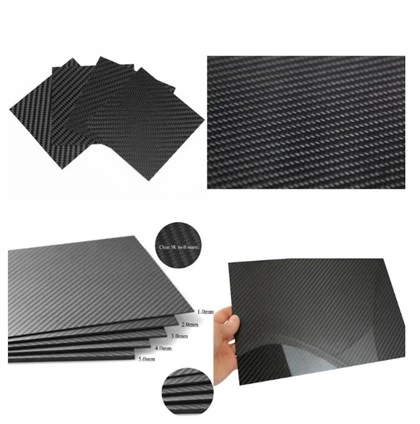
The visual appeal of carbon fiber license plate frames is deeply rooted in the history of motorsport and aerospace technology, most notably in Formula One racing. Their iconic fiber weave-commonly a 2x2 twill or 1x1 plain weave-has long been a visual symbol of high-performance engineering. When enthusiasts install carbon fiber license plate frames on their vehicles, they are, in effect, establishing a symbolic connection on an aesthetic level between their ride and legendary supercars like the McLaren F1 and Ferrari F40, which pioneered the use of this material.
From an overall design perspective, carbon fiber license plate frames often play a crucial role as the finishing touch. For vehicles already equipped with carbon fiber spoilers, diffusers, or mirror caps, the license plate frame becomes an important visual node connecting various exterior components, helping to create a unified and coherent design language. Conversely, material inconsistencies, such as pairing a carbon fiber diffuser with a plastic license plate frame, often disrupt the visual flow of the entire vehicle and weaken its overall quality.
Conclusion
The popularity of carbon fiber license plate frames is no accident, but rather a rational choice made by consumers as high-quality materials become increasingly accessible. Compared to traditional plastic or metal materials, carbon fiber license plate frames achieve a rare balance between low density, high rigidity, and excellent chemical resistance, which is the core reason for their favor among car enthusiasts. Whether it's due to the recognition of the inherent advantages of carbon fiber materials, such as their natural rust resistance and environmental stability, the desire to further optimize vehicle performance through lightweight components, or simply the aesthetic appeal and status symbol represented by carbon fiber, objective data and actual usage performance continue to validate the rationality of this choice. As the automotive industry continues to introduce composite materials into structural and functional components, consumer acceptance of carbon fiber license plate frames actually reflects a deeper understanding of the value of materials science and engineering.
Contact us
For more information about our cutting-edge carbon fiber car license plates, please contact us at sales18@julitech.cn or via WhatsApp (+86 18822947075). Let us elevate your car modification to new heights of excellence and innovation.
References
1.Savage, G. (1993). Carbon-Carbon Composites. Chapman & Hall. (Provides foundational knowledge on carbon composite structures and thermal properties).
2.Mallick, P. K. (2007). Fiber-Reinforced Composites: Materials, Manufacturing, and Design. CRC Press. (Authoritative text on the manufacturing and mechanical properties of fiber-reinforced polymers).
3.Rezaei, F., Yunus, R., & Ibrahim, N. A. (2009). "Effect of fiber length and content on mechanical and thermal properties of short carbon fiber reinforced polypropylene composites." Materials & Design, 30(2), 260-263. (Relevant for understanding the durability comparisons between standard plastics and carbon reinforced materials).