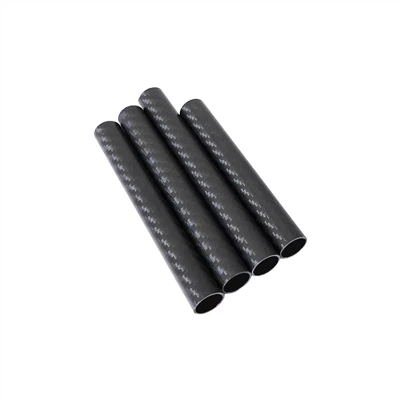
In the field of high-performance materials, few materials evoke such widespread attention and long-standing misunderstanding as carbon fiber. Often regarded as a hallmark material of Formula One racing, aerospace engineering, and high-end bicycle manufacturing, it is consistently accompanied by two seemingly contradictory assessments: extremely strong yet perceived as highly fragile. This leads engineers, tech enthusiasts, and industrial buyers to repeatedly raise a core question-is carbon fiber tubing truly prone to breakage? To accurately answer this question, we cannot rely on intuitive impressions but must return to materials science itself, conducting a systematic analysis from key dimensions such as mechanical properties, structural design, and manufacturing processes.
Are carbon fiber tubes fragile and prone to breakage?
The impression that carbon fiber tubes are "fragile" often stems from a misinterpretation of the concept of "brittleness" in materials science. In an engineering context, brittleness does not mean low material strength, but rather that the material undergoes almost no significant plastic deformation before failure. Unlike steel, which typically undergoes yielding and visible bending before fracture, carbon fiber tubes, as a typical anisotropic composite material, primarily exhibit a linear elastic response within their ultimate load range.
This means that carbon fiber tubes do not "warn" of impending failure through gradual bending; their geometry remains largely unchanged until they reach their ultimate tensile or compressive strength, after which they may fracture instantaneously. However, simply attributing this characteristic to "fragility" is inaccurate. On the contrary, within their design conditions and load paths, carbon fiber tubes are often among the structural materials with the greatest strength and stiffness advantages.
The so-called "vulnerability" stems more from a misunderstanding of its impact behavior. Carbon fiber tubes are composed of high-strength continuous fibers and a resin matrix. When subjected to high-energy, locally concentrated impacts such as hammering, they may indeed suffer damage such as delamination, matrix cracking, or fiber breakage. However, from a load-bearing capacity perspective, a properly designed carbon fiber tube can fully withstand loads sufficient to cause significant plastic deformation in aluminum alloys or to cause failure in wood structures.To better understand this, we must look at its comparison with traditional materials.
Table 1: Comparative Mechanical Properties of Structural Materials
| Material Property | Carbon Fiber Tubing (Standard Modulus) | Structural Steel (A36) | Aluminum Alloy (6061-T6) |
| Density (g/cm³) | 1.55 - 1.60 | 7.85 | 2.70 |
| Tensile Strength (MPa) | 600 - 3500 (Depending on layup) | 400 - 550 | 310 |
| Tensile Modulus (GPa) | 150 - 230 | 200 | 69 |
| Strength-to-Weight Ratio | Extremely High | Moderate | High |
| Failure Mode | Brittle/Elastic | Ductile | Ductile |
How does the strength-to-weight ratio of carbon fiber tubes compare to that of traditional materials?
The core reason engineers choose carbon fiber tubing over metal in structural design is its superior strength-to-weight ratio, meaning the load-bearing capacity of a material per unit mass. In applications where weight and height are limited, such as drones, satellite structures, and portable medical devices, every gram of weight reduction directly translates into improved performance or efficiency, and carbon fiber tubing has a decisive advantage in this regard.
While steel possesses excellent absolute strength, its high density significantly limits its use in lightweight designs. Although aluminum alloys are lighter, they struggle to provide tensile strength comparable to advanced composite materials in high-end applications. For example, in industrial applications, the strength-to-weight ratio of commonly used carbon fiber tubing is approximately five times that of 1020 grade steel and about twice that of 6061-T6 aluminum alloy. This means that, while meeting the same structural stiffness requirements, the mass of carbon fiber tubing can be reduced to approximately 20% of that of steel tubing.
It is this extremely high structural efficiency that makes carbon fiber tubes a "standard material" in the aerospace field. However, it is important to emphasize that this performance advantage is not "naturally present" in the material itself, but rather is based on precise control of fiber orientation and layup design. Since carbon fiber tubes are inherently anisotropic structures, their main load-bearing capacity is concentrated in the fiber direction. Tubes using only longitudinal fiber layup perform exceptionally well under axial tensile conditions, but may exhibit significant performance shortcomings under torsional loads.
What factors affect the impact resistance of carbon fiber tubes?
While carbon fiber tubes excel in static load bearing, their most frequently cited potential weakness lies in impact resistance. For applications frequently exposed to debris impacts or at risk of drops, the impact resistance of carbon fiber tubes is a crucial engineering parameter. Unlike metallic materials that dissipate impact energy through indentation and plastic deformation, carbon fiber tubes primarily rely on the resin matrix and the fiber-matrix interface to absorb and disperse impact energy.
From a materials and structural perspective, the impact resistance of carbon fiber tubes is primarily governed by three factors: the toughness level of the resin system, the fiber volume fraction, and the tube wall thickness. In recent years, high-performance epoxy resins with toughness modifications have been widely used, significantly enhancing energy absorption capacity and making carbon fiber tubes less prone to matrix cracking or delamination failure under impact loads. Simultaneously, introducing protective outer layers-such as braided glass fiber sleeves or Kevlar (aramid) coatings-can further improve their durability under complex or harsh operating conditions.
Structural design also plays a decisive role. Increased wall thickness significantly improves impact resistance, making industrial-grade carbon fiber tubing less prone to failure in accidental impacts compared to the thin-walled tubing used in ultralight racing cars or racing equipment. In practical industrial applications, carbon fiber tubing is typically designed with a defined safety factor to ensure that common collisions or drops do not lead to catastrophic structural damage. It is this failure mode-oriented, meticulous engineering design that allows carbon fiber tubing to be widely used as a reliable and controllable structural material, even in high-risk environments.
Can high-modulus carbon fiber tubes withstand extreme environments?
The ability of high-modulus carbon fiber tubes to serve reliably in extreme environments depends crucially on their inherent chemical and thermal stability. From a material intrinsic perspective, carbon fiber composites possess excellent corrosion resistance, unlike steel which is prone to electrochemical corrosion, and unlike aluminum alloys which may experience performance degradation in salt spray or strongly alkaline environments. Therefore, carbon fiber tubes have natural advantages in marine engineering, subsea oil and gas exploration, and chemical plants.
Carbon fiber tubes also excel in thermal adaptability. Their mechanical properties and geometric stability change minimally over a wide temperature range. In contrast, many thermoplastic materials soften at high temperatures, while metallic materials inevitably undergo thermal expansion, posing challenges to high-precision structures. High-modulus carbon fiber tubes used in precision instruments and optical systems are key load-bearing components precisely because of their superior dimensional stability.
In the vacuum environment of space, high-modulus carbon fiber tubes are among the preferred materials. This material exhibits extremely low outgassing rates and demonstrates significantly better resistance to ultraviolet radiation than most polymer systems, meeting the stringent long-term stability requirements of spacecraft. The perceived "fragility" is essentially an engineering trade-off resulting from its extremely high stiffness, rather than a defect in material properties. Through targeted design and specialized manufacturing, these high-modulus carbon fiber tubes have become an indispensable structural foundation in modern precision engineering and scientific exploration.
Conclusion
In short, is carbon fiber tubing fragile and prone to breakage? The answer is a resounding no, provided it is considered an engineering material. While it lacks the ductility of metals, meaning it won't bend before breaking, it offers a strength-to-weight ratio unmatched by traditional materials. Its "brittleness" is actually a reflection of its high modulus and efficiency, not a sign of weakness. By understanding the impact resistance of carbon fiber tubing, utilizing its compressive strength, and acknowledging its proven durability in aerospace, we can see that this material is a robust solution to the world's most demanding engineering challenges. Whether in high-modulus applications or standard industrial sectors, carbon fiber tubing combines lightweight, rigidity, and durability, continuously revolutionizing modern technology.
Contact us
Ready to elevate your project with cutting-edge carbon fiber technology? Contact Dongguan Julitech Composite Materials Technology Co., Ltd. today to explore our range of high-performance carbon fiber products. Please email us at sales18@julitech.cn or contact us via WhatsApp at +86 18822947075 to discuss how our innovative solutions can enhance your project.