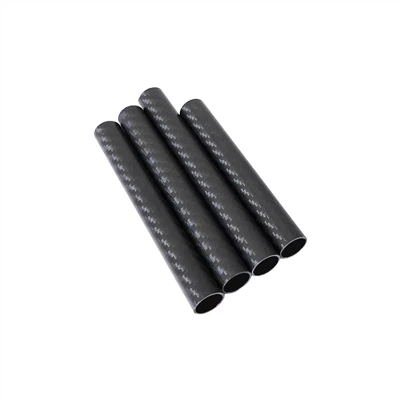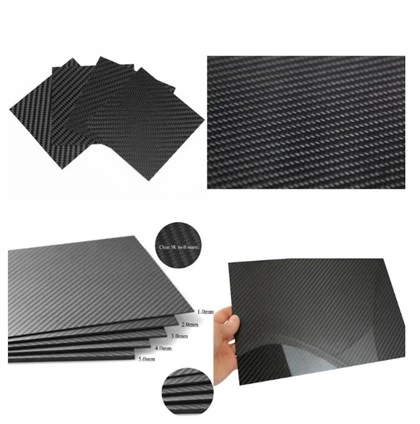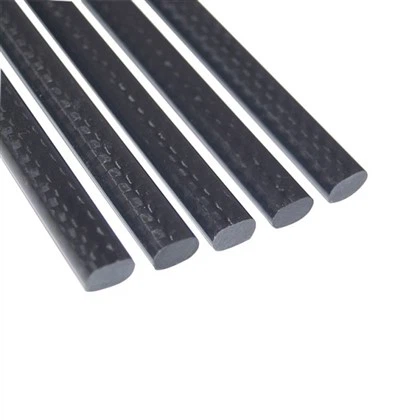
In the field of modern materials science, there are few innovations that can have such a profound impact on engineering as carbon fiber sheets. As a typical advanced composite material, carbon fiber sheets are known as "black gold" in the industry due to their excellent specific strength and specific stiffness. Its application has gradually expanded from highly specialized aerospace structural parts in the early days to high-performance industrial fields such as automobiles, energy, and equipment manufacturing, and has developed into a key engineering material with wide applicability.
Why is carbon fiber sheet the preferred choice for aerospace engineering?
The aerospace industry is the earliest and most important application market for high-strength carbon fiber composite panels, driven by the core principle of achieving continuous weight reduction without compromising structural integrity. In aircraft design, every kilogram reduction in structural weight directly translates into improved fuel efficiency, longer range, or higher payload capacity. This marginal effect has significant economic and performance value throughout the entire life cycle.
Compared to traditional aerospace-grade aluminum alloys (such as 7075-T6), carbon fiber sheets have an overwhelming advantage in terms of specific strength and specific stiffness. Taking the Boeing 787 Dreamliner as an example, about 50% of its airframe structure by weight is made of composite materials, a significant portion of which is carbon fiber sheets and integral laminated structures, widely used in key load-bearing components such as fuselage sections, wing spars, and tail skin.
The performance characteristics of aerospace-grade carbon fiber sheets include excellent fatigue resistance and extremely low coefficient of thermal expansion (CTE), which enable aircraft to maintain precise aerodynamic shape even in extreme temperature environments. From low temperatures of approximately -55 °C at cruising altitude to high temperatures of up to 50 °C on desert airstrips, their dimensional stability is superior to that of metal structures.
How will carbon fiber sheets revolutionize the automotive and racing industries?
In the automotive industry, carbon fiber sheets were initially used almost exclusively for the monocoque structures of Formula One racing cars and a few top-tier supercars. However, with the maturation of customized carbon fiber sheet manufacturing processes and the optimization of cost structures, its applications are gradually expanding to high-performance mass-produced vehicles and even electric vehicles.
The core logic behind this trend is the "virtuous circle effect" brought about by the lightweight of the whole vehicle, with a lighter body and chassis meaning less demand for engine or battery capacity, which in turn can adopt lighter suspension, braking and support systems, and ultimately achieve system-level quality and performance optimization. For high-performance sports cars, carbon fiber sheets have been widely used in body coverings, front splitters, rear diffusers, and structural reinforcement in key parts to improve overall stiffness and dynamic response.
In addition to weight reduction advantages, carbon fiber composites also have significant value in terms of crash safety. The reasonably designed carbon fiber structure can better absorb impact energy per unit mass than traditional steel structures, so as to protect occupant safety more effectively in accidents. This is the fundamental reason why modern racing cars are built almost exclusively from high-quality carbon fiber sheets.
In addition, the material itself has aesthetic properties, whether it is 3K twill or 2/2 twill, and the clear and orderly fiber texture has gradually evolved into a symbol of high-end engineering and performance aesthetics, especially in the high-end customization and performance model market.
Comparative analysis of material properties
| Property |
Carbon fiber sheet (standard modulus) |
Aluminum (7075-T6) |
Stainless steel (304) |
Titanium (grade 5) |
|
Density (g/cm³) |
1.55 - 1.60 | 2.81 | 8.00 | 4.43 |
| Tensile Strength (MPa) | 1200 - 3500 | 572 | 505 | 950 |
| Tensile Modulus (GPa) | 150 - 230 | 71.7 | 193 | 113 |
| Specific Strength (kN·m/kg) | 770 - 2200 | 204 | 63 | 214 |
| Corrosion Resistance | Excellent | Moderate | Good | Excellent |
What role do carbon fiber sheets play in industrial robots and automation?
As various industries accelerate their transition to Industry 4.0, high speed, high precision, and high automation have become core requirements for advanced manufacturing systems. Against this backdrop, carbon fiber sheets are gradually replacing traditional metal materials, becoming the preferred structural material in robotic arms, end effectors, and high-speed pick-and-assembler equipment. In such applications, the key limiting factor for system performance often stems from the inertia of moving parts. Robotic arms made from carbon fiber sheets significantly reduce weight, enabling higher acceleration and deceleration, directly shortening the cycle time and improving overall production line efficiency. This "lightweight equals performance" logic is particularly evident in high-speed automated equipment.
In addition to dynamic components, industrial-grade carbon fiber structural members (such as carbon fiber reinforced beams, tie rods, or plate reinforcements) are increasingly being used in large gantry structures and support frames. In industrial environments with frequent exposure to chemical media, the chemical inertness exhibited by carbon fiber sheets when combined with vinyl ester or epoxy resin systems offers a significant advantage over metal materials that are prone to oxidation or acid corrosion. This long-term stable corrosion resistance effectively reduces equipment maintenance costs and unplanned downtime. From the perspective of total life cycle cost, it also further verifies the rationality and economy of the high initial investment in carbon fiber plates.
Are carbon fiber sheets suitable for medical and prosthetic applications?
In the medical field, the requirements for materials go beyond high strength and lightweight; they must also meet the requirements of biocompatibility and excellent radiation transmittance (transparency to X-rays). Carbon fiber sheets demonstrate outstanding comprehensive advantages in these key indicators, thus occupying an irreplaceable position in many medical applications.
In the field of radiology, carbon fiber has become the industry-standard material for X-ray and CT scan tables. Because carbon fiber sheets have extremely low X-ray absorption, they significantly reduce interference and artifacts during imaging. Clinicians can obtain clearer and more reliable image data with lower radiation doses, thereby improving diagnostic accuracy and reducing patients' radiation exposure risks.
In prosthetics and orthotics, carbon fiber plates have revolutionized patients' mobility. Take modern "blade-like" sports prostheses as an example: their core structure is made of specialized carbon fiber plates, capable of efficiently storing and releasing energy during the gait cycle, exhibiting an elastic response similar to biological tendons. This biomimetic property, combining strength and resilience, is difficult to achieve with traditional rigid metal materials. Simultaneously, the significant lightweight advantage of carbon fiber effectively reduces energy consumption during walking or exercise, minimizing muscle fatigue and having a direct and profound impact on the long-term comfort and quality of life for amputees.
How is carbon fiber used in infrastructure and civil engineering?
The civil engineering field continues to face challenges to structural safety and service performance due to aging infrastructure. Against this backdrop, industrial-grade carbon fiber reinforcement materials (such as carbon fiber plates and strips) have become one of the mainstream technical solutions for the reinforcement and repair of bridges, historical buildings, and structures in earthquake-prone areas. Compared to the traditional "demolition-reconstruction" approach, engineers typically reinforce concrete structures by directly bonding carbon fiber plates or strips to the outer surface of the concrete members. This technique is collectively known as FRP (fiber reinforced polymer) reinforcement. This method significantly improves the load-bearing capacity, flexural strength, and seismic performance of a structure without replacing the original concrete beams, columns, or slabs. The carbon fiber plates act as an external "tension reinforcement layer" within the system, effectively inhibiting crack propagation and significantly improving the originally brittle mechanical response of the concrete structure, thereby enhancing its overall ductility. Because carbon fiber sheets are extremely thin and have very low self-weight, this reinforcement method hardly increases the structural self-weight and does not significantly change the geometric dimensions of the components. This is especially important for maintaining the clearance for passage under bridges, protecting the appearance of historical buildings, and preserving the function of existing structures.
Conclusion
Despite its overwhelming advantages, carbon fiber sheets also face challenges. The main obstacles remain production costs and the complexities of recycling. Unlike meltable and reshapeable metals, the thermosetting resins used in most carbon fiber sheets are difficult to reverse. However, research into thermoplastic resins and "circular carbon" projects is paving the way for a more sustainable lifecycle for the composite material. As manufacturing scale and automation reduce the labor-intensive nature of installation, the adoption of carbon fiber sheets will expand to more everyday applications.
Contact us
For more information on the applications of our high-quality carbon fiber sheets, please feel free to contact us at sales18@julitech.cn or via WhatsApp (+86 18822947075). Our team of experts is ready to help you find the best solution for your project.
References
[1] Soutis, C. (2005): "Carbon fiber reinforced plastics in aircraft construction," Progress in Aerospace Sciences, Vol. 41, Issue 2, pp. 143-151.
[2] Mallick, P. K. (2007): Fiber-Reinforced Composites: Materials, Manufacturing, and Design. CRC Press.
[3] International Organization for Standardization (ISO): ISO 527-4/5: Determination of tensile properties of isotropic and orthotropic fibre-reinforced plastic composites.