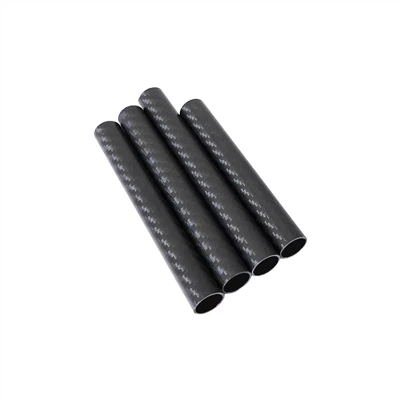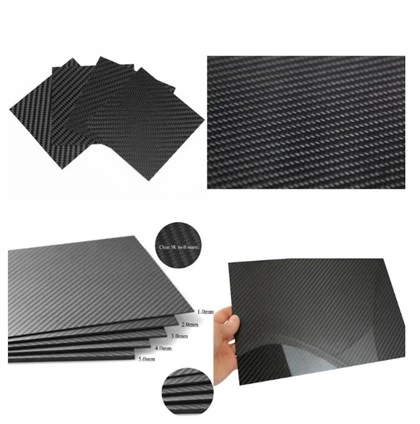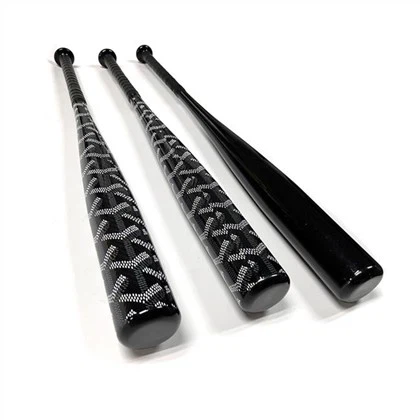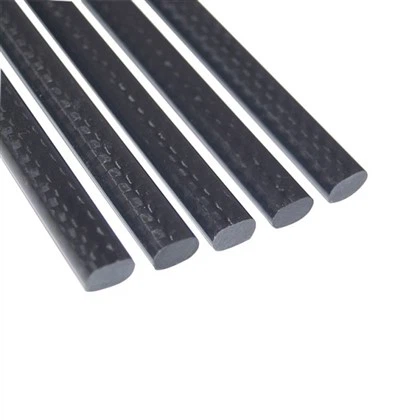
Customized fiberglass shaped tubes offer a versatile solution for various industries, combining strength, durability, and design flexibility. These high-performance components are available in an array of shapes to suit diverse applications. The most common shapes include circular, rectangular, square, oval, and hexagonal tubes. However, the beauty of customization lies in the ability to create unique profiles tailored to specific needs. From I-beams and C-channels to complex multi-cellular structures, the possibilities are virtually limitless. These lightweight, corrosion-resistant tubes can be engineered to meet precise dimensional requirements, making them ideal for aerospace, automotive, construction, and marine industries where specialized shapes are often necessary for optimal performance and functionality.
Exploring the Versatility of Fiberglass Shaped Tubes
The Advantageous Properties of Fiberglass Composites
Fiberglass composites have revolutionized numerous industries due to their exceptional properties. These materials boast an impressive strength-to-weight ratio, making them a go-to choice for applications where weight reduction is crucial without compromising structural integrity. The inherent corrosion resistance of fiberglass is another key attribute, allowing these shaped tubes to withstand harsh environments and chemicals that would deteriorate traditional materials. This durability translates to reduced maintenance costs and extended service life, making fiberglass tubes a cost-effective long-term solution.
Moreover, the thermal insulation properties of fiberglass contribute to energy efficiency in various applications. The material's low thermal conductivity helps maintain desired temperatures, whether in industrial processes or building structures. Electrical insulation is another valuable characteristic, making fiberglass tubes suitable for use in electrical and electronic components where safety and performance are paramount.
Customization Possibilities in Shape and Size
The true power of customized fiberglass shaped tubes lies in their adaptability to specific design requirements. Manufacturers can create tubes with precise cross-sections, wall thicknesses, and lengths to meet exact specifications. This level of customization allows engineers to optimize product designs for maximum efficiency and functionality. For instance, aerodynamic profiles can be developed for automotive and aerospace applications, while specialized shapes can be crafted for architectural elements or industrial machinery components.
Advanced manufacturing techniques, such as pultrusion and filament winding, enable the production of complex geometries that would be challenging or impossible with traditional materials. Multi-cellular structures, for example, can be designed to provide enhanced strength and stiffness while maintaining a lightweight profile. The ability to incorporate ribs, flanges, or other features directly into the tube's shape during production further expands the design possibilities and can eliminate the need for secondary operations.
Industry-Specific Applications of Shaped Tubes
Customized fiberglass shaped tubes find applications across a wide spectrum of industries. In the aerospace sector, these components are utilized in aircraft interiors, structural supports, and even in satellite structures where their lightweight nature and resistance to temperature fluctuations are invaluable. The automotive industry leverages shaped tubes for chassis components, body panels, and driveshafts, capitalizing on their high strength-to-weight ratio to improve fuel efficiency and vehicle performance.
In construction, fiberglass shaped tubes serve as reinforcement in concrete structures, offer corrosion-resistant alternatives to metal in coastal and chemical environments, and provide aesthetically pleasing architectural elements. The marine industry benefits from the material's resistance to saltwater and UV radiation, using shaped tubes in boat hulls, masts, and offshore structures. Even the renewable energy sector has found applications for these versatile components in wind turbine blades and solar panel support structures.
Manufacturing Processes for High-Performance Fiberglass Tubes
Pultrusion: Crafting Consistent Profiles
Pultrusion is a continuous manufacturing process that excels in producing fiberglass shaped tubes with consistent cross-sections. This method involves pulling fiberglass rovings and mats through a resin bath, then through a heated die that shapes and cures the material. The result is a high-strength, dimensionally stable product ideal for applications requiring long lengths of uniform profile. Pultrusion allows for the creation of complex shapes with tight tolerances, making it suitable for producing I-beams, channels, and custom profiles that demand precision and repeatability.
One of the key advantages of pultrusion is its ability to incorporate continuous fiber reinforcement along the length of the tube, maximizing longitudinal strength. This process also allows for the integration of different materials within the profile, such as carbon fiber for localized reinforcement or surfacing veils for enhanced surface finish and chemical resistance. The automation inherent in pultrusion leads to high production efficiency and consistency, making it cost-effective for large-scale manufacturing of customized fiberglass shaped tubes.
Filament Winding: Tailoring Strength and Orientation
Filament winding is another crucial process in the production of customized fiberglass shaped tubes, particularly for cylindrical or tapered shapes. This technique involves winding resin-impregnated fibers around a mandrel in precise patterns. The orientation and layering of these fibers can be carefully controlled to optimize the tube's mechanical properties in specific directions. This level of customization allows engineers to design tubes with enhanced hoop strength, axial stiffness, or a balance of properties to meet the exact requirements of the application.
The versatility of filament winding extends to the creation of non-circular shapes through the use of specialized mandrels and winding patterns. This process is particularly valuable for producing pressure vessels, drive shafts, and other components that require high performance under specific loading conditions. The ability to vary the winding angle and fiber tension throughout the tube's length enables the manufacture of products with tailored properties along their axis, addressing unique design challenges in aerospace, automotive, and industrial applications.
Molding Techniques for Complex Geometries
While pultrusion and filament winding excel in producing tubes with consistent cross-sections, molding techniques offer additional flexibility for creating fiberglass shaped tubes with more complex geometries or localized features. Compression molding, for instance, allows for the production of tubes with integrated flanges, ribs, or varying wall thicknesses. This process involves placing fiberglass mat or preforms into a mold cavity, which is then closed under pressure and heat to cure the resin and form the final shape.
Resin transfer molding (RTM) is another valuable technique for producing customized fiberglass shaped tubes with intricate designs. In RTM, dry fiberglass reinforcement is placed in a closed mold, and resin is injected under pressure to impregnate the fibers. This method allows for precise control over fiber placement and resin content, resulting in high-quality parts with excellent surface finish and dimensional accuracy. RTM is particularly useful for producing complex, three-dimensional shapes that would be challenging to achieve with other manufacturing methods, opening up new possibilities in product design and functionality.
Optimizing Performance Through Material Selection and Design
Fiber Types and Resin Systems
The performance of customized fiberglass shaped tubes can be further enhanced through careful selection of fiber types and resin systems. While E-glass fibers are the most common due to their balance of cost and performance, other options such as S-glass or R-glass offer higher strength and stiffness for demanding applications. Carbon fibers can be incorporated to create hybrid composites, leveraging their exceptional strength-to-weight ratio and stiffness in critical areas of the tube.
Resin selection plays a crucial role in determining the overall properties of the fiberglass tube. Polyester resins are widely used for their good balance of properties and cost-effectiveness, but epoxy resins offer superior mechanical properties and chemical resistance for high-performance applications. Vinyl ester resins provide excellent corrosion resistance and are often chosen for chemically aggressive environments. Advanced resin systems, such as phenolics or bismaleimides, can be employed for applications requiring fire resistance or high-temperature performance, expanding the range of environments in which these customized tubes can operate effectively.
Structural Optimization and Finite Element Analysis
To maximize the potential of customized fiberglass shaped tubes, engineers employ advanced design techniques and analysis tools. Finite Element Analysis (FEA) allows for detailed simulation of the tube's behavior under various loading conditions, helping to identify areas of high stress or potential failure. This computational approach enables iterative design optimization, where the tube's shape, wall thickness, and material composition can be fine-tuned to achieve the desired performance characteristics while minimizing weight and material usage.
Structural optimization techniques, such as topology optimization, can be applied to develop novel internal structures within the tube that enhance specific properties. For instance, cellular or lattice structures can be designed to improve buckling resistance or energy absorption capabilities. These advanced design methodologies, combined with the flexibility of fiberglass composites, allow for the creation of highly efficient, application-specific tubes that outperform traditional materials in terms of strength, weight, and functionality.
Surface Treatments and Coatings
The performance and longevity of customized fiberglass shaped tubes can be further enhanced through various surface treatments and coatings. UV-resistant gelcoats can be applied during the manufacturing process to protect the tube from degradation due to sunlight exposure, extending its service life in outdoor applications. For tubes used in abrasive environments, wear-resistant coatings can be applied to improve durability and maintain dimensional stability over time.
In applications where electrical conductivity is required, such as in aerospace or electronics, conductive coatings or embedded metal meshes can be incorporated into the tube's design. This allows for the creation of lightweight, corrosion-resistant components that also provide electromagnetic shielding or static dissipation properties. Hydrophobic coatings can be applied to enhance water repellency and self-cleaning properties, while specialized antimicrobial treatments can be utilized in medical or food processing applications to maintain hygiene standards.
Conclusion
Customized fiberglass shaped tubes represent a pinnacle of engineering versatility, offering a wide array of shapes and performance characteristics to meet diverse industry needs. From simple circular profiles to complex multi-cellular structures, these high-performance components combine lightweight properties with exceptional strength and corrosion resistance. The ability to tailor material composition, manufacturing processes, and surface treatments allows for the creation of tubes that excel in specific applications, pushing the boundaries of what's possible in product design and functionality. As industries continue to demand more efficient, durable, and specialized components, customized fiberglass shaped tubes stand ready to meet these challenges, driving innovation across multiple sectors.
Contact Us
For more information about our customized fiberglass shaped tubes and how they can benefit your specific application, please contact us at sales18@julitech.cn or reach out via WhatsApp at +86 15989669840. Our team of experts is ready to help you explore the possibilities and develop the perfect solution for your needs.
References
1. Johnson, M. R. (2020). Advanced Composite Materials in Modern Engineering. Journal of Materials Science, 55(12), 5678-5695.
2. Smith, A. L., & Brown, J. K. (2019). Fiberglass Composites: Properties and Applications. Composite Structures, 210, 234-248.
3. Lee, S. H., et al. (2021). Manufacturing Processes for Customized Composite Tubes: A Comprehensive Review. Composites Part A: Applied Science and Manufacturing, 142, 106252.
4. Thompson, R. C. (2018). Design Optimization of Fiberglass Shaped Tubes Using Finite Element Analysis. Composite Structures, 185, 615-624.
5. Wilson, D. M., & Zhang, Q. (2022). Surface Treatments and Coatings for Enhanced Performance of Fiberglass Composites. Progress in Organic Coatings, 162, 106590.
6. Chen, X., & Liu, Y. (2020). Industry-Specific Applications of Customized Fiberglass Tubes: Current Status and Future Trends. Composites Science and Technology, 192, 108102.