Carbon fiber materials are profoundly reshaping modern engineering systems, with applications expanding from high-end fields like aerospace to automotive manufacturing, sporting goods, and various industrial applications. As the market continues to expand, the differences between various manufacturing processes are becoming increasingly apparent. Today, judging the quality of carbon fiber products is no longer the exclusive domain of materials scientists, but an essential skill for engineers, procurement decision-makers, and even enthusiasts. This article will systematically analyze the quality assessment methods and related certification systems for carbon fiber composite materials in a clear and easy-to-understand manner, and will delve into the key technical points for distinguishing high-performance components from low-quality imitations.
How to judge the quality of carbon fiber products visually and structurally?
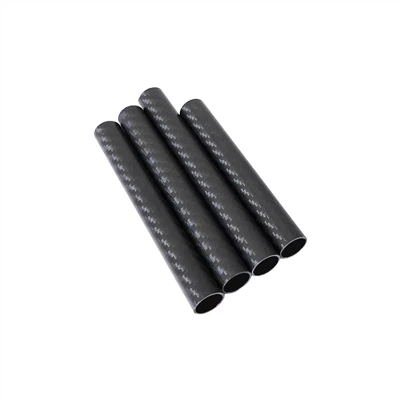
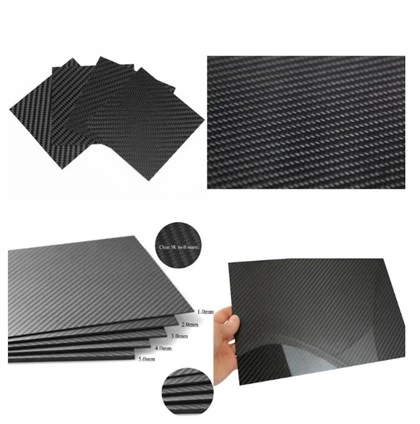
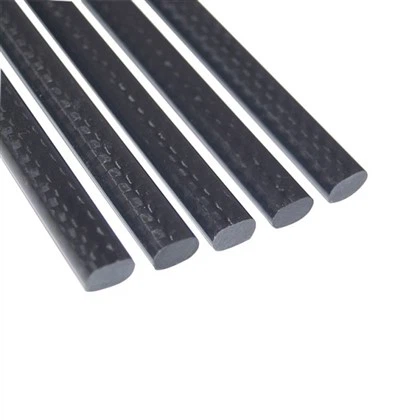
Visual inspection is the primary step in assessing the quality of carbon fiber products. While carbon fiber is often considered an aesthetic symbol due to its unique and recognizable weave texture, from an engineering perspective, these textures directly reflect the structural integrity of the component. High-quality carbon fiber products should exhibit a uniform, precisely aligned weave direction. Any form of twisting or irregularity, often referred to as "fiber washing" or "weave deformation," indicates fiber displacement during resin infusion or vacuum bagging. This is particularly critical because the mechanical properties of carbon fiber are highly dependent on fiber orientation; once the fiber direction deviates from the designed load path, the component's load-bearing efficiency and overall performance will inevitably decrease significantly.
Surface finish is also a crucial factor in judging the quality of carbon fiber products. During the evaluation process, the focus should be on checking for defects such as pinholes, resin-rich areas, or insufficient resin areas. Pinholes typically appear as tiny air bubbles on the surface, often stemming from air trapping or improper vacuum pressure control. Resin-rich areas appear as locally thick, near-glassy deposits, reflecting an imbalance in the fiber-to-resin ratio. For high-performance carbon fiber components, the ideal fiber volume fraction (Vf) should generally be controlled between 55% and 65%. Excessive resin content only increases structural weight without providing a corresponding increase in strength, while insufficient resin weakens the effective constraint on the fibers, making them more prone to premature failure under pressure conditions.
What are the key mechanical properties for evaluating the quality of carbon fiber products?
Beyond surface quality, the true core performance of carbon fiber products lies in their internal mechanical properties. Due to the significant anisotropy of carbon fiber materials, their mechanical performance varies with fiber orientation, necessitating quantitative evaluation through standardized mechanical testing methods. Commonly used key indicators include tensile strength, tensile modulus (i.e., stiffness), and interlaminar shear strength (ILSS). For a product to be considered "high-performance," its test results must meet the performance thresholds corresponding to the fiber grade used, such as the specified range for standard modulus or medium modulus fibers.
Tensile strength reflects the maximum stress a material can withstand under tensile load. For aerospace-grade carbon fiber products, this value is typically higher than 3,500 MPa. However, strength alone is insufficient to fully measure quality; elastic modulus is equally crucial. High-modulus carbon fibers provide extremely high structural stiffness, which is particularly critical for applications highly sensitive to deformation, such as satellite deployment arms and precision robots. If actual products exhibit "softness" or bendability that does not conform to design specifications during use or testing, it often indicates a low fiber grade or an unreasonable layup design and sequence (interlayer alignment).
Another crucial indicator that cannot be ignored is the glass transition temperature of the resin matrix. In practical applications, the durability and structural stability of carbon fiber products are often limited by the critical temperature at which the resin begins to soften. High-quality epoxy resin systems using autoclave processes can typically exceed 180 °C, maintaining stable performance under high thermal loads. Conversely, if lower-cost polyester resins or low-grade epoxy systems are used in the manufacturing process, components may experience warping, deformation, or a significant decrease in stiffness in moderate-temperature environments-such as the hood area of a car exposed to sunlight for extended periods. Therefore, in mechanical property evaluation, thermal stability testing and interfacial bonding performance testing between the fiber and the resin matrix must be included to ensure that the composite material continues to exert its structural strength and reliability as a whole during application.
Comparison of mechanical properties of carbon fiber product quality grades
| Fiber Type | Tensile Strength (MPa) | Tensile Modulus (GPa) | Typical Application | Carbon Fiber Product Quality Level |
| Standard Modulus (T300/T700) | 3,500 - 4,900 | 230 - 240 | Sporting goods, Automotive | Industrial Standard |
| Intermediate Modulus (IM7/IM8) | 5,500 - 6,000 | 270 - 300 | Aerospace Primary Structures | High Performance |
| High Modulus (M40J/M55J) | 4,000 - 4,500 | 370 - 540 | Satellites, Precision Instruments | Ultra-High Grade |
Which certification standards are most important for the quality of carbon fiber products?
Judging the quality of carbon fiber products requires an understanding and recognition of international standards. Performance claims lacking authoritative certification support often remain at the marketing level and are difficult to use as a basis for engineering decisions. Among numerous standards, aerospace-grade carbon fiber certification is widely recognized as the most stringent and authoritative, typically incorporated into the AS9100 quality management system. This system requires complete traceability of the entire process of fiber and resin, from chemical precursors and raw material processing to the final product, ensuring a high degree of consistency and controllability in the manufacturing process. If carbon fiber components are used in the aerospace field or have extremely high safety requirements, they must usually comply with quality management standards such as AS9100 or IATF.
How do manufacturing processes affect the quality of carbon fiber products?
In terms of carbon fiber product quality, "how to manufacture" is just as important as "what to manufacture." There are three main methods: wet layup, vacuum infusion, and prepreg/autoclave molding.
Wet layup is one of the most fundamental molding processes in carbon fiber manufacturing. However, due to the difficulty in precisely controlling resin content and the susceptibility to human error during fiber placement, the quality of the finished product is typically low. While vacuum infusion offers significant cost advantages in the production of exterior and decorative components, it often fails to meet the stringent mechanical performance requirements of structural parts. As an improvement over traditional wet layup, vacuum infusion utilizes atmospheric pressure to uniformly draw resin into the dry fiber preform, which can increase the fiber-to-resin ratio to some extent and effectively reduce porosity. However, even with these improvements, its performance ceiling remains limited.
In the field of high-performance carbon fiber manufacturing, prepreg combined with autoclave curing remains considered the gold standard for quality control. "Prepreg" refers to the precise proportion of resin pre-impregnated into carbon fibers under controlled conditions, ensuring consistency in resin content and distribution from the outset. Subsequently, the laid-up components are cured in an autoclave. An autoclave is essentially a sealed device that simultaneously applies high temperature and high pressure, maximizing the elimination of micropores and ensuring that each layup is fully dense and uniformly cured.
In carbon fiber product quality assessment, "porosity" is a key hidden danger affecting performance. Components cured in an autoclave typically have a porosity controlled below 1%, while wet-laid products can have a porosity as high as 5% or even higher. These pores become stress concentration sources, easily inducing cracks and leading to premature structural failure. Therefore, understanding the manufacturing process itself is an effective way to quickly assess the quality of carbon fiber products. If a product is explicitly labeled "autoclave cured," it usually means that it has higher mechanical reliability and a better strength-to-weight ratio, meeting the manufacturing requirements for high-performance carbon fiber products.
Conclusion
For buyers or engineers, the core objective is to obtain "objective evidence of quality." This means that when selecting or applying carbon fiber components, they should proactively request material testing reports, authoritative certification marks, and understand the manufacturing process. Based on this reliable technical evidence, users can ensure that the carbon fiber materials they possess truly possess the design performance and safety guarantees, allowing this advanced composite material, hailed as "black gold," to be applied in modern engineering and realize its due value.
Contact us
Dongguan Julitech Composite Materials Technology Co., Ltd. is a high-performance carbon fiber products manufacturer from China. Located at No. 5, Chuangxin Road, Shitanpu, Dongguan City, Guangdong Province, China, the company covers an area of 10,300 square meters and has over 100 employees. It boasts 11 tube winding production lines and multiple autoclaves. We guarantee our quality, having passed international quality certifications such as SGS, ISO9001, REACH, and TUV. We are a well-known brand in the Chinese industry and cooperate with many listed companies. Welcome to visit our factory in China. Contact us via WhatsApp: +86 18822947075 or email: sales18@julitech.cn.
References
ASTM International: Standard Test Method for Tensile Properties of Polymer Matrix Composite Materials (D3039/D3039M).
Hexcel Corporation: Composite Materials Selection Guide and Technical Data Sheets (T300, IM7 Series).
ISO (International Organization for Standardization): ISO 14125: Fiber-reinforced plastic composites - Determination of flexural properties.