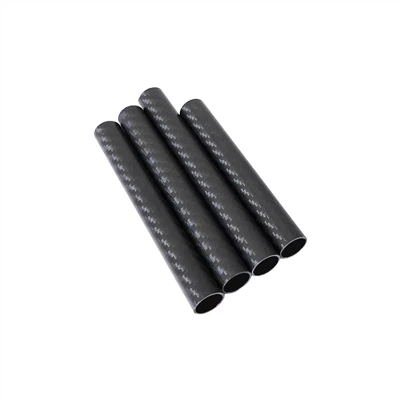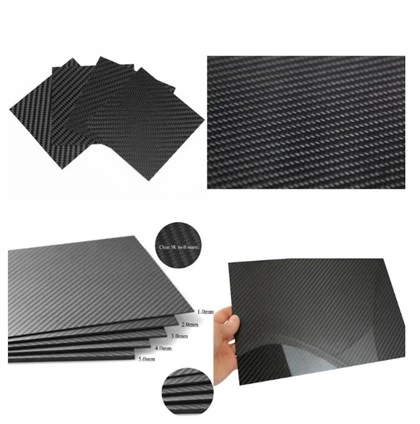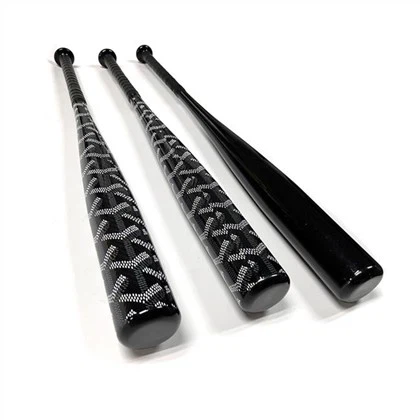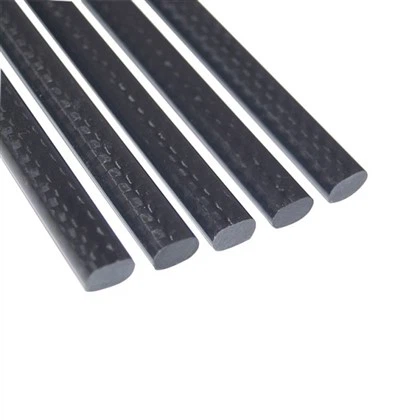
When it comes to materials that combine remarkable durability with featherlight properties, carbon fiber flat bars stand out as a stellar choice. But what makes them so exceptional? The answer lies in their tensile strength - a measure of how much pulling force a material can withstand before breaking. In the case of carbon fiber flat bars, this strength often exceeds 700 MPa (megapascals), far surpassing many traditional materials like steel or aluminum, while maintaining a fraction of the weight. This extraordinary resilience, paired with their adaptability, positions them as a go-to solution across industries, from aerospace to sporting goods. Let's dive deeper into why this matters and how it shapes their performance.
Unpacking the Science Behind Carbon Fiber Flat Bars
What Exactly Are Carbon Fiber Flat Bars?
Carbon fiber flat bars are composite materials crafted from carbon fibers embedded in a polymer matrix, typically epoxy. These fibers, thinner than a human hair, are woven or aligned in precise patterns to maximize strength and stiffness. Through advanced manufacturing processes like pultrusion or molding - expertly executed by companies like Dongguan Juli Composite Materials Technology Co., Ltd. - these bars achieve unparalleled structural integrity. Their sleek, flat design makes them ideal for applications requiring rigidity without bulk, such as structural supports or reinforcement components. Understanding their composition is key to appreciating why they excel in demanding environments.
The Mechanics of Tensile Strength
Tensile strength measures a material's ability to resist breaking under tension. For carbon fiber flat bars, this property is a result of the carbon fibers' molecular structure, where tightly bonded carbon atoms form a crystalline lattice. This arrangement allows the bars to endure immense pulling forces without deforming. Compared to steel, which boasts a tensile strength of around 400–500 MPa, carbon fiber flat bars often exceed 700 MPa, depending on the grade and manufacturing process. This high strength-to-weight ratio means they deliver robust performance without adding unnecessary mass, making them a game-changer in industries where every gram counts.
Why Tensile Strength Matters in Real-World Applications?
The impressive tensile strength of carbon fiber flat bars directly influences their performance in practical scenarios. In aerospace, they reinforce airframes, ensuring safety without compromising fuel efficiency. In automotive engineering, they enhance chassis rigidity while reducing vehicle weight, boosting both speed and economy. Even in sports, equipment like bicycle frames and tennis rackets benefit from this strength, offering athletes precision and power. The ability to withstand tension without snapping or stretching ensures reliability, longevity, and efficiency, cementing their status as a material of choice across diverse sectors.
The High Strength-to-Weight Ratio Advantage
Defining the Strength-to-Weight Ratio
One of the most celebrated attributes of carbon fiber flat bars is their high strength-to-weight ratio. This metric compares a material's strength to its density, highlighting how much load it can bear relative to its mass. Carbon fiber excels here, offering tensile strength comparable to or exceeding that of steel, yet weighing up to five times less. This balance of might and lightness is not just a technical marvel - it's a practical advantage that reshapes design possibilities. Engineers and designers can create structures that are both robust and agile, opening doors to innovation in fields where weight reduction is paramount.
Comparing Carbon Fiber to Traditional Materials
To grasp the significance of this ratio, consider a side-by-side comparison with traditional materials. Steel, while strong, is dense, making it cumbersome in applications where weight is a concern. Aluminum, though lighter, often falls short in tensile strength, requiring thicker sections to achieve similar performance. Carbon fiber flat bars, however, strike a harmonious balance. Their low density - typically around 1.6 g/cm³ compared to steel's 7.8 g/cm³ - paired with exceptional tensile strength, allows for sleeker, more efficient designs. This advantage is why industries like aerospace and motorsports increasingly favor carbon fiber over conventional alternatives.
Impact on Design and Efficiency
The high strength-to-weight ratio of carbon fiber flat bars revolutionizes design and efficiency. In construction, they enable the creation of slender yet sturdy beams, reducing material costs and environmental impact. In renewable energy, wind turbine blades made with carbon fiber composites achieve greater lengths and efficiency without compromising durability. Even in consumer products, such as drones or high-performance bicycles, this ratio translates to enhanced maneuverability and endurance. By minimizing weight while maximizing strength, carbon fiber flat bars empower engineers to push boundaries, delivering solutions that are both sustainable and cutting-edge.
Exploring the Versatile Applications of Carbon Fiber Flat Bars
Aerospace and Defense Innovations
The aerospace and defense sectors are prime beneficiaries of carbon fiber flat bars, thanks to their versatile applications. In aircraft, these bars reinforce critical components like wings and fuselages, where tensile strength and weight savings are non-negotiable. Their resistance to fatigue and corrosion further enhances their suitability for high-altitude, high-stress environments. In defense, carbon fiber composites are used in everything from missile casings to unmanned aerial vehicles, offering stealth and durability. The adaptability of these bars to complex shapes and rigorous performance standards underscores their value in mission-critical operations.
Automotive and Motorsport Excellence
In the automotive world, carbon fiber flat bars are synonymous with performance and efficiency. High-end vehicles and racing cars leverage these bars to strengthen chassis and suspension systems, capitalizing on their high strength-to-weight ratio. This not only improves acceleration and handling but also enhances fuel efficiency - a crucial factor in both consumer and competitive contexts. Beyond structural roles, carbon fiber flat bars are also used in aesthetic components, such as spoilers and interior trims, blending functionality with sleek design. Their ability to endure extreme conditions makes them indispensable in the fast-paced world of motorsports.
Everyday and Industrial Uses
Beyond high-tech industries, carbon fiber flat bars find versatile applications in everyday and industrial settings. In construction, they reinforce concrete structures, offering a lightweight alternative to steel rebar that resists corrosion. In renewable energy, they enhance the efficiency of solar panel frames and wind turbine components. Even in consumer goods, products like fishing rods, camera tripods, and fitness equipment benefit from their durability and portability. The adaptability of carbon fiber flat bars to diverse needs highlights their role as a transformative material, bridging the gap between innovation and practicality.
Conclusion
Carbon fiber flat bars are a testament to the power of advanced materials, blending exceptional tensile strength with a high strength-to-weight ratio and versatile applications. Their ability to withstand immense tension while remaining lightweight makes them invaluable across industries, from aerospace to everyday consumer products. By understanding their science, advantages, and uses, businesses and engineers can harness their potential to drive innovation and efficiency. Dongguan Juli Composite Materials Technology Co., Ltd. continues to lead the charge, crafting top-tier solutions that shape the future of composite technology.
Contact Us
Ready to explore how carbon fiber flat bars can elevate your projects? Contact Dongguan Juli Composite Materials Technology Co., Ltd. today for expert insights and premium products. Reach us at sales18@julitech.cn or via WhatsApp at +86 15989669840.
References
1. Chung, D. D. L. (2010). Composite Materials: Science and Applications. Springer.
2. Soutis, C. (2005). Carbon Fiber Reinforced Plastics in Aircraft Construction. Materials Science and Engineering.
3. Gibson, R. F. (2016). Principles of Composite Material Mechanics. CRC Press.
4. Mallick, P. K. (2007). Fiber-Reinforced Composites: Materials, Manufacturing, and Design. CRC Press.
5. Barbero, E. J. (2017). Introduction to Composite Materials Design. CRC Press.
6. Harris, B. (1999). Engineering Composite Materials. The Institute of Materials.