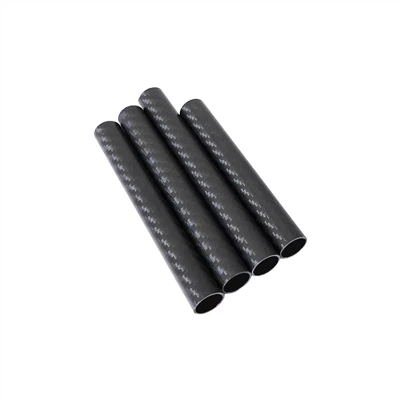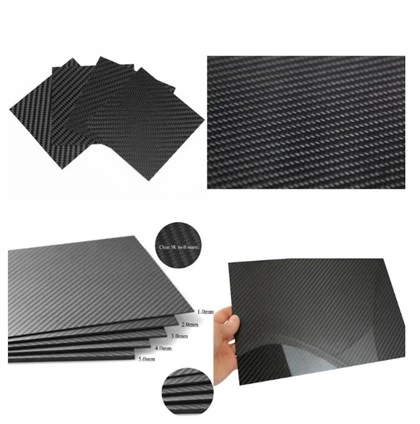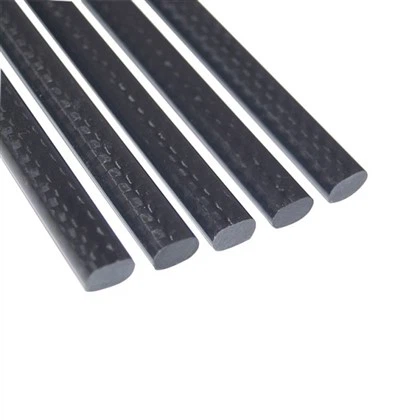
Carbon fiber square tubing is profoundly changing the way DIY enthusiasts create, providing a lightweight yet extremely strong material option for a wide range of creative projects. Whether you're creating custom furniture in your home workshop, assembling a drone frame, or reinforcing structural components, carbon fiber square tubing delivers exceptional performance. This comprehensive tutorial will guide you through the key steps of incorporating carbon fiber square tubing into your projects, from material selection to surface treatment.
What is carbon fiber square tube and its main properties?
Carbon fiber square tubes are a high-performance material composed of carbon fibers and a resin matrix. Their square cross-section contributes to the stability and strength of the overall structure. Their exceptional physical properties make these tubes popular among DIY builders. Their tensile strength can reach up to 3,500 MPa, far exceeding that of most metals, while their density is only approximately 1.6 g/cm³, making them approximately 60% lighter than steel tubes. Furthermore, their stiffness (elastic modulus) typically ranges from 200 to 600 GPa, depending on the fiber orientation. This ensures that carbon fiber square tubes maintain excellent resistance to deformation even under load.
The key to understanding why carbon fiber square tubes are so suitable for DIY projects lies in their unique manufacturing process. These tubes are typically made using pultrusion or winding techniques, with the carbon fiber layers precisely arranged according to a predetermined direction to maximize structural strength. For example, unidirectional fiber laying provides extremely high tensile strength along the length of the tube, while the braided fiber structure further enhances its torsional resistance. As a result, carbon fiber square tubes maintain the dual advantages of stability and lightweight in applications that must withstand dynamic loads, such as bicycle frames and robotic arms.
A major advantage of carbon fiber square tubing for DIY projects is its excellent corrosion resistance, which gives it a significant advantage over rust-prone metal tubing. Furthermore, carbon fiber material has an extremely low coefficient of thermal expansion (CTE), approaching zero, ensuring dimensional stability across varying temperatures. This property is particularly important for outdoor applications, such as garden trellises or solar panel mounts. In these environments, carbon fiber square tubing effectively resists deformation caused by temperature fluctuations and humidity, ensuring long-term structural reliability and aesthetics.
Before you begin working with carbon fiber square tubing, it's important to purchase high-quality material from a reputable supplier. We recommend choosing tubing with a 3K twill weave, as this construction strikes an ideal balance between aesthetics and performance. Its unique twill texture not only creates a more technical aesthetic but also effectively disperses stress, enhancing overall durability. Common specifications range from an outer diameter of 10mm x 10mm to 50mm x 50mm, with wall thicknesses typically ranging from 1–3mm. For first-time DIY enthusiasts, it's recommended to start with smaller tubing sizes to gain experience before gradually expanding to larger projects.
Why choose carbon fiber square tubes over metal alternatives?
Comparing carbon fiber square tubing with aluminum tubing clearly illustrates why more and more DIY enthusiasts are choosing the former. While aluminum tubing offers advantages like lower cost and easier processing, carbon fiber square tubing offers a superior strength-to-weight ratio, typically boasting 5–7 times the strength per unit weight of aluminum. For example, a carbon fiber square tubing of the same size weighs only approximately 30% of an aluminum tube while offering comparable or even greater stiffness, making it a preferred material for weight-sensitive projects like remote-controlled vehicles and portable furniture. Furthermore, carbon fiber square tubes exhibit excellent fatigue resistance, capable of withstanding millions of cyclic loads without structural failure. Metal materials, on the other hand, are more susceptible to cracking or breaking under prolonged, repeated stress. For this reason, carbon fiber square tubes offer unparalleled advantages in DIY applications where lightweighting and durability are paramount.
How to choose the right carbon fiber square tube for your DIY project?
When selecting the right carbon fiber square tube, the key is to conduct a comprehensive assessment based on the specific needs of the project, including factors such as load-bearing capacity, dimensional requirements, and the operating environment. First, the required mechanical properties should be clearly defined. For example, for high-stress applications such as furniture supports or structural frames, it is recommended to choose square tubes made of high-modulus carbon fiber (such as Toray T700), which can achieve a tensile strength exceeding 4,900 MPa and provide excellent load-bearing performance while maintaining lightweight.
In terms of fiber weave, plain-weave carbon fiber square tubes offer a more balanced strength and stiffness, while twill weaves enhance flexibility and impact resistance, making them more suitable for projects with complex shapes or requiring a certain degree of bending. For projects that prioritize visual impact, such as custom lighting fixtures or decorative art structures, square tubes with a high-gloss finish can enhance the overall texture and aesthetics.
Size selection is equally important. Based on precise measurements of the build space, ensure the inner diameter of the square tubing you choose will align well with the fitting. Common wall thicknesses range from 0.5 mm to 5 mm, with thicker walls typically used for high-load or structural applications.
Budget is also an important consideration in decision-making. The price of entry-level carbon fiber square tubes is approximately $10–$30 per foot, while high-end models using high-quality epoxy resin matrices, which offer better mechanical properties and appearance quality, may cost over $50 per foot. By comprehensively considering these factors, you can select the most cost-effective and high-performance carbon fiber square tubes for your DIY project. Finally, the most important thing is to check the manufacturer's ISO 9001 and other certifications to ensure quality.
What safety precautions should I take when working with carbon fiber square tubing?
When working with carbon fiber square tubes, it's crucial to observe proper safety precautions to avoid potential health risks from carbon fiber dust and resin. Cutting or sanding carbon fiber creates fine dust particles that can irritate the respiratory tract, so always wear an N95 mask or respirator with a HEPA filter. Cut-resistant gloves can prevent sharp fibers from piercing the skin, while goggles can effectively protect the eyes from flying particles. When cutting, ensure you work in a well-ventilated environment or use a dust extraction and exhaust system to reduce airborne dust concentrations. To prevent ingestion of contaminants, avoid eating and drinking in the work area. If epoxy resins are required for bonding or surface treatment, always wear chemical-resistant gloves and a protective apron, as epoxy resins may cause allergic reactions or skin irritation.
After work is completed, tools and the work area should be thoroughly cleaned. Carbon fiber dust and waste should be sealed in bags and disposed of according to hazardous waste standards to avoid secondary contamination caused by careless disposal. If carbon fiber dust or resin accidentally comes into contact with the affected area, wash it immediately with soap and water.
By strictly adhering to these safety guidelines, you can use carbon fiber square tubing safely and effectively in your DIY projects, maintaining excellent performance while minimizing health and environmental risks.
How to cut and shape carbon fiber square tubes?
Safely and accurately cutting carbon fiber square tubing requires following a series of standard steps and using the appropriate tools. First, choose the correct cutting equipment: diamond-coated or carbide-tipped saw blades are recommended to reduce the risk of material chipping or delamination during cutting. Before cutting, use masking tape to mark the cut location; this not only aids positioning but also reduces edge wear. Secure the square tubing in a vise with soft jaws to prevent surface scratching or deformation.
During operation, cut at a low speed (recommended: less than 3,000 RPM) to avoid delamination or softening of the resin due to overheating. If conditions permit, wet cutting can be used to suppress dust dispersion and reduce temperatures through water cooling. After cutting, if further adjustment of the edge is required, use a file or sandpaper, gradually refining the sandpaper from 80 grit to 400 grit to achieve a smooth edge.
To ensure long-term durability, the edges should be sealed with epoxy after cutting to prevent moisture from seeping in or loosening the fibers. Before formal operation, it is recommended to practice on scrap material to familiarize yourself with the tool characteristics and cutting feel.
By following this step-by-step approach, you'll not only improve your cutting accuracy but also achieve a clean, professional finish while ensuring safety.
What are the common applications of carbon fiber square tubes in DIY projects?
Carbon fiber square tubes are widely used in many fields due to their light weight, high strength, corrosion resistance and beautiful appearance. In the aerospace field, it is often used in drone frames, arms, light aircraft structures and satellite support parts, and can maintain high rigidity and dimensional stability in extreme environments; in the automotive and racing fields, carbon fiber square tubes are used as frame reinforcement, suspension support, roll cages and interior modification parts, which not only reduce the weight of the vehicle, but also improve safety and handling performance; in industrial equipment and machinery manufacturing, it is often used in automation equipment arms, slides, brackets and robot structures, which can maintain stability and precision in high-speed movement; in unmanned systems and electronic equipment, carbon fiber square tubes are used for drone brackets, optoelectronics Equipment brackets, camera slides and stabilizers to achieve lightweight and portability; in sports and leisure equipment, such as ski poles, trekking poles, fishing rods, bicycle parts and fitness equipment, carbon fiber square tubes can reduce the burden on users and improve durability; in the field of construction and structural engineering, it can be used for building reinforcement, exhibition display frames, bridges and tunnel internal supports, and has excellent fatigue resistance and corrosion resistance; in addition, scientific research, education and personalized creative fields also widely use carbon fiber square tubes for experimental device brackets, teaching demonstration equipment, furniture, lamps and art installations, which are both functional and aesthetic. It can be seen that carbon fiber square tubes are ideal materials for achieving lightweight, high strength and high-end appearance in many industries such as aviation, automobiles, industry, sports, construction, scientific research and innovative design.
Contact us
We are a carbon fiber product manufacturer from China. If you need to choose the right carbon fiber square tube, please contact us. We have 20 years of industry experience and our quality also complies with ISO-9001 standards. You don't have to worry about quality. You are also welcome to visit our factory. Please contact us through the following contact information: Email: sales18@julitech.cn or WhatsApp: +86 18822947075