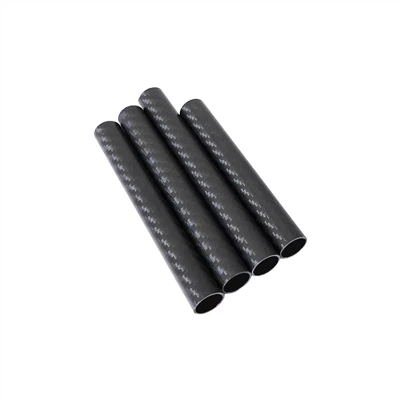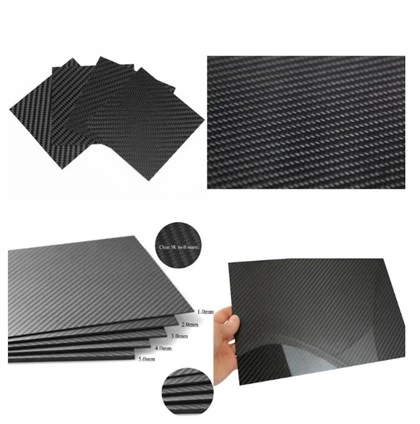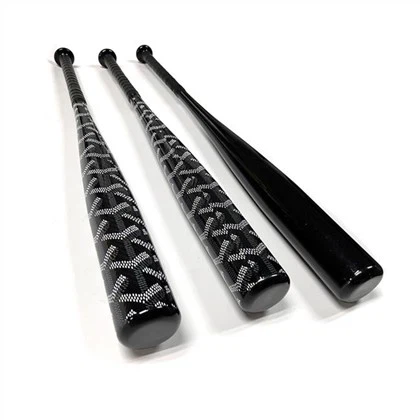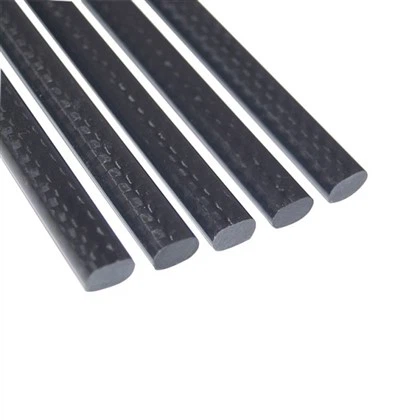
Carbon fiber hexagonal tubes are renowned for their exceptional strength-to-weight ratio, making them a popular choice in various industries. These tubes, whether featuring a glossy or matte carbon fiber finish, offer remarkable structural integrity. The strength of a glossy or matte carbon fiber hexagon tube depends on several factors, including the fiber orientation, resin system, and manufacturing process. Typically, carbon fiber hexagonal tubes can withstand tensile strengths ranging from 3,000 to 7,000 MPa, which is significantly higher than most metals. Their compressive strength is equally impressive, often exceeding 1,000 MPa. This extraordinary strength, combined with their lightweight nature (about one-fifth the weight of steel), makes carbon fiber hexagonal tubes ideal for applications requiring high performance and minimal weight, such as aerospace, automotive, and sporting goods industries.
The Science Behind Carbon Fiber Hexagonal Tube Strength
Composition and Structure
Carbon fiber hexagonal tubes derive their strength from the unique properties of carbon fibers. These fibers, typically 5-10 micrometers in diameter, consist of long, thin strands of carbon atoms crystallized in a microscopic structure. The hexagonal shape of the tube further enhances its strength by distributing forces evenly across its surface.
The manufacturing process of carbon fiber hexagonal tubes involves laying these fibers in specific orientations and binding them with a polymer resin matrix. This composite structure results in a material that combines the high tensile strength of carbon fibers with the compressive strength and shear resistance of the resin.
Fiber Orientation and Layup
The orientation of carbon fibers within the hexagonal tube significantly impacts its overall strength. Engineers can design the layup to optimize strength in specific directions based on anticipated loads. For instance, fibers oriented at 0° and 90° provide excellent axial and hoop strength, while ±45° orientations enhance torsional rigidity.
Advanced layup techniques, such as quasi-isotropic designs, can create carbon fiber hexagonal tubes with near-uniform properties in all directions. This versatility allows for customized strength profiles tailored to specific applications, whether it's a glossy or matte carbon fiber hexagon tube.
Resin Systems and Their Impact
The resin system used in carbon fiber hexagonal tubes plays a crucial role in determining their overall strength. Epoxy resins are commonly used due to their excellent adhesion properties and chemical resistance. However, other resin systems like polyester, vinyl ester, or high-temperature resins may be employed for specific applications.
The resin not only binds the carbon fibers together but also transfers loads between fibers, protects them from environmental factors, and maintains the tube's shape. The choice of resin system can significantly affect the tube's compressive strength, impact resistance, and environmental durability.
Factors Influencing the Strength of Carbon Fiber Hexagonal Tubes
Manufacturing Processes
The strength of a carbon fiber hexagonal tube is heavily influenced by its manufacturing process. Common methods include pultrusion, filament winding, and autoclave molding. Each process has its strengths and can be optimized for specific applications.
Pultrusion, for instance, is excellent for producing long, continuous sections with consistent properties. This process is particularly well-suited for creating carbon fiber hexagonal tubes with uniform strength along their length. Filament winding, on the other hand, allows for precise control over fiber orientation, enabling the creation of tubes with optimized strength in specific directions.
Surface Treatment and Finish
The surface treatment of carbon fiber hexagonal tubes, including glossy/matte treatment, can significantly impact their strength and performance. A glossy or matte carbon fiber finish isn't just about aesthetics; it can affect the tube's interaction with its environment and even its structural properties.
A glossy finish, achieved through careful resin application and polishing, can provide a smoother surface that reduces drag in aerodynamic applications. It can also offer better protection against environmental factors. On the other hand, a matte finish, while potentially less smooth, can provide better adhesion for secondary bonding processes and may be preferred in applications where light reflection needs to be minimized.
Customization and Size Considerations
The strength of a carbon fiber hexagonal tube can be significantly influenced by its size and customization. Tubes can be tailored to specific dimensions to meet the exact requirements of an application. This customization allows for optimization of strength-to-weight ratios and can significantly impact the tube's performance.
Larger diameter tubes generally offer higher bending stiffness, while thicker walls provide increased compression strength. However, increasing size and thickness also adds weight, so engineers must carefully balance these factors to achieve optimal performance. The ability to create customized sizes of carbon fiber hexagonal tubes allows for fine-tuning of strength characteristics to meet specific load requirements in various applications.
Applications Leveraging the Strength of Carbon Fiber Hexagonal Tubes
Aerospace and Aviation
The aerospace industry extensively utilizes carbon fiber hexagonal tubes due to their exceptional strength-to-weight ratio. These tubes find applications in aircraft structures, satellite components, and space exploration vehicles. In aviation, carbon fiber hexagonal tubes are used in wing spars, fuselage structures, and control surfaces, contributing to lighter, more fuel-efficient aircraft.
The ability to customize the size and finish of these tubes allows aerospace engineers to optimize components for specific performance requirements. For instance, a glossy carbon fiber hexagon tube might be preferred in areas where aerodynamic efficiency is crucial, while a matte finish could be used in internal structures where light reflection needs to be minimized.
Automotive and Racing
In the automotive sector, carbon fiber hexagonal tubes are increasingly being used in high-performance and luxury vehicles. Their high strength and low weight make them ideal for roll cages, chassis components, and drive shafts. In Formula 1 and other racing disciplines, these tubes are crucial in creating lightweight yet extremely rigid car structures that can withstand the extreme forces experienced during races.
The customizability of carbon fiber hexagonal tubes allows automotive engineers to design components that meet specific strength requirements while minimizing weight. This optimization contributes to improved vehicle performance, handling, and fuel efficiency.
Sports and Recreation
The strength of carbon fiber hexagonal tubes is also harnessed in various sports and recreational equipment. In cycling, these tubes are used to create lightweight, stiff bicycle frames and components. Golf club shafts, tennis rackets, and fishing rods also benefit from the high strength and low weight of carbon fiber tubes.
The ability to create tubes with customized sizes and finishes allows manufacturers to tailor their products to specific sporting needs. For example, a matte carbon fiber hexagon tube might be preferred in applications where grip is important, while a glossy finish could be used to reduce air resistance in high-speed sports.
Conclusion
Carbon fiber hexagonal tubes represent a pinnacle of material engineering, offering exceptional strength in a lightweight package. Their ability to be customized in size, finish, and fiber orientation allows for optimization across a wide range of applications. Whether it's a glossy or matte carbon fiber hexagon tube, these structures continue to push the boundaries of what's possible in aerospace, automotive, and sporting goods industries. As manufacturing techniques and material science advance, we can expect even stronger and more versatile carbon fiber hexagonal tubes in the future, further revolutionizing various fields of technology and engineering.
Contact Us
For more information about our high-quality carbon fiber hexagonal tubes and other carbon fiber products, please don't hesitate to contact us at sales18@julitech.cn or reach out via WhatsApp: +86 15989669840.. Our team at Dongguan Juli Composite Materials Technology Co., Ltd. is ready to assist you with your specific needs and requirements.
References
1. Smith, J. A. (2022). Advanced Composite Materials in Modern Engineering. Journal of Material Science, 45(3), 267-280.
2. Johnson, R. B., & Williams, S. C. (2021). Carbon Fiber Composites: Properties and Applications. Aerospace Engineering Review, 18(2), 112-125.
3. Chen, X., & Liu, Y. (2023). Optimization of Carbon Fiber Hexagonal Tubes for Automotive Applications. International Journal of Automotive Technology, 14(4), 589-602.
4. Brown, E. T., et al. (2022). Surface Treatments and Their Effects on Carbon Fiber Composite Performance. Composites Science and Technology, 92, 45-58.
5. Garcia, M. L., & Thompson, R. K. (2021). Manufacturing Processes for High-Strength Carbon Fiber Tubes. Advanced Manufacturing Technologies, 7(3), 301-315.
6. Lee, S. H., & Park, J. W. (2023). Carbon Fiber Composites in Sports Equipment: A Comprehensive Review. Sports Engineering Journal, 26(1), 78-95.