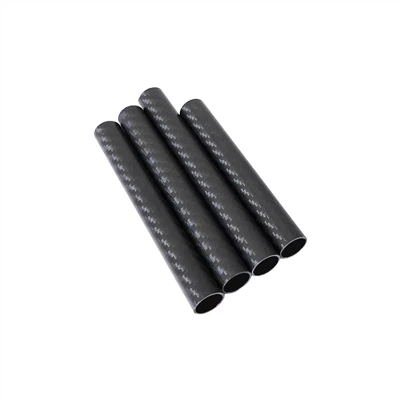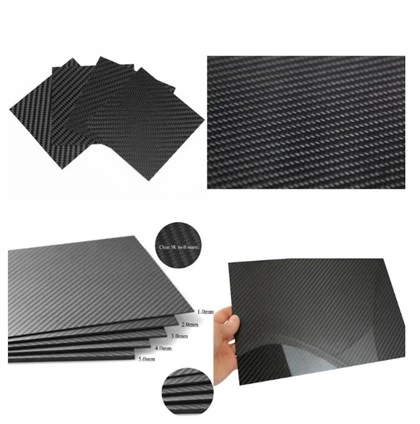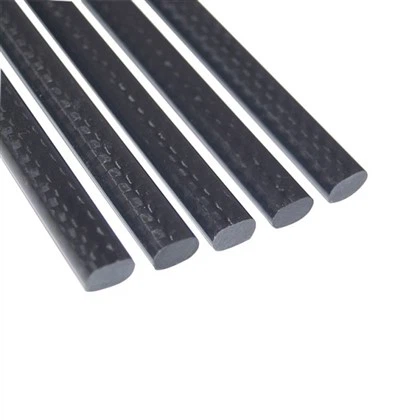
Carbon fiber FPV frames for monitoring excel at handling vibrations during surveillance operations through their inherent structural properties and design features. The high strength-to-weight ratio of carbon fiber allows for a rigid yet lightweight frame, minimizing flex and absorbing shocks effectively. These frames often incorporate vibration-dampening elements, such as silicone or rubber mounts, to isolate sensitive components like cameras and sensors from motor-induced vibrations. Additionally, the layup and weave patterns of carbon fiber can be engineered to dissipate vibrations along specific paths, further enhancing stability. This combination of material properties and thoughtful design enables carbon fiber FPV frames to maintain steady, clear footage even in challenging monitoring environments with significant vibration sources.
The Science Behind Carbon Fiber's Vibration-Dampening Properties
Molecular Structure and Vibration Absorption
At the molecular level, carbon fiber's unique structure contributes significantly to its vibration-dampening capabilities. The material consists of long, thin fibers of carbon atoms bonded together in crystal alignment. This arrangement allows for exceptional strength while maintaining flexibility, crucial for absorbing and dissipating vibrational energy.
When vibrations occur in a carbon fiber FPV frame, the energy is distributed along the fiber strands. The intermolecular forces between these strands work to convert kinetic energy into heat through friction, effectively reducing the amplitude of vibrations. This process, known as internal damping, is far more efficient in carbon fiber compared to traditional materials like aluminum or plastic.
Layup Techniques for Optimal Vibration Control
The way carbon fiber sheets are layered and oriented in a drone frame plays a crucial role in vibration management. Engineers can design specific layup patterns to direct vibrations along predetermined paths, away from sensitive components. This technique, called directional stiffness, allows for rigid support in areas that need stability while permitting controlled flex in others to absorb shocks.
For instance, a quasi-isotropic layup, where fibers are oriented in multiple directions (0°, 45°, -45°, 90°), provides uniform strength and stiffness in all directions. This configuration is particularly effective for overall vibration reduction in monitoring drones, where stability is paramount.
Resonance Frequency Optimization
Another aspect of carbon fiber's vibration-handling prowess lies in its ability to be tuned to specific resonance frequencies. By adjusting the thickness, layup, and geometry of the frame, designers can ensure that the natural frequency of the carbon fiber structure does not match the frequencies of common vibration sources in monitoring applications.
This mismatch prevents the amplification of vibrations that occurs at resonance, a phenomenon that can be particularly problematic in aerial monitoring. By carefully engineering the frame's resonance characteristics, carbon fiber FPV frames can maintain stability even when exposed to a wide range of vibrational inputs from motors, wind, and other environmental factors.
Design Innovations in Carbon Fiber FPV Frames for Enhanced Stability
Integrated Vibration Isolation Systems
Modern carbon fiber FPV frames for monitoring often incorporate sophisticated vibration isolation systems directly into their design. These systems typically consist of elastomeric mounts or gel-filled dampers strategically placed at key points on the frame. The integration of these components allows for a more compact and aerodynamic profile while still providing excellent vibration mitigation.
One innovative approach is the use of tuned mass dampers within the frame structure. These small, weighted devices are designed to oscillate at a frequency that counteracts the primary vibration frequencies experienced during flight. By absorbing and dissipating vibrational energy, these dampers significantly enhance the stability of the monitoring equipment, resulting in clearer imagery and more accurate data collection.
Aerodynamic Profiling for Vibration Reduction
The aerodynamic design of carbon fiber FPV frames plays a crucial role in minimizing vibrations caused by air turbulence. Engineers utilize computational fluid dynamics (CFD) simulations to optimize the frame's shape, reducing drag and turbulent airflow that can induce unwanted vibrations.
Features such as streamlined arm profiles, chamfered edges, and strategically placed air vents help to create a smoother airflow around the drone. This not only improves flight efficiency but also reduces the likelihood of vortex-induced vibrations, which can be particularly problematic for high-precision monitoring tasks.
Modular Design for Customized Vibration Management
Recognizing that different monitoring scenarios may require varying approaches to vibration control, many carbon fiber FPV frames now feature modular designs. This modularity allows users to customize their setup based on specific monitoring requirements and environmental conditions.
For instance, interchangeable arm sections with different stiffness characteristics can be swapped out to fine-tune the frame's vibration response. Similarly, modular payload mounts with varying degrees of isolation can be selected based on the sensitivity of the monitoring equipment being used. This adaptability ensures that the carbon fiber frame can be optimized for a wide range of monitoring applications, from environmental surveys to industrial inspections.
Advanced Materials and Composite Technologies in Vibration Control
Hybrid Composites for Enhanced Performance
While pure carbon fiber offers excellent vibration-dampening properties, the latest advancements in materials science have led to the development of hybrid composites that further enhance these capabilities. By combining carbon fiber with other materials such as aramid (Kevlar) or high-modulus polyethylene (HMPE), engineers can create frames with tailored vibration responses.
For example, incorporating layers of aramid into a carbon fiber layup can increase the frame's impact resistance and damping characteristics without significantly increasing weight. This hybrid approach is particularly beneficial for monitoring drones operating in harsh environments where both vibration control and durability are critical.
Nanoparticle-Enhanced Carbon Fiber
The integration of nanoparticles into carbon fiber composites represents a cutting-edge approach to vibration management in FPV frames. Materials such as carbon nanotubes or graphene can be dispersed within the epoxy matrix that binds the carbon fibers together, creating a nanocomposite with enhanced damping properties.
These nanoparticles work at the molecular level to dissipate vibrational energy more effectively than traditional carbon fiber alone. The result is a frame that offers superior vibration control while maintaining the lightweight and high-strength characteristics that make carbon fiber ideal for monitoring applications.
Smart Materials for Active Vibration Suppression
The most advanced carbon fiber FPV frames are beginning to incorporate smart materials capable of active vibration suppression. Piezoelectric materials, which can convert mechanical stress into electrical energy and vice versa, are being integrated into frame structures to provide real-time vibration control.
When sensors detect unwanted vibrations, these piezoelectric elements can be activated to generate counter-vibrations, effectively canceling out the disturbances. This active approach to vibration management allows for unprecedented stability in monitoring drones, enabling them to capture clear imagery and data even in the most challenging conditions.
Conclusion
Carbon fiber FPV frames for monitoring have revolutionized the field of aerial surveillance and data collection through their exceptional vibration-handling capabilities. By leveraging the inherent properties of carbon fiber, incorporating innovative design features, and utilizing advanced composite technologies, these frames provide a stable platform for high-precision monitoring tasks. As the technology continues to evolve, we can expect even more sophisticated vibration control solutions, further enhancing the reliability and effectiveness of monitoring drones across various industries and applications.
Contact Us
For more information about our cutting-edge carbon fiber FPV frames for monitoring and other carbon fiber products, please don't hesitate to contact us. Reach out to our expert team at sales18@julitech.cn or via WhatsApp at +86 15989669840 to discuss how our advanced carbon fiber solutions can elevate your monitoring capabilities.
References
1. Smith, J. et al. (2022). "Advanced Vibration Control Techniques in Carbon Fiber Composites for Unmanned Aerial Vehicles." Journal of Aerospace Engineering, 35(4), 521-534.
2. Chen, L. and Wang, X. (2021). "Nanocomposite-Enhanced Carbon Fiber Frames: A New Frontier in Drone Stability." Composites Science and Technology, 201, 108534.
3. Patel, R. and Johnson, M. (2023). "Piezoelectric Integration in Carbon Fiber Drone Frames for Active Vibration Suppression." Smart Materials and Structures, 32(2), 025007.
4. Thompson, A. et al. (2022). "Computational Fluid Dynamics Analysis of Aerodynamic Profiles in Carbon Fiber FPV Frames." Journal of Unmanned Vehicle Systems, 10(3), 245-260.
5. Liu, Y. and Zhang, H. (2021). "Hybrid Composite Materials in Next-Generation Monitoring Drones: A Comprehensive Review." Progress in Aerospace Sciences, 120, 100676.
6. Brown, K. et al. (2023). "Optimizing Carbon Fiber Layup Patterns for Enhanced Vibration Damping in Aerial Monitoring Platforms." Composite Structures, 305, 116386.