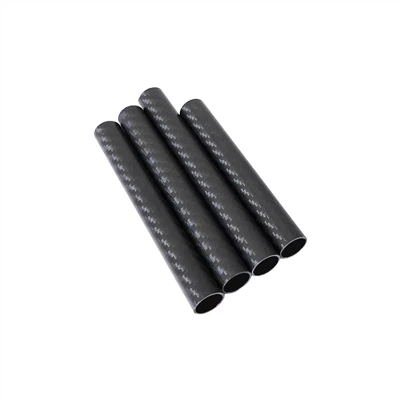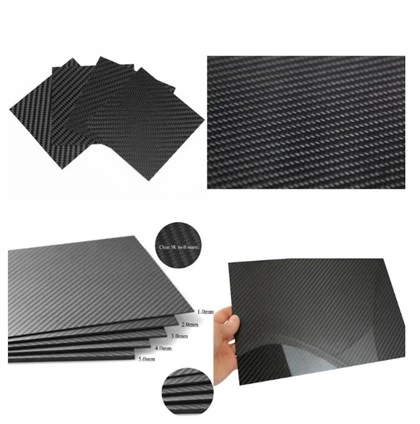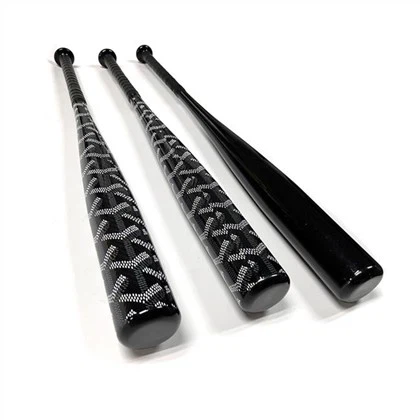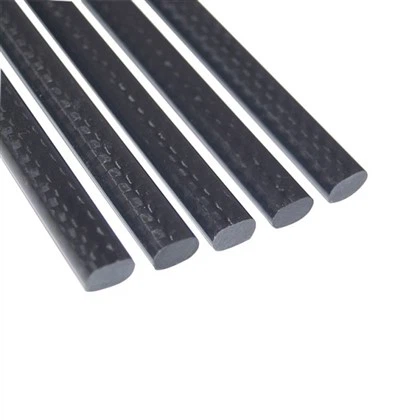
For many years, a common misconception has existed in the manufacturing and engineering industries: that carbon fiber tubing is limited to niche, high-end fields such as aerospace and Formula 1 racing. This view is not only outdated and lacks technical basis, but it is also severely out of touch with current industrial applications. In fact, carbon fiber tubing has now developed into a highly versatile mainstream engineering material, widely used in numerous industries including robotics, medical devices, new energy, sports equipment, industrial automation, shipbuilding, and consumer electronics.
This misconception stems primarily from the inherent association between carbon fiber composites and high-cost aerospace projects in the 1970s and 80s. With continuous iterations in pultrusion, fiber winding, coil winding, resin transfer molding (RTM), and automated composite manufacturing processes, the mass production capacity and widespread adoption of carbon fiber tubing have significantly improved. Today, specialized manufacturers can customize carbon fiber tubing with different modulus grades, fiber arrangement angles, and resin systems to fully adapt to various complex working conditions and application scenarios.
Why do people think that carbon fiber tubing lacks versatility?
The misconception that carbon fiber tubing is only for specific industries stems primarily from the following three historical factors:
Early aerospace exclusivity
High manufacturing costs in the past
Limited understanding of composite materials engineering
In the early stages of carbon fiber commercialization, aerospace companies dominated its consumption due to their need for extremely high stiffness-to-weight ratios. At the time, the costs of precursor materials and autoclave processing were prohibitively expensive for mainstream manufacturing.
However, the composite materials industry has undergone significant technological changes over the past two decades. Today, the production of carbon fiber tubing utilizes scalable industrial processes, including:
| Manufacturing Process | Typical Application | Cost Efficiency | Production Scale |
| Pultrusion | Industrial structures | High | Mass production |
| Filament Winding | Pressure vessels & pipes | Medium-High | Large scale |
| Roll Wrapping | Precision tubing | Medium | Custom production |
| Compression Molding | Automotive parts | High | High volume |
| Resin Transfer Molding (RTM) | Structural components | Medium | Automated manufacturing |
These advancements in manufacturing technology have significantly lowered the barriers to entry for industries that previously relied on aluminum or steel tubing.
Are carbon fiber tubing only used in the aerospace field?
Absolutely not. While aerospace remains a major market, the real growth in carbon fiber tubing is happening outside the aerospace industry. Modern industry has an increasing demand for lightweight structures, which must possess high stiffness and dimensional stability. This is precisely where carbon fiber tubing excels.
Industrial automation and robotics
Industrial robots are one of the fastest-growing application areas for carbon fiber tubing. Lightweight carbon fiber tubing used in industrial automation is already widely used in robotic arm equipment. With its significant weight reduction advantages, it effectively reduces motion inertia, enabling faster start-stop response, improved repeatability, and simultaneously reducing motor energy consumption and optimizing structural vibration damping performance. In high-speed pick-and-place robotic equipment, replacing traditional aluminum tubing with carbon fiber tubing can maintain excellent structural rigidity, significantly shorten the work cycle, and greatly improve overall work efficiency.
Manufacturing of drones and unmanned aerial vehicles
The drone industry relies heavily on high-strength carbon fiber tubing. Drones have stringent comprehensive performance requirements for structural components: lightweight, impact resistance, high torsional stiffness, and fatigue resistance. Carbon fiber has excellent high specific modulus properties, making it an ideal material for multi-rotor arms, landing gear, and overall aircraft structural frames.
Carbon fiber tubing is becoming increasingly common in medical devices
Transmission X-ray imaging stage Surgical robotic arm prosthesis rehabilitation equipment mobile device.
Carbon fiber composites have low X-ray attenuation, which means that imaging equipment can operate with minimal interference.
Sporting goods and consumer products
Carbon fiber tubes are widely used in modern sports equipment, including: Bicycle frame Fishing rod Trekking poles Hockey sticks Paddle sports equipment Golf clubs.
The misconception that carbon fiber is only in aerospace ignores the fact that composite tubing technology is used in millions of consumer products today.
Are carbon fiber tubing too expensive for general industrial use?
Historically, the production cost of carbon fiber has indeed been high, which to some extent limited its early widespread application. However, with industry development, the emergence of economies of scale and the maturity of automated production technologies have significantly broken down the price barrier of carbon fiber, making its cost gradually more reasonable and adaptable to more industrial scenarios. Specifically, the core drivers of carbon fiber cost reduction and their industry impact are as follows:
1.Large-tow carbon fiber production effectively reduces raw material procurement and processing costs, laying the foundation for large-scale application.
2.Automated winding systems reduce reliance on manual labor, lower labor costs, and simultaneously improve production efficiency and product consistency.
3.Improved resin chemical properties shorten product curing cycles, increase production speed, and indirectly reduce unit product production costs.
4.Large-scale industrial applications generate significant economies of scale, further reducing production, R&D, and supply chain costs.
5.
The expansion of the global supply chain has increased the supply of carbon fiber, alleviated the supply-demand imbalance, and driven market prices toward stability and reasonableness.
Conclusion
The view that carbon fiber tubing is limited to specific industries is technically inaccurate and increasingly outdated. Modern carbon fiber tubing has become a fundamental material in fields such as industrial automation, medical engineering, robotics, drones, renewable energy, transportation, sporting goods, and advanced manufacturing.
Contact Us
If you're looking to use carbon fiber tubing to enhance your project, please contact us for assistance. We are a manufacturer specializing in carbon fiber products from China, with 20 years of industry experience. As a manufacturer, we guarantee quality and offer fast delivery. You can contact us via email at sales18@julitech.cn.