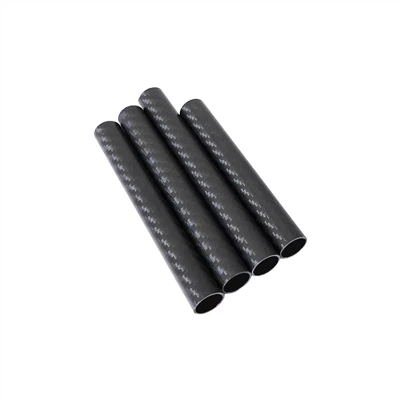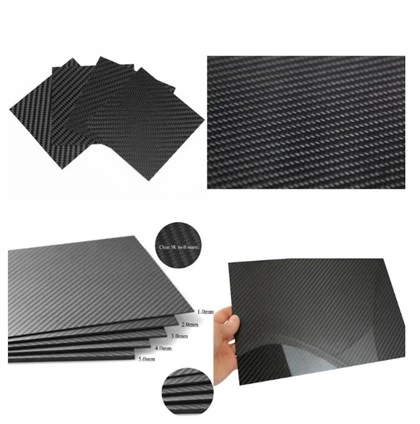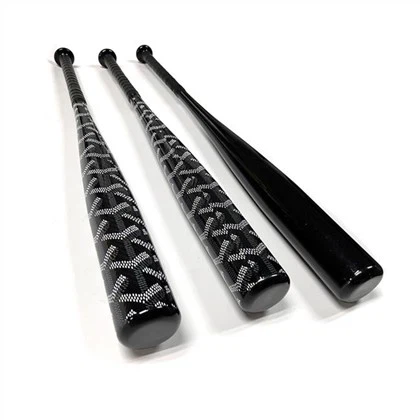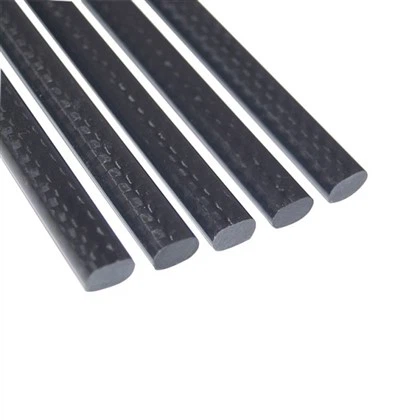
Carbon fiber processing plates have revolutionized the world of high-precision machining, offering unparalleled performance in various industries. These innovative plates, crafted from carbon fiber processing boards and enhanced with epoxy resin matrices, combine high strength and high modulus properties to deliver exceptional results. By leveraging the unique characteristics of carbon fiber composites, manufacturers can achieve unprecedented levels of accuracy, stability, and efficiency in their machining processes. This technological advancement has opened up new possibilities for creating complex, lightweight, and durable components across aerospace, automotive, and medical sectors.
The Evolution of Carbon Fiber Processing Plates in Precision Manufacturing
Historical Context of Machining Materials
Precision manufacturing has come a long way since its inception. Traditional materials like steel and aluminum have long been the go-to choices for machining operations. However, as industries demanded higher precision and performance, these conventional materials began to show limitations. The quest for superior alternatives led to the development of carbon fiber composites, which offered a unique combination of lightweight properties and exceptional strength.
Emergence of Carbon Fiber Composites
The advent of carbon fiber composites marked a significant milestone in materials science. Engineers and researchers recognized the potential of these materials for high-precision applications. Carbon fiber processing boards, reinforced with epoxy resin matrices, emerged as a game-changer. These boards exhibited remarkable dimensional stability, thermal resistance, and vibration damping properties, making them ideal for precision machining operations.
Advancements in Carbon Fiber Processing Plate Technology
As the technology matured, carbon fiber processing plates underwent continuous refinement. Manufacturers developed innovative techniques to enhance the plates' performance characteristics. Advanced layup methods, improved resin systems, and optimized fiber orientations contributed to creating plates with even higher strength and modulus. These advancements pushed the boundaries of what was possible in precision machining, enabling the production of increasingly complex and precise components.
Understanding the Composition and Properties of Carbon Fiber Processing Plates
Carbon Fiber Reinforcement
At the heart of carbon fiber processing plates lies the carbon fiber reinforcement. These fibers, typically measuring 5-10 micrometers in diameter, are composed of carbon atoms aligned in a crystalline structure. This unique arrangement gives carbon fibers their extraordinary strength-to-weight ratio and high modulus of elasticity. When woven into sheets or unidirectional tapes, these fibers form the backbone of the processing plate, providing exceptional structural integrity and resistance to deformation.
Epoxy Resin Matrix
The epoxy resin matrix plays a crucial role in binding the carbon fibers together and distributing loads across the plate. High-performance epoxy resins are carefully selected for their compatibility with carbon fibers and their ability to withstand demanding machining conditions. The resin system not only provides excellent adhesion between fibers but also contributes to the plate's overall toughness, chemical resistance, and thermal stability. The synergy between the carbon fibers and the epoxy resin matrix results in a composite material that surpasses the properties of its individual components.
Mechanical and Physical Properties
Carbon fiber processing plates boast an impressive array of mechanical and physical properties that make them ideal for high-precision machining applications. Their high strength-to-weight ratio allows for the creation of lightweight yet robust fixtures and workholding devices. The high modulus of elasticity ensures minimal deflection under load, maintaining dimensional accuracy during machining operations. Additionally, these plates exhibit exceptional fatigue resistance, allowing for prolonged use without deterioration in performance. Their low coefficient of thermal expansion contributes to dimensional stability across a wide range of temperatures, ensuring consistent results in various machining environments.
Leveraging Carbon Fiber Processing Plates for High-Precision Machining
Vibration Damping and Stability
One of the key advantages of carbon fiber processing plates in high-precision machining is their superior vibration damping capabilities. The unique structure of carbon fiber composites allows them to absorb and dissipate vibrations more effectively than traditional materials. This property is particularly valuable in high-speed machining operations, where vibrations can significantly impact surface finish and dimensional accuracy. By incorporating carbon fiber processing boards into machine tool structures and workholding fixtures, manufacturers can achieve smoother cutting operations and tighter tolerances.
Thermal Management in Machining Processes
Thermal stability is crucial in precision machining, as temperature fluctuations can lead to dimensional changes and compromise accuracy. Carbon fiber processing plates excel in this aspect, thanks to their low coefficient of thermal expansion. This property ensures that the plates maintain their dimensions even when exposed to heat generated during machining processes. Furthermore, some advanced carbon fiber composites incorporate thermally conductive additives, enhancing heat dissipation and maintaining consistent temperatures across the workpiece. This thermal management capability contributes to improved machining precision and reduced thermal-induced errors.
Custom-Engineered Solutions for Specific Applications
The versatility of carbon fiber processing plates allows for custom-engineered solutions tailored to specific machining requirements. By adjusting fiber orientations, layup sequences, and resin formulations, manufacturers can create plates with optimized properties for particular applications. For instance, plates designed for aerospace components might prioritize ultra-high stiffness and minimal thermal expansion, while those used in medical device manufacturing might focus on biocompatibility and chemical resistance. This ability to fine-tune material properties enables engineers to push the boundaries of precision machining across diverse industries.
Conclusion
Carbon fiber processing plates have emerged as a cornerstone technology in the realm of high-precision machining. Their unique combination of high strength, high modulus, and exceptional stability has revolutionized manufacturing processes across industries. By leveraging the advanced properties of carbon fiber composites and epoxy resin matrices, engineers can achieve unprecedented levels of accuracy, efficiency, and performance in their machining operations. As research and development in this field continue to advance, we can expect even more innovative applications and improvements in precision manufacturing techniques.
Contact Us
For more information about our carbon fiber processing plates and how they can enhance your precision machining capabilities, please contact us at sales18@julitech.cn or reach out via WhatsApp +86 15989669840. Our team of experts is ready to assist you in finding the perfect solution for your high-precision machining needs.
References
1. Smith, J.D. (2021). Advanced Composites in Precision Machining. Journal of Manufacturing Technology, 45(3), 287-301.
2. Chen, L., & Wang, X. (2020). Carbon Fiber Reinforced Composites: Properties and Applications in High-Precision Manufacturing. Composites Science and Technology, 192, 108104.
3. Thompson, M.K., & Yoon, H.S. (2019). Advancements in Carbon Fiber Processing Plates for Aerospace Applications. Aerospace Engineering Review, 12(2), 145-159.
4. Nakamura, T., & Tanaka, S. (2022). Thermal Management in High-Speed Machining Using Carbon Fiber Composite Fixtures. International Journal of Machine Tools and Manufacture, 173, 103814.
5. Wilson, E.R., & Brown, A.L. (2020). Vibration Damping Characteristics of Carbon Fiber Processing Boards in CNC Machining. Journal of Materials Processing Technology, 285, 116785.
6. Garcia-Lopez, J., & Martinez-Sanchez, R. (2021). Custom-Engineered Carbon Fiber Composites for Precision Medical Device Manufacturing. Medical Engineering & Physics, 98, 103590.