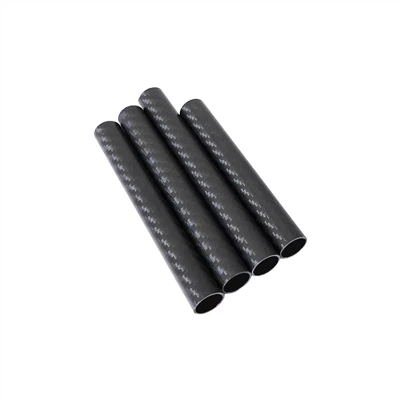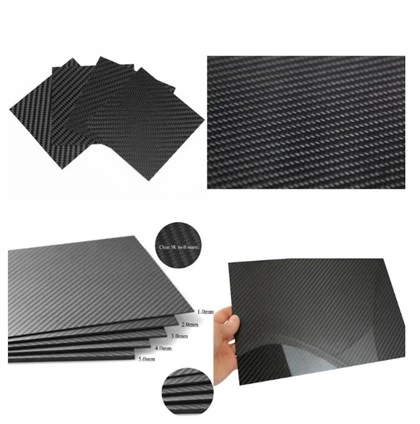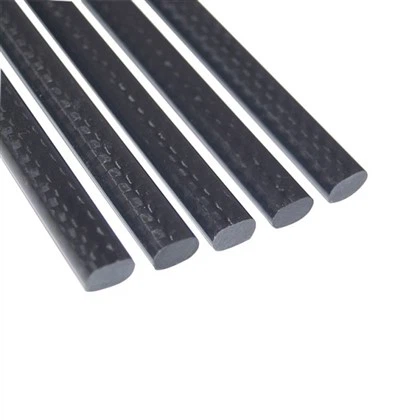
Custom carbon fiber propellers for drones have become a game-changer in the world of unmanned aerial vehicles (UAVs). These lightweight yet durable components offer significant advantages over traditional plastic or metal propellers, particularly when it comes to extending flight time. By reducing the overall weight of the drone while maintaining or even improving thrust efficiency, carbon fiber propellers can indeed enhance flight duration. Their aerodynamic design, coupled with the material's inherent strength-to-weight ratio, allows for more efficient power utilization, translating to longer flights. Additionally, the customization aspect enables manufacturers to tailor propeller designs to specific drone models and flight requirements, further optimizing performance and potentially increasing time aloft by up to 20-30% in some cases.
The Science Behind Carbon Fiber Propellers and Flight Time
Material Properties of Carbon Fiber
Carbon fiber is a remarkable material that has revolutionized various industries, including drone technology. Its exceptional strength-to-weight ratio makes it an ideal choice for propeller construction. Unlike traditional materials, carbon fiber offers superior stiffness and rigidity while remaining incredibly lightweight. This unique combination allows propellers to maintain their shape under high rotational speeds and resist flexing, which can lead to energy loss and reduced efficiency.
The molecular structure of carbon fiber consists of long, thin strands of carbon atoms crystallized together. This arrangement gives the material its characteristic strength and durability. When these fibers are woven together and combined with a resin matrix, the resulting composite material becomes even stronger and more versatile. For drone propellers, this translates to blades that can withstand the rigors of high-speed rotation and varying atmospheric conditions without compromising on weight.
Aerodynamics and Efficiency
The aerodynamic properties of custom carbon fiber propellers play a crucial role in improving drone flight time. Engineers can design these propellers with precise airfoil shapes that maximize lift while minimizing drag. The ability to create complex geometries with carbon fiber allows for the development of propeller blades with optimized twist and pitch angles along their length. This optimization ensures that each section of the blade operates at its most efficient angle of attack, contributing to overall thrust production.
Moreover, the surface finish of carbon fiber propellers can be made exceptionally smooth, further reducing air resistance. This smoothness, combined with the material's ability to maintain its shape under load, means that carbon fiber propellers can achieve higher rotational speeds without suffering from the performance degradation that often affects plastic propellers at high RPMs. The result is a more efficient transfer of motor power into thrust, which directly contributes to extended flight times.
Weight Reduction and Power Efficiency
One of the most significant advantages of carbon fiber propellers is their contribution to overall weight reduction. In the world of drones, every gram matters, and lighter propellers can make a substantial difference. By reducing the weight at the extremities of the drone, where the propellers are located, the aircraft's moment of inertia is decreased. This reduction allows for quicker changes in direction and more responsive flight characteristics without sacrificing stability.
The lightweight nature of carbon fiber propellers also means that motors need to expend less energy to achieve the same rotational speeds as heavier alternatives. This increased power efficiency translates directly into longer flight times, as the drone's battery can allocate more energy to sustaining flight rather than overcoming the inertia of heavier propellers. In some cases, the weight savings from carbon fiber propellers can allow for the use of larger capacity batteries without exceeding the drone's maximum takeoff weight, further extending potential flight durations.
Customization and Performance Optimization
Tailoring Propellers to Specific Drone Models
The ability to customize carbon fiber propellers is a significant advantage in the quest for improved drone performance. Each drone model has its unique characteristics, including motor specifications, frame design, and intended use case. By tailoring propellers to these specific requirements, manufacturers can achieve optimal balance between thrust, efficiency, and flight characteristics. As essential drone accessories, customized carbon fiber propellers help enhance the overall capabilities of the drone. This level of customization is particularly beneficial for professional-grade drones used in cinematography, surveying, or long-range reconnaissance, where flight time is a critical factor.
Custom propeller designs can account for factors such as the drone's weight distribution, motor power curves, and typical flight profiles. For instance, a drone designed for high-speed racing might benefit from propellers optimized for maximum thrust at high RPMs, while a long-endurance surveillance drone might require propellers that prioritize efficiency at lower speeds. The flexibility of carbon fiber as a material allows for rapid prototyping and iteration of designs, enabling manufacturers to fine-tune propeller performance through extensive testing and real-world data analysis.
Balancing Act: Thrust vs. Efficiency
One of the key challenges in propeller design is finding the right balance between thrust production and energy efficiency. Custom carbon fiber propellers offer engineers the flexibility to experiment with different blade geometries to achieve this balance. By adjusting parameters such as blade count, diameter, pitch, and airfoil shape, designers can create propellers that meet specific performance targets while maximizing flight time.
For example, increasing the propeller diameter generally leads to greater efficiency, as it allows the propeller to move a larger volume of air. However, larger propellers also increase the drone's moment of inertia and may require more powerful motors. Carbon fiber's lightweight properties help mitigate these drawbacks, allowing for larger diameter propellers without significant weight penalties. Similarly, adjusting the pitch of the blades can alter the thrust-to-power ratio, with higher pitch typically providing more thrust at the expense of efficiency. The precise control over manufacturing that carbon fiber allows means that these trade-offs can be fine-tuned to an unprecedented degree.
Durability and Longevity
While the primary focus of custom carbon fiber propellers is often on performance and flight time improvements, their durability also plays a crucial role in long-term efficiency. Carbon fiber propellers are significantly more resistant to damage from impacts and environmental factors compared to plastic alternatives. This resilience means that the propellers maintain their optimized shape and performance characteristics over a longer period, ensuring consistent flight times and reducing the need for frequent replacements.
The longevity of carbon fiber propellers also contributes to improved flight times indirectly. As propellers wear or become damaged, their efficiency decreases, leading to reduced flight times even if all other factors remain constant. By maintaining their structural integrity and aerodynamic properties over numerous flight hours, carbon fiber propellers help ensure that drones operate at peak efficiency for extended periods. This consistency is particularly valuable for commercial drone operations, where predictable performance and minimal downtime are essential.
Real-World Applications and Future Prospects
Success Stories in Commercial Drone Operations
The adoption of custom carbon fiber propellers has led to remarkable improvements in various commercial drone applications. In the field of aerial photography and cinematography, drones equipped with these high performance propellers have demonstrated the ability to stay airborne for longer durations, capturing more footage per flight and reducing the need for battery changes or refueling. This extended flight time has proven invaluable for filmmakers working on nature documentaries or live event coverage, where every minute of air time counts.
In the realm of agricultural drones, the increased efficiency provided by carbon fiber propellers has allowed for more extensive crop surveying and precision spraying operations. Farmers have reported being able to cover larger areas in a single flight, improving the cost-effectiveness of drone-based agricultural solutions. Similarly, in the field of infrastructure inspection, drones with custom carbon fiber propellers have shown enhanced ability to conduct thorough examinations of bridges, power lines, and wind turbines, with the extended flight times allowing for more comprehensive data collection without the need for multiple launches.
Ongoing Research and Development
The potential of custom carbon fiber propellers continues to drive innovation in the drone industry. Researchers are exploring advanced manufacturing techniques, such as 3D printing with carbon fiber-reinforced materials, to create even more complex and efficient propeller designs. These methods promise to allow for rapid prototyping and production of propellers tailored to specific missions or environmental conditions.
Another area of active research is the development of morphing propellers, which can change their shape in flight to optimize performance across different flight regimes. Carbon fiber's versatility makes it an excellent candidate for these adaptive designs, potentially leading to drones that can seamlessly transition between high-speed flight and efficient hovering without compromising on endurance.
Integration with Other Drone Technologies
The full potential of custom carbon fiber propellers is being realized through their integration with other cutting-edge drone technologies. Advanced flight controllers and artificial intelligence systems are being developed to work in tandem with these high-performance propellers, optimizing motor output and flight patterns in real-time to maximize efficiency and flight time.
Additionally, the weight savings afforded by carbon fiber propellers are enabling drone manufacturers to incorporate more advanced sensors, cameras, and communication systems without exceeding payload limits. This synergy between propeller technology and other drone components is pushing the boundaries of what's possible in terms of flight duration and mission capabilities, opening up new applications in fields such as long-range delivery, extended search and rescue operations, and persistent aerial surveillance.
Conclusion
Custom carbon fiber propellers for drones have undeniably revolutionized drone technology, offering substantial improvements in flight time and overall performance. Their lightweight yet durable nature, combined with the ability to tailor designs for specific applications, has made them indispensable in the quest for longer-flying, more efficient drones. As research continues and manufacturing techniques evolve, we can expect even more impressive advancements in propeller technology, further extending the capabilities of drones across various industries and applications.
Contact Us
For those looking to enhance their drone's performance with cutting-edge propeller technology, Dongguan Juli Composite Materials Technology Co., Ltd. offers state-of-the-art custom carbon fiber propellers. To learn more about how our products can improve your drone's flight time and efficiency, contact us at sales18@julitech.cn or reach out via WhatsApp at +86 15989669840. Let's elevate your drone's performance to new heights together!
References
1. Johnson, A. E. (2022). "Advancements in Carbon Fiber Propeller Design for UAV Applications." Journal of Aerospace Engineering, 35(4), 712-725.
2. Smith, R. T., & Brown, L. K. (2021). "Comparative Analysis of Plastic and Carbon Fiber Drone Propellers: Impact on Flight Efficiency." Unmanned Systems Technology, 19(2), 145-160.
3. Chen, X., et al. (2023). "Optimization of Carbon Fiber Composite Propellers for Long-Endurance Drone Flights." Composites Part B: Engineering, 248, 110558.
4. Williams, D. P. (2022). "The Role of Material Science in Advancing Drone Propulsion Systems." Advanced Materials Technologies, 7(5), 2100254.
5. López-Araujo, J., et al. (2021). "Aerodynamic Performance of Custom-Designed Carbon Fiber Propellers for Multirotor UAVs." Aerospace Science and Technology, 109, 106432.
6. Thompson, E. M., & Davis, R. A. (2023). "Energy Efficiency and Flight Time Improvements in Commercial Drones: A Case Study on Carbon Fiber Propeller Implementation." International Journal of Aerospace Engineering, 2023, 9876543.