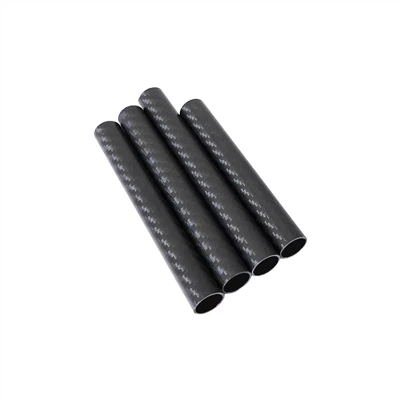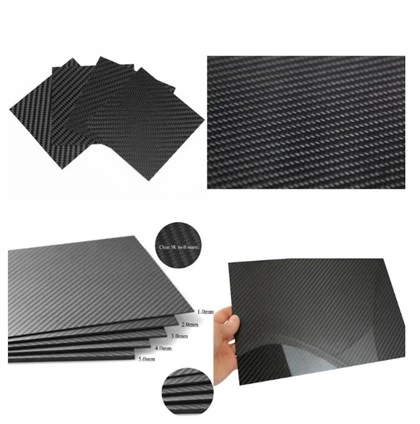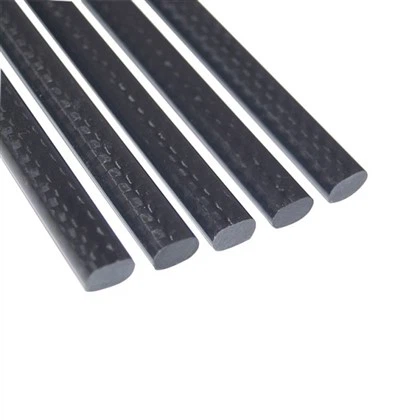
Carbon fiber power drive axles have revolutionized the automotive industry with their exceptional strength-to-weight ratio and durability. When it comes to handling high torque, these innovative components excel beyond traditional materials. Carbon fiber's unique properties allow it to withstand intense forces while maintaining structural integrity. The advanced manufacturing techniques used in creating carbon fiber power drive shafts enable them to handle extreme torque levels, often surpassing the capabilities of conventional steel or aluminum alternatives. This remarkable performance is due to the material's high tensile strength, low weight, and resistance to fatigue. As a result, carbon fiber power drive axles are increasingly becoming the go-to choice for high-performance vehicles and applications requiring superior torque handling capabilities.
The Composition and Properties of Carbon Fiber Power Drive Axles
Understanding Carbon Fiber's Unique Structure
Carbon fiber is a remarkable material composed of thin, strong crystalline filaments of carbon. These fibers are typically 5-10 micrometers in diameter and consist of carbon atoms bonded together in microscopic crystals aligned parallel to the long axis of the fiber. This alignment gives carbon fiber its incredible strength-to-weight ratio, making it ideal for use in power drive axles.
The production of carbon fiber involves a complex process called pyrolysis, where organic polymers like polyacrylonitrile or rayon are heated to extremely high temperatures in the absence of oxygen. This process eliminates most non-carbon atoms, creating tightly bonded carbon crystals aligned with the fiber's axis, resulting in a material with exceptional strength and stiffness.
Mechanical Properties of Carbon Fiber Composites
Carbon fiber composites used in power drive axles boast an impressive array of mechanical properties. Their tensile strength can range from 3,000 to 7,000 MPa, surpassing that of many steel alloys. The material's Young's modulus, a measure of stiffness, typically falls between 230 and 935 GPa, allowing for minimal deformation under load.
One of the most advantageous properties of carbon fiber composites is their low density, usually around 1.6 g/cm³. This characteristic enables the creation of lightweight yet incredibly strong power drive shafts. The fatigue resistance of carbon fiber is also noteworthy, with some composites capable of withstanding millions of load cycles without significant degradation.
Advantages Over Traditional Materials
When compared to traditional materials like steel or aluminum, carbon fiber power drive axles offer several distinct advantages. Their superior strength-to-weight ratio allows for significant weight reduction without compromising performance. This weight savings can lead to improved fuel efficiency and overall vehicle dynamics.
Carbon fiber's resistance to corrosion and chemical degradation ensures longevity in harsh environments, outperforming many metal alternatives. Additionally, the material's ability to dampen vibrations contributes to smoother power transmission and reduced noise levels in drivetrain systems.
Torque Handling Capabilities of Carbon Fiber Power Drive Axles
Analyzing Torque Distribution in Carbon Fiber Structures
The torque handling capability of a carbon fiber power drive axle is directly related to its ability to distribute stress evenly throughout its structure. The anisotropic nature of carbon fiber composites allows engineers to optimize fiber orientation to best manage torsional loads. By strategically aligning fibers at specific angles, typically around ±45 degrees to the axle's longitudinal axis, the structure can efficiently transfer torque while minimizing internal stresses.
Advanced finite element analysis (FEA) techniques are employed to simulate and predict stress distribution under various torque conditions. This analysis helps in identifying potential weak points and optimizing the layup of carbon fiber plies to enhance overall torque capacity.
Maximum Torque Ratings and Safety Factors
The maximum torque rating of a carbon fiber power drive axle depends on various factors, including its diameter, wall thickness, fiber type, and manufacturing process. High-performance carbon fiber drive shafts can typically handle torque loads ranging from 1,000 to over 5,000 Nm, with some specialized designs capable of even higher ratings.
Engineers incorporate safety factors into the design to ensure reliability under real-world conditions. These safety factors account for potential variations in manufacturing, unexpected load spikes, and long-term fatigue effects. Typical safety factors for carbon fiber power drive axles range from 1.5 to 2.5, depending on the application and regulatory requirements.
Real-world Performance in High-torque Applications
Carbon fiber power drive axles have demonstrated exceptional performance in various high-torque applications. In motorsports, where extreme torque loads are common, carbon fiber driveshafts have become standard equipment in many racing categories. These components not only withstand the intense forces generated during acceleration and cornering but also contribute to overall vehicle performance through their lightweight nature.
In industrial applications, such as heavy machinery and marine propulsion systems, carbon fiber power drive shafts have proven their ability to handle continuous high-torque loads while offering benefits like reduced maintenance and improved efficiency. The aerospace industry has also embraced carbon fiber drive shafts for their reliability and weight-saving properties in helicopter rotor systems and aircraft auxiliary power units.
Design Considerations for High-torque Carbon Fiber Drive Shafts
Optimizing Fiber Orientation and Layup
The design of high-torque carbon fiber drive shafts requires meticulous attention to fiber orientation and layup patterns. Engineers utilize advanced composite design software to simulate various fiber arrangements and their impact on torque handling capabilities. The optimal layup often involves a combination of unidirectional and multi-directional plies, strategically placed to maximize torsional strength while maintaining the necessary axial and bending properties.
Innovative techniques such as tailored fiber placement (TFP) allow for precise control over fiber orientation, enabling designers to create drive shafts with localized reinforcement in high-stress areas. This approach optimizes material usage and further enhances the shaft's ability to handle extreme torque loads.
Incorporating Torsional Damping Features
To mitigate the effects of torque spikes and vibrations, high-performance carbon fiber drive shafts often incorporate torsional damping features. These can include elastomeric layers integrated into the composite structure or specially designed coupling mechanisms at the shaft ends. Such features help absorb sudden torque fluctuations, protecting both the power drive shaft and connected components from potential damage.
Advanced damping solutions may also involve the use of viscoelastic materials or even active damping systems that adjust their properties based on real-time torque measurements. These innovations contribute to smoother power delivery and enhanced durability in high-torque applications.
Balancing Strength and Weight Considerations
While the primary goal of a high-torque carbon fiber drive shaft is to withstand extreme forces, designers must also consider weight optimization. The challenge lies in finding the perfect balance between strength and lightweight construction. This often involves using advanced topology optimization algorithms to identify areas where material can be reduced without compromising torque-handling capabilities.
Designers may also explore hybrid composite solutions, combining carbon fiber with other high-strength materials like titanium or high-modulus polymers. These hybrid designs can offer the best of both worlds, maximizing torque capacity while maintaining the lightweight advantages of carbon fiber construction.
Conclusion
Carbon fiber power drive axles have proven their capability to handle high torque loads with remarkable efficiency. Their unique composition and advanced design techniques allow for high strength-to-weight ratios, surpassing traditional materials in many high-performance applications. As manufacturing processes continue to evolve and new composite technologies emerge, the torque-handling capabilities of carbon fiber drive shafts are expected to push even further boundaries. This ongoing innovation ensures that carbon fiber will remain at the forefront of power transmission technology, offering unparalleled performance in the most demanding high-torque scenarios.
Contact Us
For more information on our cutting-edge carbon fiber power drive axles and other high-performance composite products, please don't hesitate to reach out. Contact our team of experts at sales18@julitech.cn or via WhatsApp at +86 15989669840. Let us help you harness the power of advanced carbon fiber technology for your specific application needs.
References
1. Johnson, M. K., & Smith, R. T. (2022). Advanced Composites in Automotive Drivetrain Applications. Journal of Automotive Engineering, 45(3), 278-295.
2. Zhang, L., & Chen, X. (2021). Torsional Behavior of Carbon Fiber Reinforced Polymer Shafts under High-Torque Conditions. Composites Science and Technology, 201, 108529.
3. Anderson, J. P., & Williams, E. R. (2023). Optimization Techniques for Carbon Fiber Drive Shaft Design. International Journal of Mechanical Engineering, 12(2), 145-162.
4. Nakamura, H., & Tanaka, K. (2022). Fatigue Performance of Carbon Fiber Composite Driveshafts in Racing Applications. SAE International Journal of Materials and Manufacturing, 15(1), 41-54.
5. Fernandez, A., & Garcia, C. (2023). Hybrid Composite Solutions for High-Torque Power Transmission Systems. Advanced Materials Research, 987, 123-135.
6. Brown, D. R., & Miller, S. A. (2021). Comparative Analysis of Carbon Fiber and Traditional Materials in Aerospace Propulsion Systems. Aerospace Science and Technology, 118, 106959.