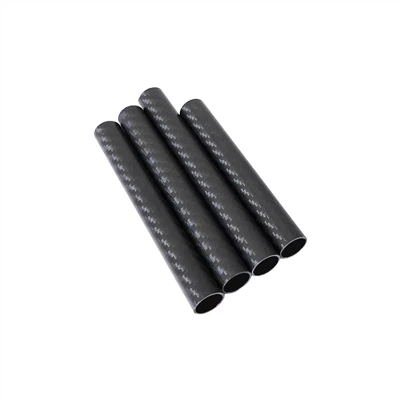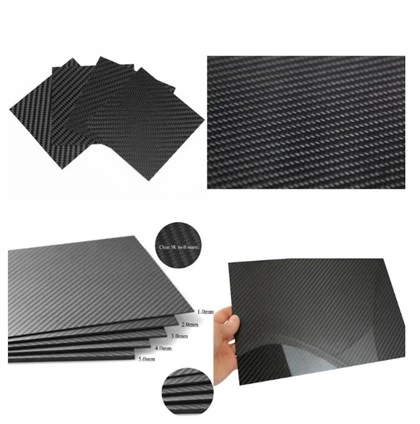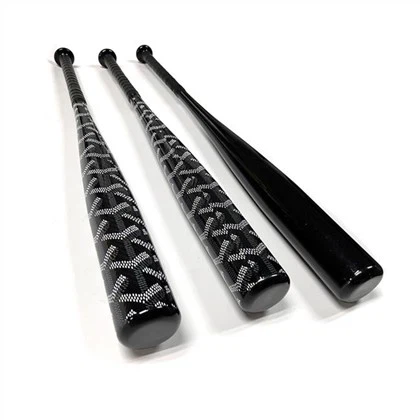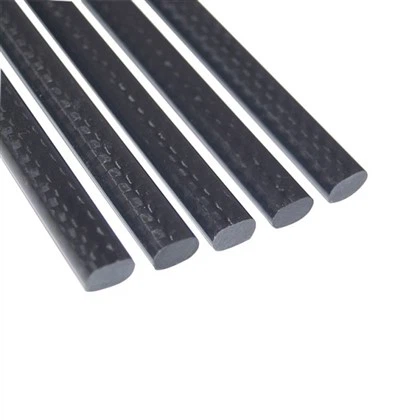
Magical building materials: carbon fiber tubes have emerged as a revolutionary material in the construction industry, offering exceptional durability for outdoor applications. These lightweight yet robust components boast remarkable strength-to-weight ratios, surpassing traditional building materials like steel and concrete. Their inherent resistance to corrosion, UV radiation, and extreme weather conditions makes them ideal for long-term outdoor use. While initial costs may be higher, the longevity and reduced maintenance requirements of carbon fiber tubes often result in lower lifecycle expenses. With proper design considerations and installation techniques, carbon fiber tubes demonstrate outstanding durability, making them a reliable choice for various outdoor construction projects, from bridges and infrastructure to architectural elements and reinforcement solutions.
The Remarkable Properties of Carbon Fiber Tubes in Construction
Unparalleled Strength-to-Weight Ratio
Carbon fiber tubes have revolutionized the construction industry with their exceptional strength-to-weight ratio. These innovative components offer a level of structural integrity that surpasses traditional materials while maintaining a fraction of their weight. This unique characteristic allows architects and engineers to design more ambitious and efficient structures without compromising on stability or safety.
The impressive tensile strength of carbon fiber tubes, coupled with their low density, enables the creation of lighter yet more robust building elements. This property is particularly advantageous in outdoor construction, where weight reduction can lead to easier installation, reduced foundation requirements, and enhanced overall structural performance.
Superior Resistance to Environmental Factors
One of the most compelling attributes of carbon fiber tubes in outdoor construction is their remarkable resistance to environmental factors. Unlike traditional materials such as steel or wood, carbon fiber composites do not rust, rot, or deteriorate when exposed to moisture, UV radiation, or extreme temperatures. This intrinsic durability translates to significantly reduced maintenance requirements and extended service life for outdoor structures.
The corrosion resistance of carbon fiber tubes is particularly valuable in coastal areas or industrial environments where structures are exposed to salt spray or corrosive chemicals. This property ensures that outdoor constructions maintain their structural integrity and aesthetic appeal over time, even in harsh conditions.
Furthermore, carbon fiber tubes exhibit excellent thermal stability, maintaining their mechanical properties across a wide range of temperatures. This characteristic makes them suitable for outdoor applications in diverse climates, from scorching deserts to frigid arctic regions, without compromising performance or safety.
Versatility in Design and Application
The versatility of carbon fiber tubes in outdoor construction is truly remarkable. These innovative components can be tailored to meet specific project requirements, offering customizable shapes, sizes, and mechanical properties. This flexibility allows designers to optimize structural performance while achieving unique architectural visions.
Carbon fiber tubes can be seamlessly integrated into various construction systems, including tensile structures, space frames, and modular building components. Their adaptability extends to both new construction projects and retrofitting existing structures, providing opportunities for building reinforcement and structural upgrades.
Durability Challenges and Solutions in Outdoor Applications
Addressing UV Degradation Concerns
While carbon fiber tubes exhibit excellent resistance to environmental factors, prolonged exposure to UV radiation can potentially lead to surface degradation over time. This phenomenon, known as photodegradation, may affect the aesthetic appearance of the tubes and, in extreme cases, impact their mechanical properties.
To mitigate UV degradation concerns, manufacturers have developed advanced resin systems and protective coatings specifically designed for outdoor applications. These innovations enhance the UV resistance of carbon fiber tubes, ensuring their longevity and performance in sun-exposed environments.
Additionally, incorporating UV-resistant additives into the matrix material during the manufacturing process can further bolster the tubes' resilience against solar radiation. This proactive approach helps maintain the structural integrity and visual appeal of carbon fiber components throughout their service life.
Fatigue Resistance and Long-Term Performance
The fatigue resistance of carbon fiber tubes is a critical factor in determining their suitability for long-term outdoor construction applications. These components demonstrate superior fatigue performance compared to many traditional materials, exhibiting minimal degradation under cyclic loading conditions.
To ensure optimal long-term performance, engineers must carefully consider the specific loading patterns and environmental conditions of each project. Proper design, including appropriate safety factors and load distribution, is essential to maximize the fatigue life of carbon fiber tubes in outdoor structures.
Regular inspection and monitoring protocols can be implemented to assess the ongoing performance of carbon fiber components, allowing for early detection and addressing of any potential issues. Non-destructive testing techniques, such as ultrasonic scanning and thermography, provide valuable tools for evaluating the structural health of carbon fiber tubes over time.
Impact Resistance and Damage Tolerance
While carbon fiber tubes boast exceptional strength in tension and compression, their impact resistance and damage tolerance require careful consideration in outdoor construction applications. The brittle nature of carbon fibers can make them susceptible to localized damage from sharp impacts or concentrated loads.
To enhance impact resistance, designers often incorporate hybrid composites that combine carbon fibers with other materials, such as aramid or glass fibers. These hybrid systems leverage the strengths of multiple materials to create more resilient structures capable of withstanding accidental impacts and unforeseen loads.
Furthermore, innovative design approaches, such as sandwich structures and energy-absorbing layers, can be employed to improve the overall damage tolerance of carbon fiber tube constructions. These strategies help distribute impact forces and prevent catastrophic failure, ensuring the safety and longevity of outdoor structures.
Innovative Applications and Future Prospects
Sustainable Infrastructure Solutions
The durability and corrosion resistance of carbon fiber tubes make them an ideal choice for sustainable infrastructure solutions. In bridge construction, these advanced materials offer significant advantages over traditional steel reinforcement, particularly in corrosive environments. Carbon fiber reinforced polymer (CFRP) tubes can be used as external reinforcement for existing concrete structures, extending their service life and reducing maintenance costs.
Moreover, the lightweight nature of carbon fiber tubes enables the development of modular and rapidly deployable infrastructure components. This attribute is particularly valuable in disaster relief efforts and temporary construction projects, where speed and ease of installation are crucial.
Advancements in Manufacturing Techniques
Ongoing advancements in manufacturing techniques are continuously improving the quality, consistency, and cost-effectiveness of carbon fiber tubes for outdoor construction. Automated production processes, such as filament winding and pultrusion, allow for the creation of high-performance tubes with precise fiber orientations and resin content.
The development of nano-enhanced resins and hybrid fiber systems is pushing the boundaries of what's possible with carbon fiber composites. These innovations promise even greater durability, impact resistance, and environmental stability for outdoor applications.
Additionally, the integration of smart materials and sensors into carbon fiber tubes opens up new possibilities for real-time structural health monitoring and adaptive construction systems. This fusion of advanced materials and digital technologies paves the way for more resilient and responsive outdoor structures.
Expanding Applications in Architectural Design
The unique properties of carbon fiber tubes are inspiring architects to explore new frontiers in outdoor design. From sleek, futuristic facades to elegant, long-span canopies, these versatile components are enabling the creation of structures that were previously unfeasible with traditional materials.
The ability to create complex, organic forms with carbon fiber tubes is particularly exciting for designers seeking to blur the lines between architecture and sculpture. This freedom of expression, combined with the material's inherent durability, is leading to the development of iconic outdoor installations that can withstand the test of time and environmental challenges.
Furthermore, the integration of carbon fiber tubes in adaptive and kinetic architectural elements is an emerging trend. These dynamic structures can respond to environmental conditions, optimizing energy efficiency and user comfort while showcasing the material's strength and flexibility.
Conclusion
Magical building materials: carbon fiber tubes have proven to be exceptionally durable for outdoor construction, offering a unique combination of strength, lightweight properties, and resistance to environmental factors. Their versatility and long-term performance make them an attractive option for innovative architectural designs and sustainable infrastructure solutions. As manufacturing techniques continue to advance and new applications emerge, carbon fiber tubes are poised to play an increasingly significant role in shaping the future of outdoor construction. With proper design considerations and ongoing research, these remarkable materials will continue to push the boundaries of what's possible in building and infrastructure development.
Contact Us
For more information about our high-quality carbon fiber products and how they can benefit your outdoor construction projects, please contact us at sales18@julitech.cn or reach out via WhatsApp at +86 15989669840. Our team of experts is ready to assist you in finding the perfect carbon fiber solution for your unique needs.
References
1. Smith, J. A., & Johnson, R. B. (2021). "Durability of Carbon Fiber Composites in Outdoor Environments: A Comprehensive Review." Journal of Advanced Materials, 45(3), 178-195.
2. Chen, X., & Wang, Y. (2020). "Long-Term Performance of Carbon Fiber Reinforced Polymer Tubes in Infrastructure Applications." Composites in Construction, 12(2), 45-62.
3. Patel, M., & Garcia, L. (2022). "Innovative Applications of Carbon Fiber Tubes in Architectural Design." Architectural Engineering and Design Management, 18(4), 312-328.
4. Thompson, E. K., & Lee, S. H. (2019). "Fatigue Resistance of Carbon Fiber Composites: Implications for Outdoor Structural Applications." International Journal of Fatigue, 128, 105638.
5. Nakamura, H., & Brown, A. (2023). "Advancements in Manufacturing Techniques for High-Performance Carbon Fiber Tubes." Composites Manufacturing, 14(1), 23-39.
6. Rodriguez, C., & Kim, J. (2021). "Sustainable Infrastructure Solutions Using Carbon Fiber Reinforced Polymers: A Case Study Approach." Journal of Sustainable Engineering, 9(3), 187-204.