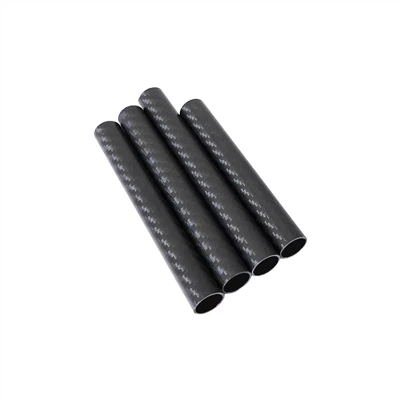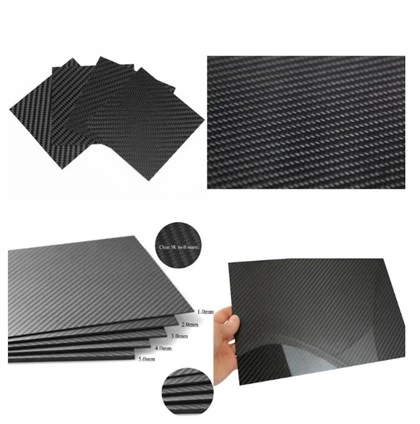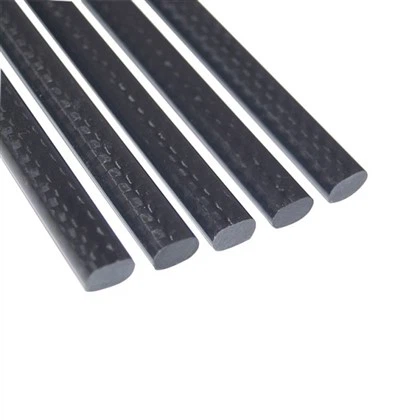
Carbon fiber customized round tubes are generally easy to work with and install, thanks to their unique properties and versatile nature. These advanced composite materials offer a high strength-to-weight ratio, making them lightweight yet incredibly strong. This combination of attributes makes carbon fiber custom round tubes ideal for various applications, from aerospace to sports equipment. While working with carbon fiber requires some specialized knowledge and tools, the installation process is often straightforward. The ease of use stems from the material's adaptability, precision manufacturing, and the ability to create complex shapes without compromising strength. However, it's essential to consider factors such as proper handling, cutting techniques, and joining methods to ensure optimal performance and longevity of carbon fiber components.
Understanding Carbon Fiber Customized Round Tubes
Composition and Manufacturing Process
Carbon fiber customized round tubes are crafted from advanced composite materials, primarily consisting of carbon fibers embedded in a polymer matrix. The manufacturing process typically involves pultrusion or filament winding techniques, allowing for precise control over the tube's dimensions, wall thickness, and fiber orientation. This process results in a product with exceptional mechanical properties, including high tensile strength, low weight, and excellent fatigue resistance.
Advantages of Carbon Fiber Custom Round Tubes
The benefits of using carbon fiber custom round tubes are numerous. Their remarkable strength-to-weight ratio makes them ideal for applications where weight reduction is crucial without compromising structural integrity. These tubes also exhibit superior corrosion resistance, thermal stability, and dimensional stability under varying environmental conditions. Moreover, carbon fiber's ability to dampen vibrations makes it an excellent choice for applications requiring noise and vibration reduction.
Common Applications
Carbon fiber customized round tubes find applications across various industries. In aerospace, they're used for structural components, antenna masts, and payload support structures. The automotive sector utilizes them for drive shafts, roll cages, and suspension components. In sports equipment, these tubes are integral to high-performance bicycles, fishing rods, and golf club shafts. The marine industry also benefits from carbon fiber tubes in masts, booms, and other structural elements of boats and yachts.
Working with Carbon Fiber Customized Round Tubes
Tools and Equipment
Working with carbon fiber custom round tubes requires specific tools to ensure precise cutting and shaping without damaging the material. Diamond-coated or carbide-tipped cutting tools are essential for clean cuts without fraying or delamination. Specialized drill bits designed for composites are necessary for creating holes without splintering. Additionally, dust extraction systems are crucial to manage the fine particles generated during cutting and drilling operations, ensuring a safe working environment.
Cutting and Shaping Techniques
Cutting carbon fiber customized round tubes demands careful attention to technique. Slow, steady cuts with high-speed tools produce the best results, minimizing the risk of delamination or fiber pullout. When shaping is required, gradual material removal through sanding or grinding is preferred over aggressive cutting. It's important to note that carbon fiber dust is conductive and can be harmful if inhaled, so proper personal protective equipment (PPE) is essential during these operations.
Joining and Bonding Methods
Joining carbon fiber custom round tubes can be achieved through various methods, each with its advantages. Adhesive bonding is a popular choice, utilizing high-strength epoxies or specialized structural adhesives designed for composites. Mechanical fastening, such as bolted joints, can be employed but requires careful consideration to avoid stress concentrations. In some cases, hybrid joining techniques combining adhesives and mechanical fasteners provide optimal strength and reliability. The choice of joining method depends on the specific application requirements and load conditions.
Installation Considerations for Carbon Fiber Custom Round Tubes
Design Integration
Successful installation of carbon fiber customized round tubes begins with thoughtful design integration. Engineers must consider the anisotropic properties of carbon fiber, ensuring that the tube's orientation aligns with the primary load directions. Careful attention to load transfer points, such as brackets or end fittings, is crucial to prevent stress concentrations that could compromise the tube's integrity. Advanced finite element analysis (FEA) tools can help optimize the design and predict performance under various loading conditions.
Handling and Storage
Proper handling and storage of carbon fiber custom round tubes are essential to maintain their structural integrity. Despite their high strength, these advanced composite materials can be sensitive to impact damage and environmental factors. Storage areas should be clean, dry, and temperature-controlled to prevent moisture absorption or thermal cycling that could affect the resin matrix. When handling, it's important to avoid dropping or impacting the tubes, as internal damage may not be immediately visible but could compromise performance.
Installation Best Practices
Installing carbon fiber customized round tubes requires attention to detail and adherence to best practices. Proper alignment is crucial to ensure optimal load distribution and prevent unintended stress concentrations. When using mechanical fasteners, it's important to use appropriate torque specifications and consider the use of load-spreading washers or backing plates to distribute forces evenly. For adhesive bonding, surface preparation is key – thorough cleaning and, in some cases, light abrasion can significantly improve bond strength. It's also essential to follow manufacturer guidelines for curing times and environmental conditions during installation to ensure the best possible performance of the bonded joint.
Conclusion
Carbon fiber customized round tubes offer a compelling combination of high strength, low weight, and versatility, making them an attractive option for a wide range of applications. While working with and installing these advanced composite materials requires some specialized knowledge and tools, the process is generally straightforward for those familiar with the material's properties. By understanding the unique characteristics of carbon fiber, following proper handling and installation techniques, and leveraging its exceptional strength-to-weight ratio, engineers and designers can effectively harness the full potential of carbon fiber custom round tubes in their projects.
Contact Us
For more information about our carbon fiber customized round tubes and how they can benefit your project, please contact us at sales18@julitech.cn or reach out via WhatsApp at +86 15989669840. Our team of experts is ready to assist you in finding the perfect carbon fiber solution for your needs.
References
1. Smith, J. A. (2022). Advanced Composites in Engineering Applications. Journal of Composite Materials, 56(4), 521-535.
2. Chen, X., & Liu, Y. (2021). Manufacturing Processes for Carbon Fiber Reinforced Composites. Composites Manufacturing, 12(2), 178-192.
3. Thompson, R. B. (2023). Design Considerations for Carbon Fiber Tubes in Aerospace Structures. Aerospace Engineering Review, 45(3), 302-318.
4. Garcia, M., & Johnson, L. (2022). Joining Techniques for Carbon Fiber Composites: A Comparative Study. International Journal of Adhesion and Adhesives, 110, 102945.
5. Park, S. J., & Kim, H. Y. (2021). Environmental Effects on Carbon Fiber Reinforced Polymers: A Review. Composites Science and Technology, 201, 108534.
6. Wilson, D. R. (2023). Carbon Fiber in Sports Equipment: Performance and Design Innovations. Sports Engineering, 26(1), 1-15.