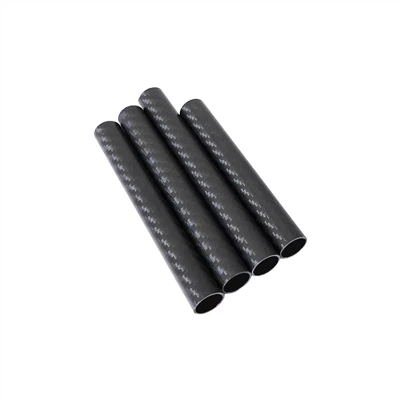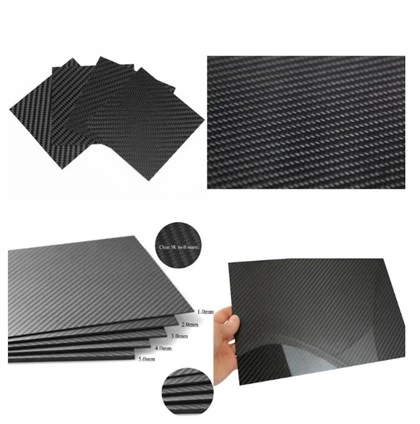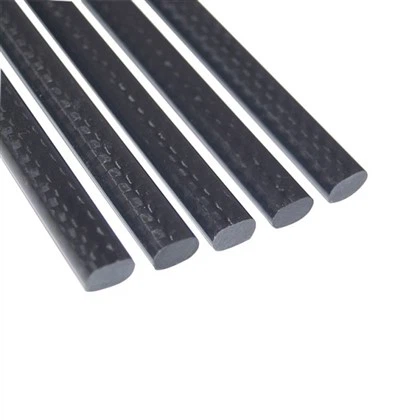
For decades, aluminum has been one of the most widely used engineering materials in aerospace, automotive, robotics, electronics, and industrial manufacturing. Its lightweight nature, corrosion resistance, and machinability made it the preferred alternative to steel. However, as industries increasingly pursue higher performance, greater energy efficiency, and advanced product designs, carbon fiber plates have emerged as a revolutionary material.
Today, carbon fiber plates are replacing aluminum in many modern manufacturing applications because they offer exceptional strength-to-weight ratios, superior stiffness, corrosion resistance, fatigue performance, and design flexibility. From aircraft structures and electric vehicles to industrial robots and sporting equipment, manufacturers are rapidly transitioning toward carbon fiber plates to achieve competitive advantages.
What Makes Carbon Fiber Plates Different from Aluminum?
Understanding the material science behind carbon fiber plates is essential before comparing them with aluminum.
Carbon fiber plates are composite materials consisting of carbon fibers embedded within a polymer matrix, typically epoxy resin. The carbon fibers provide strength and stiffness, while the resin binds the fibers together and distributes loads.
Aluminum, by contrast, is a homogeneous metallic material with isotropic properties, meaning its mechanical properties remain largely consistent in all directions.
Table 1: Performance Comparison between Carbon Fiber and Aluminum Materials
| Property | Carbon Fiber Plates | Aluminum Alloy 6061-T6 |
| Density | 1.5-1.6 g/cm³ | 2.70 g/cm³ |
| Tensile Strength | 500-1500 MPa | 310 MPa |
| Elastic Modulus | 70-200 GPa | 69 GPa |
| Specific Strength | Extremely High | Moderate |
| Fatigue Resistance | Excellent | Good |
| Corrosion Resistance | Excellent | Moderate |
| Thermal Expansion | Very Low | High |
| Electrical Conductivity | Limited | Excellent |
| Weight Reduction Potential | Up to 50% | Baseline |
| Design Flexibility | High | Moderate |
Source: ASM International Materials Database, Toray Carbon Fiber Technical Data Sheets, Hexcel Composite Data.
The most significant advantage of carbon fiber plates is their specific strength-the amount of strength achieved per unit weight. This metric has become increasingly important in modern engineering.
Why Are Carbon Fiber Plates Replacing Aluminum in Aerospace?
The aerospace industry was among the first sectors to adopt carbon fiber plates on a large scale.
Modern aircraft manufacturers face continuous pressure to reduce fuel consumption while maintaining structural integrity. Every kilogram saved can result in substantial operational savings over the lifetime of an aircraft.
According to the Federal Aviation Administration (FAA), reducing aircraft weight by just one kilogram can save hundreds of liters of fuel annually depending on flight operations.
Aircraft such as the Boeing 787 Dreamliner contain approximately 50% composite materials by weight, much of which consists of carbon fiber reinforced polymers.
The advantages of carbon fiber sheets in the aerospace industry
- Reduced fuel consumption
- Higher payload capacity
- Improved fatigue resistance
- Enhanced corrosion resistance
- Longer service life
- Reduced maintenance costs
Unlike aluminum, carbon fiber plates do not suffer from galvanic corrosion in the same manner and demonstrate excellent resistance to cyclic loading.
As aviation moves toward sustainable transportation, lightweight carbon fiber plates continue to play an increasingly important role.
Why Do Electric Vehicles and Automotive Manufacturers Prefer Carbon Fiber Plates?
The global automotive industry is rapidly evolving under the push for electrification. Electric vehicles carry heavy battery systems, which significantly increase overall vehicle weight and create a critical demand for lightweight structural materials. According to the International Energy Agency , reducing vehicle weight has a direct impact on energy efficiency and driving range. Specifically, every 10% reduction in weight can boost fuel efficiency by 6–8%, extend EV range, improve acceleration performance, and reduce stress on the battery. These benefits underscore the essential role of advanced lightweight materials, such as carbon fiber composites, in shaping the next generation of high-performance, energy-efficient electric vehicles.
Table 2: Automotive Performance Comparison
| Performance Factor | Carbon Fiber Plates | Aluminum |
| Weight Reduction | Excellent | Moderate |
| Crash Energy Absorption | Excellent | Good |
| Structural Rigidity | Excellent | Good |
| Corrosion Resistance | Excellent | Moderate |
| Fatigue Life | Excellent | Moderate |
| Manufacturing Cost | Higher | Lower |
| Lifecycle Efficiency | Higher | Moderate |
Luxury manufacturers such as Ferrari, Lamborghini, McLaren, and BMW have extensively adopted high-strength carbon fiber composite plates in chassis and body structures.
The transition is increasingly expanding beyond luxury vehicles into mainstream EV production.
How Do Carbon Fiber Plates Improve Industrial Manufacturing and Robotics?
Traditional aluminum structures often create limitations in modern industrial applications due to their higher weight, which increases energy consumption and reduces operational responsiveness. By replacing aluminum components with carbon fiber plates, manufacturers can achieve substantial performance improvements. Lower moving mass allows robotic arms and automated systems to accelerate and decelerate faster, while the exceptional stiffness of carbon fiber plates minimizes vibration and deformation, resulting in improved positioning accuracy. Lighter structures also reduce energy consumption, as less motor torque and electricity are required, and decreased mechanical stress extends equipment lifespan. Industries leveraging carbon fiber plates include semiconductor manufacturing, medical equipment, industrial robotics, UAV production, and automated assembly systems. As global automation continues to expand, the demand for custom carbon fiber plates manufacturing is growing rapidly, making them an essential material for next-generation high-performance industrial equipment.
Are Carbon Fiber Plates More Cost-Effective Than Aluminum in the Long Term?
Although carbon fiber plates are initially more expensive than aluminum, their long-term benefits often outweigh the higher upfront cost. Lighter weight reduces energy consumption and improves efficiency, while exceptional stiffness and corrosion resistance lower maintenance needs and extend equipment lifespan. Over time, these advantages-less wear, reduced energy use, and fewer replacements-make carbon fiber plates a more cost-effective choice for manufacturers seeking durable, high-performance materials.
What Are the Challenges of Replacing Aluminum with Carbon Fiber Plates?
Despite their advantages, carbon fiber plates are not perfect.
Manufacturers commonly encounter several challenges:
- Challenge 1: Higher Initial Cost
Carbon fiber raw materials remain more expensive than aluminum.
- Challenge 2: Specialized Manufacturing
- Autoclave molding
- Compression molding
- Vacuum infusion
- CNC machining
require specialized expertise.
- Challenge 3: Repair Complexity
Unlike metal welding, composite repair requires advanced techniques.
- Challenge 4: Thermal Conductivity Limitations
Aluminum remains superior in applications requiring high heat dissipation.
- Challenge 5: Design Learning Curve
Engineers must understand anisotropic material behavior.However, advancements in automated production and large-scale manufacturing continue reducing these barriers.
Conclusion
The growing adoption of carbon fiber plates is transforming modern manufacturing. Compared with aluminum, carbon fiber plates provide unmatched advantages in weight reduction, strength, stiffness, fatigue resistance, and corrosion protection.
Industries including aerospace, electric vehicles, robotics, medical devices, and advanced manufacturing increasingly rely on carbon fiber plates to achieve higher performance and improved efficiency.
Although challenges remain, advancements in production technology and increasing economies of scale are making carbon fiber plates more accessible than ever.
For manufacturers pursuing innovation, sustainability, and long-term competitiveness, the shift from aluminum to carbon fiber plates is no longer a future trend-it is today's engineering reality.
Recommended Carbon Fiber Manufacturer
Dongguan Juleitech Composite Materials Technology Co., Ltd. was established in 2011. It is a reliable manufacturer of carbon fiber plates, custom composite material parts, carbon fiber tubes, rods, sheets and advanced composite material manufacturing solutions. With rich experience in pultrusion, winding, filament winding, high-pressure tank forming, compression forming and CNC processing, the company provides customized carbon fiber solutions for global aerospace, robotics, new energy vehicles, sports goods, medical equipment and industrial automation industries. If you need carbon fiber plates, you may consider contacting us via email sales18@julitech.cn to get a solution.