Professional drones are no longer used only for aerial photography. Today, they support industrial inspections, agricultural spraying, land surveying, infrastructure monitoring, and emergency response. As these applications become more demanding, drone manufacturers need structural materials that are lightweight, stiff, and reliable.
This is one reason carbon fiber components have become increasingly important in professional drone design. From structural frames and arms to mounting plates and support tubes, carbon fiber composites offer a useful combination of low density and high specific stiffness.
However, choosing the right material involves more than reducing weight. Engineers must also consider structural loads, vibration, manufacturing methods, environmental conditions, and production costs. Understanding these factors helps manufacturers determine where carbon fiber provides the greatest value.
Why Are Carbon Fiber Components Suitable for Professional Drones?
High Strength-to-Weight Ratio
Weight is a critical consideration in drone design. Every structural component contributes to the aircraft's total mass, affecting the propulsion system, battery requirements, and available payload capacity.
Carbon fiber composites typically offer a high strength-to-weight ratio compared with many conventional structural materials. This allows engineers to design lightweight components without automatically sacrificing the strength required for a particular application.
For example, carbon fiber arms can support motors and propellers while keeping structural mass under control. Lightweight mounting plates can also help accommodate cameras, thermal imaging equipment, and other specialized payloads.
The actual benefit depends on fiber type, resin system, laminate structure, component geometry, and loading conditions. Material properties alone cannot guarantee that a finished component will outperform an aluminum or plastic alternative.
High Stiffness for Structural Stability
Strength and stiffness are different properties. Strength describes the load a component can withstand before failure, while stiffness describes how much it deforms under an applied load.
For professional drones, stiffness matters because excessive structural deformation can affect motor alignment, sensor positioning, and overall flight performance.
Carbon fiber composites can provide high specific stiffness, making them suitable for applications where low weight and limited deformation are both important.
However, carbon fiber does not automatically eliminate vibration. The final result depends on structural geometry, fiber orientation, joint design, damping, and the drone's operating conditions.
Resistance to Corrosion
Professional drones often operate outdoors, where components may encounter rain, humidity, dust, and temperature changes.
Unlike conventional steel, carbon fiber composites do not rust. Their environmental durability depends on the resin system, surface protection, manufacturing quality, and exposure conditions.
One important consideration is galvanic corrosion. When carbon fiber contacts aluminum in the presence of an electrolyte, the aluminum may corrode. Suitable insulation, coatings, and joint design can help reduce this risk.
For drones used in agriculture, marine environments, or industrial inspections, material compatibility should be evaluated before production.
Where Are Carbon Fiber Components Used in Drones?
Carbon fiber can be used in different parts of a drone depending on its design and operating requirements.
Carbon Fiber Frames and Arms
The frame supports the drone's major systems, while the arms connect the motors to the main structure. These parts must withstand propulsion forces, maneuvering loads, and repeated vibration.
Carbon fiber structures can reduce weight while providing the stiffness required for many professional applications.
For multirotor drones, engineers should pay particular attention to arm bending, torsional stiffness, motor mounting points, and joint strength. These factors influence the performance of the complete assembly.


Carbon Fiber Tubes
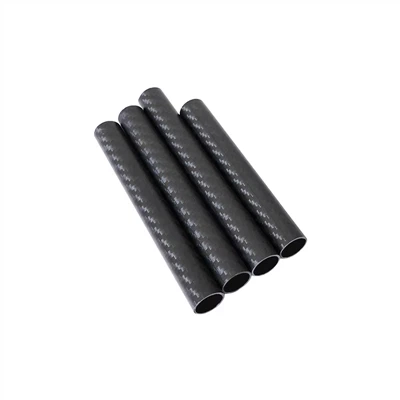
A carbon fiber tube is a practical option for tubular drone structures, including selected arms, support members, camera mounts, and landing-gear components.Its performance depends on several factors:
Outer diameter and wall thickness: These affect bending stiffness, structural capacity, and weight.
Fiber orientation: Longitudinal fibers support axial loads, while appropriately designed angled fibers can contribute to torsional performance.
Manufacturing process: Pultrusion and roll-wrapping produce different reinforcement architectures.
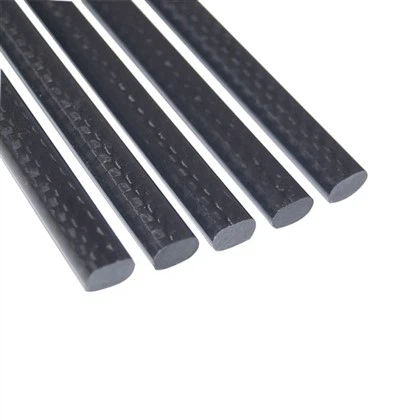
Pultruded carbon fiber tubes generally contain fibers aligned primarily along the tube's length. They can be suitable for applications dominated by axial loading.
Roll-wrapped tubes allow manufacturers to arrange prepreg layers at different angles, providing greater flexibility when balancing axial, bending, and torsional requirements.
The best option depends on the actual load case rather than the manufacturing process alone.
Carbon Fiber Plates and Mounting Components
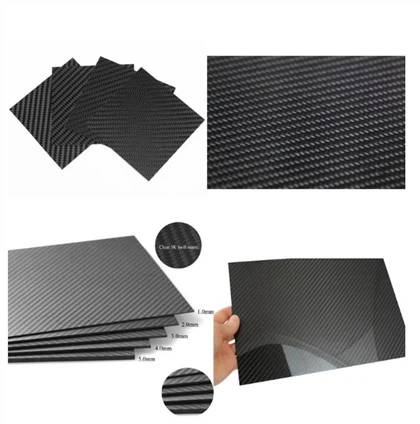
Carbon fiber plates are commonly considered for structural panels, equipment mounts, brackets, and other flat components.
They can provide a lightweight platform for installing electronic equipment and specialized sensors. CNC machining can produce the holes, slots, and contours required for precise assembly.
However, drilled holes and machined edges need careful inspection. Poor machining practices may damage the laminate or cause localized delamination.
For components exposed to concentrated loads, engineers should also evaluate local reinforcement and fastener arrangements.

How Do Carbon Fiber Components Affect Drone Performance?
The main advantage of carbon fiber is not simply that it is lightweight. Its value comes from how engineers can use its mechanical properties to improve the overall design.
Weight Reduction and Payload Capacity
Reducing structural mass gives engineers more flexibility when balancing the battery, propulsion system, and payload.
For example, an industrial inspection drone may carry a high-resolution camera, thermal imaging equipment, or a LiDAR sensor. Reducing unnecessary structural weight can help accommodate these systems within the aircraft's mass limits.
However, the benefit must be evaluated at the system level. A lighter frame does not automatically mean a higher payload rating because motor capacity, battery performance, structural limits, and flight regulations also matter.
Potential Improvements in Flight Endurance
A lighter drone may require less thrust to maintain flight under otherwise comparable conditions. This can reduce propulsion demand and potentially improve endurance.
The actual improvement depends on the drone's configuration, battery capacity, motor efficiency, propeller selection, flight speed, and mission profile.
Manufacturers should therefore validate endurance claims through controlled flight tests rather than relying only on material weight comparisons.
Structural Stability and Sensor Performance
Professional drones often carry equipment that requires stable positioning. Excessive structural movement or vibration may affect image quality, measurement accuracy, and sensor performance.
A properly designed carbon fiber structure can help control deformation. Nevertheless, engineers must also consider resonance, vibration transmission, and mounting-system design.
In applications involving precision surveying or industrial inspection, structural analysis and testing are important steps in the development process.
Carbon Fiber vs. Aluminum for Drone Structures
Carbon fiber and aluminum are both useful materials for professional drones, but they serve different design priorities.
| Comparison Factor | Carbon Fiber Composite | Aluminum |
|---|---|---|
| Weight | Often advantageous for high specific stiffness requirements | Generally denser than carbon fiber laminates |
| Structural stiffness | Depends on fiber orientation and laminate design | Depends on alloy, geometry, and temper |
| Corrosion | Does not rust, but metal interfaces require attention | Corrosion resistance varies by alloy and protection |
| Machining | Requires composite-specific tooling and dust control | Established machining methods |
| Impact behavior | Can suffer cracking or delamination | May deform before failure |
| Cost | Depends on material, tooling, and production volume | Depends on alloy and manufacturing process |
Carbon fiber is often attractive when reducing structural mass while maintaining stiffness is a priority. Aluminum may be more practical for threaded connections, complex machined interfaces, and applications where cost or repairability is important.
Some drone designs combine both materials. For example, a carbon fiber tube may provide the main structural member, while aluminum fittings provide mounting interfaces.
The key is to compare components designed for equivalent requirements rather than comparing material properties in isolation.
How to Choose the Right Carbon Fiber Tube for a Drone
Selecting a carbon fiber tube requires more than choosing a diameter from a product catalog. Several engineering factors should be considered before placing an order.
First, define the loading conditions. Determine whether the tube will experience bending, axial compression, torsion, impact, or repeated vibration. The dominant load direction helps determine the required reinforcement architecture.
Second, establish dimensional requirements. Outer diameter, inner diameter, wall thickness, length, straightness, and tolerances all affect installation and structural performance.
Third, select the manufacturing process. Pultruded tubes may suit applications requiring predominantly longitudinal reinforcement. Roll-wrapped tubes may offer more flexibility for structures exposed to combined bending and torsional loads.
Fourth, evaluate the connection method. Holes, clamps, bonded joints, and inserts can influence the strength of the assembled component. Local crushing and stress concentrations should be considered during design.
Finally, verify quality and consistency. Ask the manufacturer about dimensional inspection, material specifications, production controls, and available test reports. For critical applications, representative mechanical testing may be necessary.
These checks help ensure that the selected tube meets the requirements of the finished drone rather than simply matching a nominal size.
What Should Drone Manufacturers Look for in a Carbon Fiber Supplier?
A reliable supplier should offer more than standard carbon fiber products. For professional drone applications, manufacturing consistency and technical communication are equally important.
When evaluating a carbon fiber manufacturer, consider the following factors:
Manufacturing capabilities: Confirm whether the supplier produces tubes, plates, profiles, or custom-shaped components using suitable processes.
Customization support: Check whether it can work from technical drawings, CAD files, samples, and dimensional specifications.
Quality control: Ask about dimensional inspection, material traceability, and procedures for handling nonconforming products.
Machining capabilities: Confirm whether holes, slots, cut-to-length services, and other required features can be produced consistently.
Production capacity: Discuss sample development, minimum order quantities, lead times, and repeat-order requirements.
When requesting a quotation, provide drawings, dimensions, tolerances, expected loading conditions, surface requirements, and estimated order quantities. Clear specifications make it easier for manufacturers to assess feasibility and provide an accurate quotation.
For customized drone structures, early communication between the design team and composite supplier can also help identify manufacturing limitations before production begins.
FAQ
Q: Are carbon fiber components suitable for commercial drones?
A: Yes. Carbon fiber components can be suitable for commercial drones that require lightweight structures and high specific stiffness. Their suitability depends on the application, loading conditions, manufacturing quality, and total project cost.
Q: Are carbon fiber tubes better than aluminum tubes for drone arms?
A: Not in every situation. Carbon fiber tubes may provide advantages when low weight and directional stiffness are priorities. Aluminum tubes may be preferable for certain cost-sensitive designs or applications requiring different impact and connection characteristics.
Q: Can carbon fiber components increase drone flight time?
A: They may help by reducing structural mass, which can lower the thrust required to support the aircraft. The actual improvement depends on the complete drone system and should be verified through flight testing.
Q: How long do carbon fiber drone components last?
A: Service life depends on loading cycles, impact exposure, environmental conditions, manufacturing quality, and maintenance. Regular inspections are important, especially after collisions, hard landings, or other events that may damage the composite structure.
Conclusion
Carbon fiber components have become an important option for professional drone manufacturers because they can combine low weight with high specific stiffness and design flexibility. Carbon fiber frames, plates, and tubes can support applications ranging from industrial inspection to precision surveying.However, successful implementation depends on choosing the right material architecture, manufacturing process, dimensions, and connection design. Carbon fiber should be evaluated against the actual requirements of each component rather than treated as a universal replacement for aluminum or other materials.
For manufacturers developing custom UAV structures, working with an experienced composite supplier can help align material selection, production methods, dimensional tolerances, and quality requirements. A well-designed component is not simply lightweight; it must also perform reliably under real operating conditions.
Contact Us
We are a carbon fiber product supplier from China. Dongguan JULI Composite Materials Technology Co., Ltd. was established in 2011 and has provided solutions for many drone manufacturers. Among them, the well-known Chinese brand DJI uses our products. We have equipment such as pultrusion, tube rolling, autoclave, compression molding machines, and CNC processing machines. We also started researching carbon fiber prepregs on our own and offer one-stop services. Please contact us via email: sales18@julitech.cn or WhatsApp: +86 18822947075.