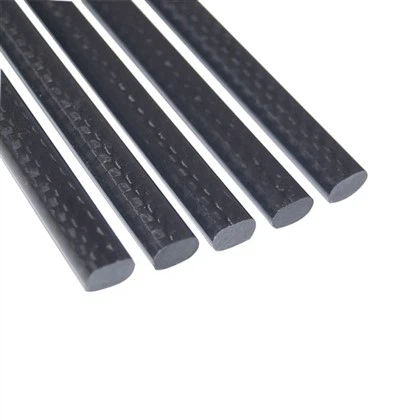
Choosing between a pultruded tube and a roll-wrapped tube is an important decision in carbon fiber product design. Although both manufacturing processes produce lightweight composite tubes, their fiber architectures, production methods, mechanical behavior, and cost structures can differ significantly.
For engineers, OEM manufacturers, and industrial buyers, understanding pultruded tube vs roll-wrapped tube helps determine which construction is better suited to a specific application. The decision affects more than tensile strength. Bending stiffness, torsional resistance, dimensional stability, surface quality, machining requirements, and production volume must also be considered.
A pultruded carbon fiber tube is manufactured through a continuous process that primarily aligns reinforcing fibers along the tube's length. This construction is often suitable for structural members that require high longitudinal stiffness and consistent cross-sectional dimensions.
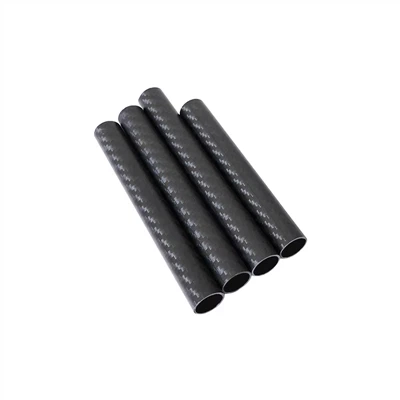
A roll-wrapped carbon fiber tube is made by wrapping carbon fiber prepreg sheets or tapes around a mandrel, followed by consolidation and curing. Because individual layers can be arranged in different directions, roll-wrapped tubes offer greater flexibility when designing a laminate for bending, torsion, transverse loading, or combined stresses.
Neither process is automatically better in every application. The correct choice depends on the required load-bearing capacity, laminate design, dimensions, operating environment, and manufacturing budget.
This guide explains the differences between pultruded tube vs roll-wrapped tube and provides practical selection criteria for industrial carbon fiber components.
What Is a Pultruded Tube?
A pultruded carbon fiber tube is manufactured by continuously pulling reinforcing fibers through a resin impregnation system and a heated forming die. The die establishes the tube's cross-sectional geometry while the resin cures, producing a rigid composite profile.
The process is particularly suitable for producing long, straight components with a consistent cross-section. Continuous carbon fiber rovings are generally arranged primarily along the longitudinal axis, allowing the reinforcement to carry substantial axial loads.
How does the pultrusion process work?
The manufacturing process typically includes five stages.
1. Fiber feeding
Continuous carbon fiber rovings are supplied from creels and guided into the production line. Fiber tension and alignment must be controlled to avoid uneven reinforcement distribution.
2. Resin impregnation
The fibers are impregnated with a compatible resin system. Resin viscosity, wet-out quality, and fiber distribution influence the finished composite's integrity.
3. Preforming
Guides arrange the fibers into the intended tubular profile before they enter the forming die. The preforming stage helps establish the geometry and reinforcement arrangement.
4. Die forming and curing
The impregnated reinforcement passes through a heated die. The die defines the cross-section, while the curing process converts the resin into a rigid matrix.
5. Continuous pulling and cutting
A pulling mechanism advances the cured profile through the production line. The finished tube is then cut to the specified length and inspected.
Main advantages of pultruded tubes
The primary advantage of pultrusion is continuous production. Once the tooling and process parameters have been qualified, manufacturers can produce repeated profiles with relatively consistent dimensions and material characteristics.
Pultruded carbon fiber tubes are often suitable for applications where longitudinal stiffness, low weight, and repeatable geometry are the main requirements.
Typical applications include industrial support structures, robotic equipment frames, lightweight rods, telescopic poles, and structural components subjected mainly to axial or bending loads.
However, a predominantly longitudinal fiber arrangement does not automatically provide high transverse strength or hoop strength. Localized compression, torsion, and concentrated loads may require additional reinforcement or a different laminate architecture.
Buyers should therefore confirm the actual construction of the tube rather than assuming that all pultruded products have identical mechanical properties.
What Is a Roll-Wrapped Carbon Fiber Tube?
A roll-wrapped carbon fiber tube is manufactured by placing carbon fiber prepreg sheets or tapes around a cylindrical mandrel. The reinforcement is arranged in layers according to a specified fiber orientation and laminate sequence. The assembly is then compacted and cured before the tube is removed from the mandrel and finished.
Carbon fiber prepreg contains reinforcing fibers that have already been impregnated with a controlled amount of resin. Depending on the material system and production specification, roll-wrapped tubes may be cured using an oven, autoclave, or another qualified curing system.
How does the roll-wrapping process work?
The process typically includes the following operations.
1. Prepreg material preparation
Carbon fiber prepreg is selected according to the required fiber type, resin system, thickness, and mechanical properties. Material storage and handling must follow the supplier's requirements.
2. Cutting and ply preparation
The prepreg is cut into the required shapes and dimensions. Ply orientation, overlap, and cutting accuracy are important because they affect the final laminate architecture.
3. Layup and wrapping
The prepared layers are wrapped around a mandrel. Depending on the product design, the laminate may include longitudinal, bias, or circumferential reinforcement.
4. Compaction and curing
The wrapped assembly is compacted to reduce unwanted voids and improve consolidation. The tube is then cured under the specified temperature and pressure conditions, where applicable.
5. Mandrel removal and finishing
After curing, the tube is removed from the mandrel when the tooling design permits. Cutting, trimming, surface finishing, and dimensional inspection complete the manufacturing process.
Why is fiber orientation important in roll-wrapped tubes?
The main engineering advantage of roll-wrapped tubes is the ability to design different fiber orientations within one component.
Longitudinal reinforcement contributes to axial stiffness. Bias layers can support in-plane shear and influence torsional performance. Circumferential reinforcement can improve resistance to hoop stresses and some forms of transverse loading.
For example, a lightweight robotic arm may need high bending stiffness without excessive mass. A rotating shaft may require a carefully balanced laminate to withstand torsional loads. A tube subjected to radial compression may need reinforcement that is not adequately provided by a simple longitudinal construction.
The final performance still depends on fiber grade, resin properties, laminate thickness, consolidation quality, and manufacturing control. A roll-wrapped tube should therefore be evaluated using its actual construction and relevant test data.
Pultruded Tube vs Roll-Wrapped Tube: Key Differences
The most important difference in pultruded tube vs roll-wrapped tube manufacturing is the way the reinforcing fibers are positioned within the tube wall.
Pultrusion primarily uses continuous longitudinal reinforcement. Roll-wrapping allows the manufacturer to combine layers with different fiber orientations, providing greater flexibility in tailoring the laminate to the expected loading conditions.
| Comparison factor | Pultruded tube | Roll-wrapped tube |
|---|---|---|
| Manufacturing method | Continuous pulling through a heated die | Prepreg layup and wrapping around a mandrel |
| Main reinforcement direction | Predominantly longitudinal | Longitudinal, bias, circumferential, or combined |
| Production approach | Continuous profile production | Part-by-part laminate preparation and curing |
| Axial stiffness | Well suited to high longitudinal stiffness | Depends on the proportion of longitudinal reinforcement |
| Torsional behavior | Depends on the construction and available off-axis reinforcement | Can be tailored using suitable bias layers |
| Hoop reinforcement | Limited in conventional longitudinal constructions | Can be incorporated into the laminate design |
| Cross-sectional consistency | Suitable for repeatable fixed profiles | Depends on mandrel accuracy and layup control |
| Surface finish | Depends on die, resin, and finishing process | Depends on mandrel surface, compaction, curing, and finishing |
| Length flexibility | Well suited to continuous long profiles | Influenced by mandrel handling and curing equipment |
| Tooling | Forming die and pulling equipment | Mandrel, layup tools, and curing equipment |
| Production economics | Often favorable for repeated, high-volume profiles | Often attractive for customized laminate requirements |
| Typical applications | Structural supports, rods, and repeated profiles | Robotic tubes, sporting equipment, shafts, and custom structural tubes |
These are general process characteristics rather than universal product specifications. A particular roll-wrapped tube may be designed primarily for axial loading, while a pultruded tube may incorporate additional reinforcement. The actual fiber architecture determines how the component performs.
Which tube is stronger?
There is no single answer without specifying the load direction, tube dimensions, laminate design, and test method.
A pultruded tube with continuous longitudinal fibers can perform well under axial tension and bending. A roll-wrapped tube with suitable off-axis reinforcement may be better suited to combined bending and torsional loading.
The comparison must also account for wall thickness and mass. A heavier tube may demonstrate greater absolute strength simply because it contains more material. For lightweight engineering applications, comparing performance at equivalent mass or structural requirements may be more informative.
Which Applications Are Better Suited to Each Process?
The correct choice depends on the component's functional requirements rather than the manufacturing label alone.
Applications for pultruded carbon fiber tubes
Pultruded tubes are generally suitable for applications that require a stable cross-section, consistent longitudinal reinforcement, and repeated production.
Examples include:
Industrial structural supports.
Lightweight equipment frames.
Long rods and straight profiles.
Telescopic poles and support members.
Repeated components for automation systems.
Pultrusion can be especially attractive when a product has established dimensions and is manufactured in large quantities. Continuous production can reduce repetitive setup work and support consistent output.
Before placing an order, buyers should confirm the outside diameter, inside diameter, wall thickness, straightness, length tolerance, and surface finish. Where the tube will be drilled, clamped, bonded, or mechanically connected, local loading and machining damage should also be considered.
Applications for roll-wrapped carbon fiber tubes
Roll-wrapped tubes are suitable when the design benefits from greater control over the laminate architecture.
Typical applications include:
Robotic arm components and lightweight mechanical assemblies.
Carbon fiber tubes for sporting equipment.
Drive shafts and torsion-loaded components.
Custom structural tubes with specific fiber orientations.
Lightweight components subjected to combined loading.
A roll-wrapped construction allows designers to choose the layer sequence according to the expected stresses. This can help achieve an appropriate balance between axial stiffness, torsional response, and transverse performance.
The advantage depends on the quality of the engineering design. A poorly selected layup can introduce weak directions or unnecessary weight. Buyers should request a description of the laminate construction and determine whether the supplier can verify the relevant mechanical properties.
What Factors Affect the Cost of Pultruded and Roll-Wrapped Tubes?
The cost of a carbon fiber tube depends on material selection, dimensions, production volume, manufacturing complexity, quality requirements, and secondary operations.
Pultrusion can offer economic advantages for repeated profiles because the production line operates continuously after setup. When demand is stable and the cross-section does not change, production efficiency can improve and tooling costs can be distributed across a large number of parts.
Roll-wrapped tubes require material cutting, ply preparation, layup, compaction, and curing. These operations may involve more handling and process planning. However, roll-wrapping can provide design flexibility that is valuable for specialized components, particularly when fiber orientation must be tailored to a complex load case.
Neither process is always cheaper. A simple roll-wrapped tube may be economical at a particular quantity, while a custom pultruded profile may require significant tooling investment. Actual costs depend on the supplier's equipment, labor, yield, material utilization, and production schedule.
Buyers should compare equivalent specifications rather than comparing prices for tubes with the same outside diameter alone. Differences in wall thickness, laminate architecture, resin content, surface finish, and tolerances can make two visually similar products structurally different.
A useful quotation request should include the tube drawing, material grade, fiber orientation requirements, dimensions, tolerances, finish, annual demand, batch quantity, and testing requirements. If the tube will be machined or bonded into an assembly, include those requirements during the quotation stage.
Total cost of ownership should also be considered. A tube that meets the required stiffness and service life may reduce replacement costs, machining waste, assembly problems, and the need for additional reinforcement.
Frequently Asked Questions
Is a pultruded tube stronger than a roll-wrapped tube?
Not in every loading direction. Pultruded tubes are often efficient under longitudinal loading, while roll-wrapped tubes allow more flexible reinforcement design. The stronger option depends on fiber orientation, wall thickness, resin system, geometry, and the test method.
Are roll-wrapped carbon fiber tubes suitable for robotic arms?
Yes. Roll-wrapped tubes can be suitable for robotic arms when the laminate provides the required bending stiffness, torsional response, weight, and dimensional accuracy. The design should account for the arm's length, payload, acceleration, vibration, and joint loads.
Can pultruded carbon fiber tubes be machined?
Yes, provided the machining process is appropriate for the composite construction. Cutting and drilling should be controlled to limit fiber breakout, delamination, and local damage. The finished component should be inspected against the required acceptance criteria.
Which process is more cost-effective for bulk orders?
Pultrusion is often attractive for high-volume production of a fixed profile. Roll-wrapping may be more suitable when the application requires a custom laminate architecture. A valid cost comparison requires the same product dimensions, performance requirements, production quantity, and inspection criteria.
Can roll-wrapped tubes use unidirectional carbon fiber prepreg?
Yes. Unidirectional prepreg can be used to create longitudinal reinforcement, while additional layers may be arranged at other angles when the design requires them. The actual construction depends on the tube specification and the manufacturer's qualified process.
Conclusion
Pultruded tube vs roll-wrapped tube is fundamentally a comparison between two manufacturing methods with different approaches to fiber placement and production.
Pultrusion is generally suitable for consistent profiles with predominantly longitudinal reinforcement and repeated production requirements. Roll-wrapping provides greater flexibility in laminate design and is useful when the tube must accommodate multiple loading directions.
For engineers and procurement teams, the best decision begins with the required mechanical performance, not the process name. Define the load cases, compare equivalent test data, confirm dimensional tolerances, and evaluate the operating environment before approving a tube for production.
Contact Us
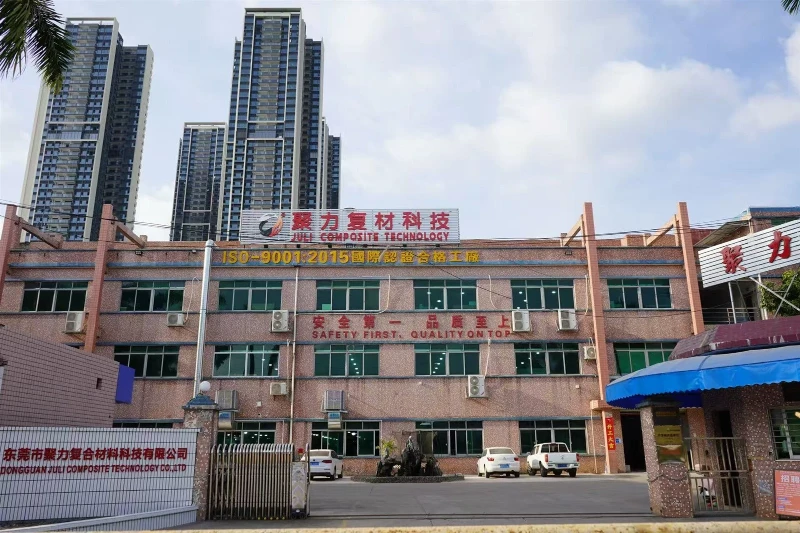
Are you struggling to decide which type of carbon fiber tube to use? Welcome to contact us for your inquiries. We are a carbon fiber product supplier from China. We have 16 years of experience. We have both the tube rolling and pultrusion processes and more than 10 production lines. We can provide you with delivery quickly. Email: sales18@julitech.cn or WhatsApp: +86 18822947075. Welcome to come for factory inspection.