In the field of modern materials science, few materials can have a profound impact on the development path of engineering technology like carbon fiber reinforced polymers (CFRP). Carbon fiber is known as the "black gold" of the manufacturing industry due to its excellent specific strength and specific stiffness. However, the performance potential of the material itself can only be fully realized through high-precision processing and cutting processes.
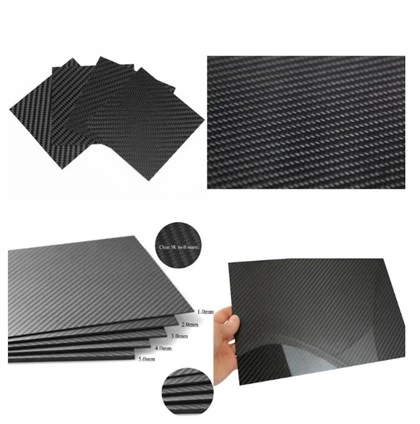
The processing of carbon fiber sheets is a highly specialized technical category, and its core lies in the transformation of cured laminated structures into geometrically complex and stable engineering components. As various industries continue to advance in decarbonization goals and efficiency improvements, the demand for high-precision CNC carbon fiber cutting technology is showing a rapid growth trend.
Why is the processing and cutting of carbon fiber sheets crucial to the aerospace industry?
The aerospace industry is perhaps the most demanding application for processing and cutting carbon fiber sheets. In this industry, which is extremely sensitive to weight, every gram reduction in structural mass directly translates into improved fuel efficiency and lower carbon emissions. Therefore, the transition from traditional aluminum alloys to advanced composite materials has become an inevitable trend. Modern commercial aircraft, such as the Boeing 787 Dreamliner and the Airbus A350, have carbon fiber composite materials accounting for over 50% of their main load-bearing structures.
Against this backdrop, the processing and cutting technology of carbon fiber sheets is crucial. Aerospace applications impose almost stringent standards on processing quality, especially with strict control or even "zero tolerance" for delamination and heat-affected zones (HAZ). Whether processing wing spars, fuselage frames, or cabin floor structures, the cutting process must ensure that the integrity of the fiber-resin matrix interface is not compromised, thereby maintaining the overall mechanical properties of the material.
Carbon fiber composites typically possess a high tensile modulus exceeding 230 GPa and an extremely low coefficient of thermal expansion, enabling them to exhibit exceptional dimensional stability in high-altitude and extreme temperature environments. For example, in satellite structures, high-precision machined and cut carbon fiber sheets can be used to manufacture mounting brackets, ensuring they maintain shape and accuracy stability under severe temperature cycling. Furthermore, high-precision CNC cutting technology allows engineers to achieve complex aerodynamic configurations that were previously difficult to machine using titanium or aluminum alloys.
By optimizing the processing and application of carbon fiber sheets, aerospace structures can typically achieve weight reductions of up to approximately 20% compared to traditional metal designs, thereby significantly improving the range and payload capacity of aircraft. It is worth noting that due to the significant abrasiveness of carbon fiber, diamond-coated tools are usually required during processing to reduce tool wear and prevent cutting edge dulling. Otherwise, burrs or abnormal wear can easily occur on the machined surface, thus affecting the quality and reliability of the final component.
How can high-precision CNC carbon fiber cutting revolutionize automotive engineering?
In the automotive industry, the application of carbon fiber sheet processing and cutting is gradually expanding from its early focus on Formula One racing to mainstream electric vehicles (EVs) and luxury models, driven primarily by "lightweight" design. For electric vehicles, reducing the weight of the chassis and key structural components not only allows for the placement of larger capacity battery packs without increasing the overall vehicle weight, but also effectively extends the driving range, thereby improving overall vehicle performance and energy efficiency.
High-precision CNC carbon fiber cutting technology is widely used in the manufacturing of monocoque structures, interior and exterior door panels, and high-end interior components. Compared to traditional steel sheet stamping processes, carbon fiber sheet processing supports a higher degree of structural integration design, that is, replacing multiple metal parts with a single complex composite material component, thereby significantly reducing assembly steps and lowering potential failure points.
In terms of safety performance, the excellent energy absorption characteristics of carbon fiber composites make them a key collision protection material. When customizing the design for energy-absorbing zones, processing and cutting precision are particularly critical. It is essential to ensure that the fiber layup direction is highly consistent with the expected load path to achieve optimal mechanical response.
In addition, waterjet cutting technology is widely used in automobile manufacturing to process thicker carbon fiber composite sheets. This process avoids the formation of heat-affected zones, effectively preventing thermal degradation or performance deterioration of the resin matrix during processing, thereby ensuring the structural integrity of the material.
As sustainable development becomes a key strategic direction for the automotive industry, the processing efficiency of carbon fiber sheet fabrication and cutting is becoming increasingly critical. Optimizing material utilization and reducing waste through advanced nesting software not only helps lower production costs but also significantly improves environmental performance. High-precision CNC machining allows manufacturers to typically achieve tolerance control at the ±0.05 mm level, meeting the stringent requirements for dimensional consistency and assembly reliability in high-speed automated assembly environments.
In what ways is the manufacturing of custom carbon fiber parts applied in high-end medical devices?
In the medical field, the requirements for material performance extend beyond high strength and stiffness; "radiotransmittance," meaning no interference during X-ray or CT imaging, is also crucial. Driven by this critical need, the processing and cutting of carbon fiber sheets has demonstrated significant technological advantages and is gradually becoming a core process in related applications. Key equipment such as imaging stages, prosthetic systems, and surgical fixation devices all heavily rely on customized carbon fiber composite components.
Taking medical imaging equipment as an example, worktables manufactured using carbon fiber sheets can effectively avoid artifacts caused by traditional metal structures, thus providing clearer and more accurate imaging data for clinical diagnosis. At the same time, the excellent specific stiffness of carbon fiber composite materials ensures that the operating table maintains good flexural strength even when supporting heavy patients, which is particularly crucial for the stringent requirements of positioning accuracy in robot-assisted surgery.
In the field of prosthetic engineering, the processing and cutting of carbon fiber sheets has enabled lightweight, high-resilience "blade-like" prostheses and personalized sockets. These components need to be highly customized according to the patient's anatomy, thus placing higher demands on the flexibility of the processing technology and dimensional accuracy.
Furthermore, the resin systems used in some carbon fiber composite materials possess excellent biocompatibility and can support autoclaving processes, making them suitable for the development of surgical instruments. High-precision CNC cutting ensures both ergonomic design and structural rigidity and operational stability of the instruments during minimally invasive and delicate surgeries.
It is worth noting that the medical industry often adopts aerospace-grade quality control standards in carbon fiber processing to ensure that the processed surface is free of microcracks or structural defects, thereby reducing the risk of bacterial growth from the source. This cross-industry technological integration highlights the deep collaboration and standard convergence among high-end manufacturing systems.
What role do carbon fiber sheets play in industrial robots and high-speed machinery?
In the context of Industry 4.0, the requirements for "speed" and "precision" in manufacturing systems have been raised to an unprecedented level. Industrial robots, especially "pick-and-place" triangular robots used for high-speed sorting, are highly dependent on low inertia characteristics. This performance is achieved through the processing and cutting of carbon fiber sheets, which are widely used in robotic arm and end effector structures.
The exceptional specific stiffness of carbon fiber composites enables robots to achieve millisecond-level precise braking without significant oscillations after high-speed movements. In contrast, traditional steel structures often suffer from residual vibrations due to their greater mass and inertia, which weakens system positioning accuracy and affects production cycle time. Leveraging high-precision CNC carbon fiber cutting technology, manufacturers can construct lattice-type robotic arm structures that combine high rigidity with low mass, achieving an optimized balance between dynamic performance and structural stability.
Besides robotics, carbon fiber sheet processing and cutting are also widely used in high-speed textile equipment and printing machinery. In such continuously operating equipment, long-shaft rollers and reciprocating motion components benefit significantly from reduced mass, effectively reducing drive load and improving operational response speed. Simultaneously, the excellent fatigue resistance of carbon fiber materials, compared to aluminum alloys, makes them less prone to performance degradation, significantly extending the service life of customized composite components and thus reducing downtime frequency in high-intensity continuous production environments.
In practical engineering applications, such structures often require the integration of metal inserts (such as bearing housings and sensor interfaces), which places higher demands on processing precision. The cutting of carbon fiber sheets must be subject to strict dimensional control to achieve interference fit and ensure assembly stability. Overall, through advanced carbon fiber processing and cutting technologies, industrial automation systems have overcome the limitations of traditional materials in terms of the mass and dynamic performance of moving parts, significantly improving the throughput and operational efficiency of production lines.
Conclusion
The question of which industries can benefit from carbon fiber sheet processing and cutting is no longer limited to the high-performance segment. From the wings of next-generation aircraft to the precise internal components of medical imaging equipment, carbon fiber sheet processing and cutting is a critical bridge between raw chemical potential and functional engineering excellence. By mastering the high-precision CNC carbon fiber cutting technique, manufacturers can harness the superior mechanical properties of carbon fiber sheets to create products that are lighter, stronger, and more durable than any metal predecessor.
Contact us
Want to know if carbon fiber sheets can be used for your project? You can learn about Dongguan Juli Composite Technology Co., Ltd., with 20 years of industry experience and well-equipped factories, if you are interested, please contact us WhatsApp+86 18822947075 or email sales18@julitech.cn, we will give you advanced carbon fiber solutions to meet your needs.
References
Davim, J. P. (2012). Machining of Composite Materials. Wiley. (Detailed analysis of tool wear and delamination during carbon fiber sheet processing and cutting).
Zhang, H. (2018). Composite Materials: Design and Applications. CRC Press. (Focuses on the mechanical advantages of CFRP in industrial design).