When purchasing custom carbon fiber products, lead time is one of the most important considerations for manufacturers, engineers, and procurement professionals. Whether developing carbon fiber tubes, plates, rods, structural components, or precision-machined parts, understanding the production schedule helps businesses manage inventory, coordinate product launches, and avoid unnecessary project delays.
Unlike standard off-the-shelf components, custom carbon fiber products require multiple manufacturing stages. These may include engineering evaluation, material selection, tooling development, fiber cutting, layup, molding, curing, CNC machining, surface finishing, and quality inspection.
Each stage contributes to the total manufacturing lead time. A relatively simple carbon fiber tube may require fewer production steps, while a complex structural component with strict dimensional tolerances may involve additional engineering work and process validation.
So, what determines the delivery time of custom carbon fiber products? The answer depends on several interconnected factors, including design complexity, raw material availability, manufacturing methods, production capacity, tooling requirements, and quality control procedures.
How Does Product Design Complexity Affect Manufacturing Lead Time?

Product design is one of the earliest factors influencing the lead time for custom carbon fiber parts. Before manufacturing begins, engineers must understand the component's geometry, mechanical requirements, operating environment, and intended application.
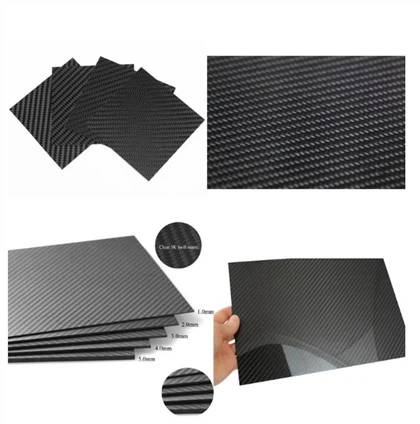
A simple carbon fiber plate or straight tube generally requires less engineering preparation than a complex component featuring curved surfaces, variable wall thicknesses, multiple mounting points, or integrated structural features.
Several design characteristics can increase development time:
Geometric complexity: Curved surfaces, irregular profiles, and complicated cross-sections require more detailed manufacturing planning.
Dimensional tolerances: Tight tolerances demand more precise tooling, machining, and inspection procedures.
Mechanical requirements: Components designed for high tensile loads, bending resistance, or impact resistance may require additional laminate analysis.
Fiber orientation: Different fiber directions influence stiffness, strength, and structural performance.
Surface requirements: Visible cosmetic finishes, controlled weave patterns, and special coatings may introduce additional processing steps.
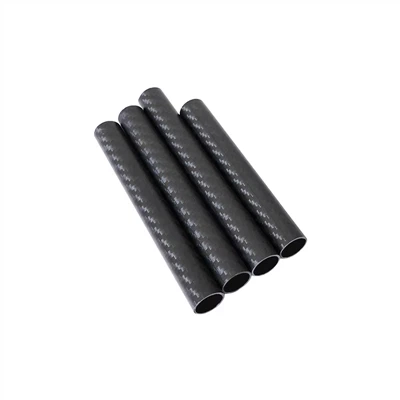
For example, a standard carbon fiber tube with fixed dimensions may be produced using an established process. However, a custom structural tube designed for industrial robotics may require specific wall thicknesses, fiber orientations, connection interfaces, and mechanical testing.
These requirements must be clarified before production. Changes introduced after tooling development or material preparation can result in engineering revisions, additional samples, and repeated manufacturing operations.
To reduce unnecessary delays, buyers should provide complete technical drawings, 3D models, dimensional tolerances, expected quantities, and application requirements during the initial quotation stage.
A clear design specification allows manufacturers to evaluate production feasibility, select appropriate materials, and establish a realistic manufacturing schedule.
Does Raw Material Availability Influence Carbon Fiber Production Time?
Yes. Raw material availability can significantly affect the delivery schedule of custom carbon fiber products.
Carbon fiber composites are manufactured using reinforcement fibers combined with a resin matrix. Depending on the required application, manufacturers may use woven carbon fiber fabric, unidirectional prepreg, carbon fiber tow, pultrusion-grade reinforcement, or other composite materials.
These materials are not interchangeable. Each material format has different mechanical characteristics, processing requirements, and storage conditions.
Several material-related factors influence lead time.
Carbon Fiber Grade and Material Specifications
Different carbon fiber grades offer different tensile properties, modulus values, and performance characteristics. Aerospace applications may require specific material grades and documented traceability, while industrial applications may allow a broader range of commercially available materials.
If a project requires a particular fiber grade, resin system, fabric weight, weave pattern, or customized prepreg specification, the manufacturer may need to arrange special procurement.
Prepreg Storage and Handling
Carbon fiber prepreg requires controlled storage because its resin system has a limited storage life and allowable exposure time outside refrigerated conditions.
According to Hexcel's Prepreg Technology guide, certain HexPly prepregs have a typical guaranteed shelf life of 12 months when stored at -18°C. However, actual storage life, tack life, and out-life depend on the specific product and its technical data sheet.
This means manufacturers must monitor material batches, storage temperatures, and accumulated out-time before production.
Supplier Delivery and Transportation
Imported carbon fiber materials may require additional transportation, customs clearance, and incoming inspection. Special resin systems or less common reinforcement materials can create further procurement uncertainty.
| Material-related factor | Potential impact on lead time | Recommended action |
|---|---|---|
| Standard carbon fiber fabric | Generally easier to source | Confirm inventory before ordering |
| Specialized carbon fiber grade | Additional procurement time | Confirm specifications early |
| Customized prepreg | Material preparation and testing | Approve material requirements in advance |
| Imported resin systems | Shipping and customs delays | Maintain supplier communication |
| Expired or unsuitable materials | Material replacement and production interruption | Verify batch records and storage history |
Therefore, confirming material availability before approving the production schedule is an important step in managing custom carbon fiber manufacturing lead time.
How Do Manufacturing Processes Affect Custom Carbon Fiber Product Lead Time?
The selected manufacturing method directly affects production efficiency, equipment scheduling, labor requirements, and processing time.
Different carbon fiber products require different manufacturing processes. Choosing an appropriate method is important not only for product performance but also for delivery efficiency.
Pultrusion
Pultrusion is a continuous manufacturing process in which reinforcing fibers are pulled through a resin impregnation system and a heated forming die.
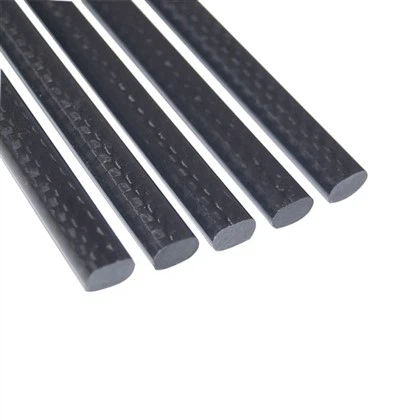
It is commonly used to manufacture carbon fiber rods, bars, and profiles with consistent cross-sectional dimensions.
Because pultrusion is a continuous process, it can be efficient for products with regular cross-sections and repeatable specifications.
However, customized cross-sectional designs may require new dies and additional setup time.
Roll-Wrapping
Roll-wrapping is commonly used for manufacturing carbon fiber tubes.
In this process, prepreg sheets are cut and wrapped around a mandrel according to the specified fiber orientation and laminate structure. The wrapped material is subsequently consolidated and cured under controlled conditions.
Production time depends on tube diameter, length, wall thickness, ply count, surface requirements, and the number of manufacturing operations.
Compression Molding
Compression molding is suitable for producing carbon fiber components with more complicated shapes.
The material is placed into a mold and formed under controlled temperature and pressure. This process can provide good dimensional consistency when the tooling and process parameters are properly established.
However, complex mold development and process validation may increase initial production lead time.
Autoclave Molding
Autoclave molding is frequently used for high-performance composite components requiring carefully controlled consolidation and curing conditions.
The process involves preparing the laminate, vacuum bagging, applying a prescribed thermal cycle, and curing under controlled pressure.
The curing cycle depends on the resin system and material specifications. Additional time may be required for cooling, demolding, trimming, and inspection.
| Manufacturing process | Typical applications | Main lead-time considerations |
|---|---|---|
| Pultrusion | Carbon fiber rods and profiles | Die availability, setup, continuous production |
| Roll-wrapping | Carbon fiber tubes | Layup, mandrel preparation, curing |
| Compression molding | Customized shaped components | Mold development, material preparation, curing |
| Autoclave molding | High-performance structural parts | Layup, bagging, cure cycle, inspection |
| CNC machining | Precision carbon fiber components | Programming, fixturing, machining, inspection |
There is no universally fastest manufacturing process. The appropriate method depends on product geometry, structural requirements, order quantity, and dimensional specifications.
Selecting a process that matches the product design can reduce unnecessary operations and improve manufacturing efficiency.
Why Does Custom Tooling and Mold Development Take Time?
Tooling is another important factor determining the lead time for custom carbon fiber products.
Unlike standard products manufactured using existing equipment, customized components may require dedicated molds, mandrels, dies, or machining fixtures.
Tooling development generally involves several steps:
Reviewing product drawings and technical specifications.
Evaluating mold structure and manufacturing feasibility.
Selecting appropriate tooling materials.
Designing and manufacturing the mold.
Checking dimensions and surface quality.
Conducting initial production trials.
Making necessary adjustments before mass production.
The tooling material must be compatible with the selected manufacturing process. Factors such as operating temperature, pressure, dimensional stability, thermal expansion, and surface finish should be considered.
For example, a customized carbon fiber tube may require a specific mandrel diameter and surface finish. A complex compression-molded component may need a multi-part mold with accurately controlled cavity dimensions.
If the first trial reveals dimensional deviations, surface defects, or difficulties during demolding, tooling modifications may be necessary.
These changes can extend the overall production schedule.
The importance of tooling and process control is also recognized in the Federal Aviation Administration's AC 20-107B, Composite Aircraft Structure. The guidance identifies tooling, material handling, laminate layup, cure management, machining, and inspection as important considerations in composite manufacturing implementation.
For repeat orders, existing qualified tooling can substantially reduce preparation time, provided the design and process specifications remain unchanged.
Can CNC Machining and Surface Finishing Extend Delivery Time?
Yes. Secondary processing can represent a significant portion of the total manufacturing schedule.
After molding or curing, many carbon fiber components require additional operations to achieve their final dimensions and appearance.
Common secondary processes include:
- CNC milling and drilling.
- Precision cutting and trimming.
- Edge finishing.
- Bonding and assembly.
- Surface coating and painting.
- Dimensional correction within approved process limits.
- Final cleaning and packaging.
CNC machining is particularly important for customized carbon fiber products used in robotics, industrial equipment, medical machinery, and electronic devices.
These applications may require accurate mounting holes, connection interfaces, flatness, parallelism, and positional tolerances.
Unlike machining conventional metals, carbon fiber machining requires appropriate cutting tools and process parameters to reduce delamination, fiber pull-out, edge damage, and excessive tool wear.
The machining schedule depends on part geometry, fixture design, programming complexity, cutting operations, and inspection requirements.
Surface finishing also influences lead time. A component requiring a standard trimmed edge may need fewer operations than one requiring a controlled cosmetic surface, coating, or specialized finish.
To improve efficiency, manufacturers should evaluate machining requirements during the design stage rather than waiting until the molded component is completed.
What Can Buyers Do to Reduce Custom Carbon Fiber Manufacturing Lead Time?
Although manufacturers control the production process, buyers can also take practical steps to prevent unnecessary delays.
The most effective approach is to reduce uncertainty before production begins.
1. Provide complete technical documentation.
Submit 2D drawings, 3D models, material requirements, dimensional tolerances, and surface finish specifications.
2. Confirm the manufacturing method early.
Discuss whether pultrusion, roll-wrapping, compression molding, or autoclave molding is most suitable for the application.
3. Approve samples promptly.
For customized projects, sample approval should be completed before mass production whenever required.
4. Avoid unnecessary design changes.
Late modifications can affect tooling, material preparation, machining programs, and inspection procedures.
5. Confirm raw material availability.
Verify material grades, specifications, quantities, and procurement schedules before confirming the production date.
6. Establish clear quality requirements.
Define inspection standards, testing requirements, dimensional tolerances, and acceptance criteria in advance.
7. Choose an experienced manufacturer.
A supplier with established manufacturing processes, engineering support, suitable equipment, and quality management procedures can help reduce production uncertainty.
For businesses sourcing custom carbon fiber products from China, communication is especially important. Sharing complete specifications and confirming milestones with the manufacturer can make international procurement more predictable.
FAQ
Q: What is the typical lead time for custom carbon fiber products?
A: There is no universal lead time. It depends on product complexity, material availability, tooling requirements, manufacturing processes, order quantity, and inspection standards. Repeat orders with approved designs and available tooling are generally easier to schedule than new product development projects.
Q: Why do custom carbon fiber parts take longer to produce than standard products?
A: Custom parts may require engineering evaluation, specialized material procurement, dedicated tooling, prototype development, and additional quality testing. Standard products usually benefit from existing designs and established production processes.
Q: Does carbon fiber tooling need to be developed for every order?
A: No. Existing tooling can often be reused when product dimensions, material specifications, and manufacturing requirements remain unchanged. New tooling may be necessary when the product design or manufacturing process changes.
Q: Which carbon fiber manufacturing process is faster?
A: The answer depends on product geometry and production volume. Pultrusion is efficient for continuous production of uniform profiles, while roll-wrapping is suitable for many tubular products. Compression molding and autoclave molding are selected according to component geometry and performance requirements.
Q: How can I obtain an accurate quotation and delivery estimate?
A: Provide technical drawings, material specifications, dimensions, tolerances, required quantities, surface finish requirements, and intended applications. These details help manufacturers evaluate feasibility, production operations, material availability, and scheduling requirements.
Conclusion
The lead time for custom carbon fiber products is determined by several interconnected factors rather than a single manufacturing operation.
Product design complexity, raw material availability, manufacturing methods, tooling development, curing requirements, CNC machining, quality inspection, and order quantity all influence the final delivery schedule.
Understanding these factors allows buyers to prepare more complete specifications, select suitable manufacturing processes, and communicate realistic production expectations.
For manufacturers, effective engineering evaluation, stable material management, process control, production scheduling, and quality assurance are essential for maintaining reliable delivery performance.
When selecting a carbon fiber supplier, buyers should look beyond the quoted delivery date. Manufacturing experience, technical capabilities, equipment availability, and quality management are equally important considerations.
A reliable manufacturing partner should be able to explain the production process, identify potential risks, and provide a clear schedule from initial design review to final shipment.
Ultimately, efficient delivery is not about skipping essential manufacturing steps. It is about planning each stage correctly and maintaining consistent control over the entire production process.
Contact Us
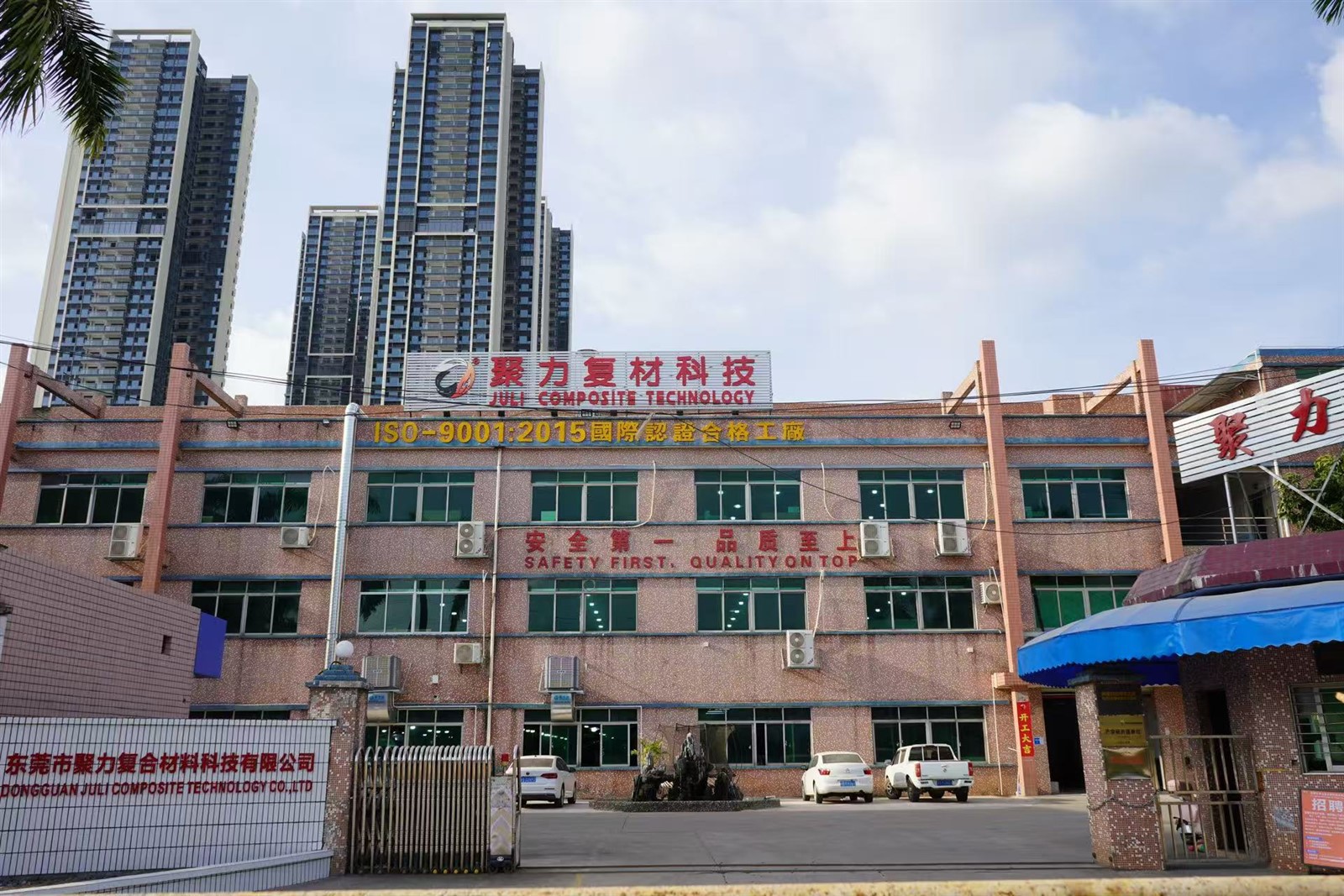
Are you looking for a supplier of carbon fiber products? You may consider Dongguan Julei Composite Materials Technology Co., Ltd. Our company offers a one-stop service from carbon fiber prepreg fabric to carbon fiber products, including processes such as pultrusion, tube rolling, autoclave, and CNC machining. You can contact us via email: sales18@julitech.cn or WhatsApp: +86 18822947075. We welcome you to visit our factory in China.