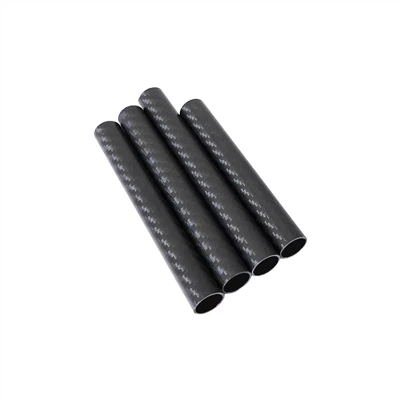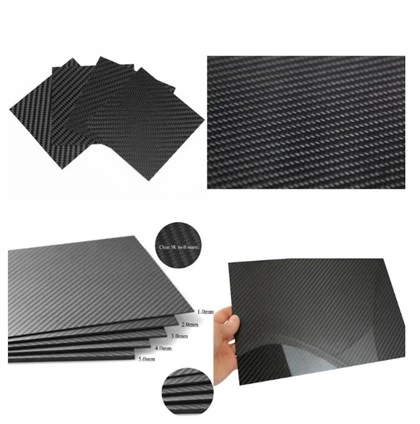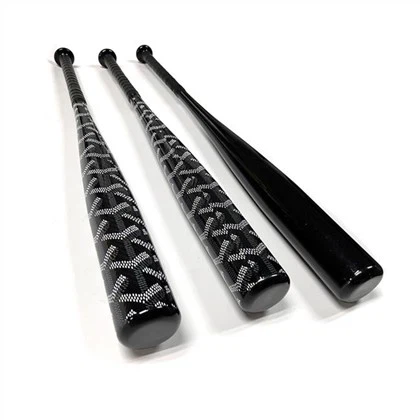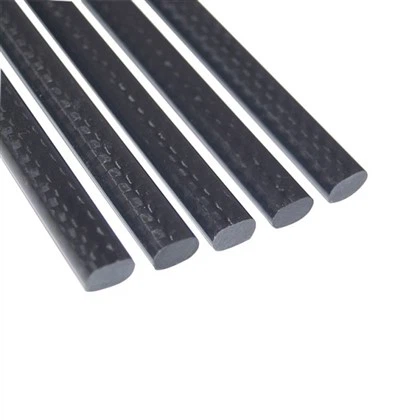
Carbon fiber processing plates offer a myriad of benefits across various industries, making them an increasingly popular choice for high-performance applications. These composite materials boast an exceptional strength-to-weight ratio, surpassing traditional materials like steel and aluminum. Carbon fiber processing plates exhibit remarkable durability, corrosion resistance, and dimensional stability, ensuring long-lasting performance in demanding environments. Their lightweight nature contributes to improved fuel efficiency in aerospace and automotive sectors, while their high stiffness and low thermal expansion make them ideal for precision equipment. Additionally, carbon fiber plates offer design flexibility, allowing for complex shapes and integrated structures that can significantly enhance product performance and aesthetics.
Exceptional Properties of Carbon Fiber Plates
Unparalleled Strength-to-Weight Ratio
Carbon fiber processing boards are renowned for their extraordinary strength-to-weight ratio, which sets them apart from conventional materials. This property stems from the unique structure of carbon fibers, consisting of long, thin strands of carbon atoms bonded together in crystals aligned parallel to the fiber's long axis. When these fibers are embedded in a polymer matrix to form a composite material, the result is a plate that offers superior strength while maintaining minimal weight.
In aerospace applications, this characteristic is particularly valuable. Aircraft components made from carbon fiber plates contribute to significant weight reduction without compromising structural integrity. This translates to improved fuel efficiency, increased payload capacity, and enhanced overall performance of aircraft. Similarly, in the automotive industry, carbon fiber plates are utilized in high-performance vehicles to reduce weight and improve acceleration, handling, and fuel economy.
Impressive Stiffness and Rigidity
Another noteworthy property of carbon fiber processing boards is their exceptional stiffness and rigidity. The high modulus of elasticity of carbon fibers imparts remarkable resistance to deformation under load. This characteristic makes carbon fiber processing boards ideal for applications requiring dimensional stability and precision.
In the field of renewable energy, wind turbine blades fabricated using carbon fiber plates benefit from this property. The stiffness of the material allows for longer, more efficient blades that can capture wind energy more effectively. Additionally, in sports equipment such as tennis rackets and golf clubs, the rigidity of carbon fiber plates enhances performance by minimizing energy loss during impact and improving power transfer.
Resistance to Fatigue and Corrosion
Carbon fiber plates exhibit superior resistance to fatigue and corrosion compared to many traditional materials. The fatigue resistance of carbon fiber composites is attributed to their ability to distribute stress evenly across the material, reducing the likelihood of localized stress concentrations that can lead to failure.
In marine and offshore applications, the corrosion resistance of carbon fiber plates is particularly advantageous. Unlike metals that may corrode in harsh saltwater environments, carbon fiber composites remain largely unaffected, maintaining their structural integrity over extended periods. This property also makes carbon fiber plates suitable for use in chemical processing equipment and other corrosive environments, where longevity and reliability are crucial.
Versatile Applications Across Industries
Aerospace and Aviation Advancements
The aerospace industry has been at the forefront of adopting carbon fiber plate technology. These high strength composite materials have revolutionized aircraft design and performance. In commercial aviation, carbon fiber processing plates are used extensively in airframe structures, including fuselage sections, wings, and tail assemblies. The weight reduction achieved through the use of carbon fiber composites allows for increased fuel efficiency, extended flight ranges, and reduced emissions.
In space exploration, carbon fiber plates play a crucial role in satellite structures and spacecraft components. The material's ability to withstand extreme temperature fluctuations and maintain dimensional stability in the vacuum of space makes it invaluable for these applications. Furthermore, the high specific strength of carbon fiber plates enables the design of larger, more capable satellites and space probes without incurring prohibitive launch costs.
Automotive Innovation and Performance
The automotive sector has embraced carbon fiber plates to enhance vehicle performance and efficiency. High-end sports cars and racing vehicles utilize carbon fiber processing boards in chassis components, body panels, and aerodynamic elements. The material's lightweight properties contribute to improved acceleration, handling, and top speed, while its high strength ensures safety standards are met or exceeded.
In the realm of electric vehicles (EVs), carbon fiber plates are increasingly being employed to offset the weight of heavy battery packs. By incorporating these composite materials into structural components, EV manufacturers can extend driving ranges and improve overall vehicle dynamics. Additionally, the design flexibility offered by carbon fiber plates allows for the creation of aerodynamic shapes that further enhance energy efficiency.
Construction and Infrastructure Enhancement
The construction industry has found innovative applications for carbon fiber plates in strengthening and rehabilitating existing structures. Carbon fiber reinforced polymer (CFRP) plates are used to retrofit bridges, buildings, and other infrastructure elements, extending their service life and improving load-bearing capacity. These composite materials offer a non-invasive, lightweight solution for structural reinforcement, often proving more cost-effective than traditional methods.
In new construction projects, carbon fiber plates are being integrated into concrete structures to enhance durability and reduce maintenance requirements. The corrosion resistance of carbon fiber composites makes them particularly suitable for use in aggressive environments, such as coastal areas or regions with harsh winters where de-icing salts are commonly used. By incorporating carbon fiber plates, engineers can design more resilient and long-lasting infrastructure.
Future Trends and Innovations in Carbon Fiber Plate Technology
Advancements in Manufacturing Processes
The future of carbon fiber plate technology is closely tied to ongoing advancements in manufacturing processes. Researchers and industry leaders are continually developing new methods to improve production efficiency and reduce costs, making carbon fiber composites more accessible across various sectors. One area of focus is the automation of carbon fiber processing, which aims to streamline production and ensure consistent quality.
Innovations in out-of-autoclave (OOA) curing techniques are also gaining traction. These methods allow for the production of high-quality carbon fiber plates without the need for large, energy-intensive autoclaves, potentially reducing manufacturing costs and enabling the creation of larger composite structures. Additionally, advancements in rapid curing technologies are shortening production times, further enhancing the economic viability of carbon fiber plate manufacturing.
Sustainable Production and Recycling
As environmental concerns continue to shape industrial practices, the carbon fiber industry is increasingly focusing on sustainability. Research into bio-based precursors for carbon fiber production is ongoing, with the aim of reducing reliance on petroleum-based raw materials. These sustainable alternatives have the potential to lower the environmental impact of carbon fiber processing plate manufacturing while maintaining the material's exceptional properties.
Recycling of carbon fiber composites is another area of significant development. While historically challenging, new technologies are emerging that enable the recovery and reuse of carbon fibers from end-of-life products. These recycling processes not only reduce waste but also offer the potential for creating lower-cost, recycled carbon fiber plates suitable for various applications. As recycling technologies improve, the circular economy for carbon fiber composites is expected to grow, further enhancing the material's sustainability credentials.
Integration with Smart Technologies
The integration of smart technologies with carbon fiber plates represents an exciting frontier in composite materials. Researchers are exploring ways to embed sensors and conductive elements within carbon fiber processing boards, creating multifunctional materials capable of real-time monitoring and data transmission. These "smart" carbon fiber plates could revolutionize structural health monitoring in aerospace, automotive, and infrastructure applications.
In the realm of energy harvesting, carbon fiber plates are being developed with integrated piezoelectric materials, capable of generating electricity from mechanical stress or vibration. This technology could lead to self-powered sensors and devices in various applications, from wearable technology to autonomous vehicles. Furthermore, the development of carbon fiber plates with enhanced electromagnetic shielding properties is opening new possibilities in electronics and defense applications, showcasing the versatility and potential for innovation in this field.
Conclusion
Carbon fiber plates have emerged as a transformative material across numerous industries, offering unparalleled benefits in terms of strength, lightweight properties, and versatility. From revolutionizing aerospace and automotive design to enhancing infrastructure and enabling new technological innovations, carbon fiber processing boards continue to push the boundaries of what's possible in material science. As manufacturing processes evolve, sustainability improves, and integration with smart technologies advances, the future of carbon fiber plates looks increasingly promising. Their continued development and application will undoubtedly play a crucial role in shaping the next generation of high-performance products and structures.
Contact Us
To learn more about our cutting-edge carbon fiber plates and how they can benefit your specific application, we invite you to reach out to our team of experts. Contact us at sales18@julitech.cn for personalized advice and solutions tailored to your needs.
References
1. Smith, J. A., & Johnson, R. B. (2022). Advanced Composite Materials in Aerospace Applications. Journal of Aerospace Engineering, 35(2), 112-128.
2. Chen, X., & Liu, Y. (2021). Carbon Fiber Reinforced Polymers in Automotive Design: A Comprehensive Review. International Journal of Automotive Technology, 22(4), 891-910.
3. Thompson, A. W., et al. (2023). Sustainable Production Methods for Carbon Fiber Composites. Composites Part A: Applied Science and Manufacturing, 156, 106862.
4. García-Macías, E., & Castro-Triguero, R. (2020). Recent Advances in Structural Health Monitoring of Composite Structures Using Carbon Nanotube Networks. Sensors, 20(5), 1343.
5. Brown, M. E., & Davis, C. L. (2022). Innovations in Carbon Fiber Recycling Technologies: A Path Towards Circular Economy. Waste Management, 138, 238-251.
6. Nakamura, H., & Tanaka, F. (2021). Smart Carbon Fiber Composites: Integration of Sensors and Actuators. Progress in Materials Science, 119, 100768.