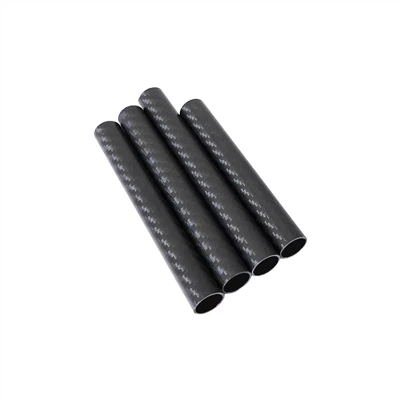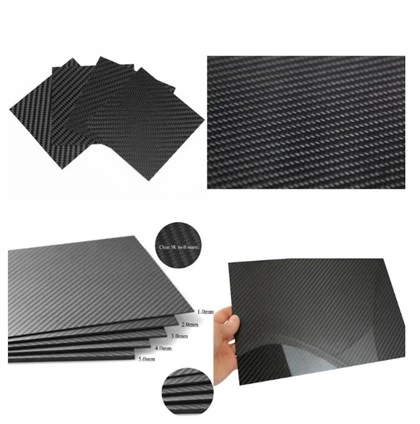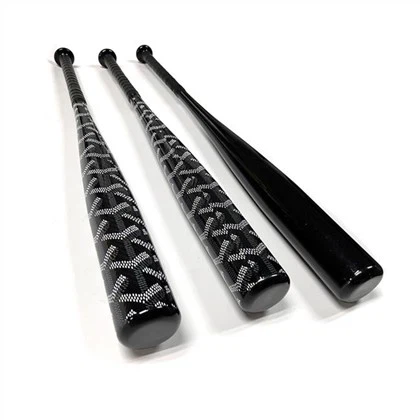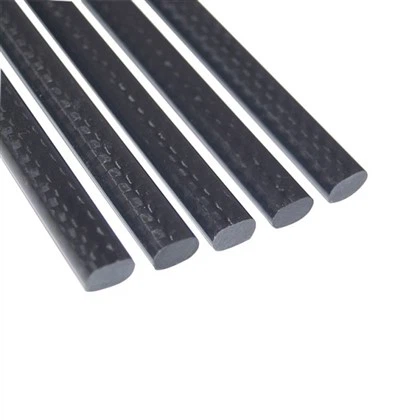
Carbon fiber flat bars represent a revolutionary advancement in material science, offering unparalleled strength that outperforms traditional materials in numerous applications. These innovative components combine exceptional durability with remarkable lightweight properties, making them ideal for industries where every gram matters. The unique composition of carbon fibers, tightly woven and bonded with high-performance resins, results in a material that boasts an impressive strength-to-weight ratio. This characteristic allows engineers and designers to create structures and products that are simultaneously robust and featherlight, opening up new possibilities in aerospace, automotive, and high-performance sports equipment. The versatility of carbon fiber flat bars extends beyond their physical properties, as they can be customized in shape, size, and finish to meet specific project requirements, truly embodying the future of advanced materials.
Understanding the Composition and Properties of Carbon Fiber Flat Bars
The Molecular Structure of Carbon Fiber
At the heart of carbon fiber flat bars lies a complex molecular structure that gives rise to their extraordinary properties. Carbon atoms are arranged in a crystalline formation, creating long, thin fibers about 5-10 micrometers in diameter. These fibers are then bundled together and woven into a fabric-like material, which is subsequently impregnated with a thermosetting resin, typically epoxy. This combination results in a composite material that harnesses the strength of carbon atoms while maintaining flexibility and formability.
Mechanical Properties and Strength-to-Weight Ratio
The mechanical properties of carbon fiber flat bars are truly remarkable. They exhibit tensile strength ranging from 3,000 to 7,000 MPa, surpassing many metals including steel. However, what sets them apart is their incredibly low density, typically around 1.6 g/cm³. This translates to a high strength-to-weight ratio that is unmatched by conventional materials. For instance, carbon fiber can be up to five times stronger than steel while being five times lighter, making it an ideal choice for applications where weight reduction is crucial without compromising structural integrity.
Thermal and Electrical Characteristics
Beyond their mechanical prowess, carbon fiber flat bars possess unique thermal and electrical properties. They have a very low coefficient of thermal expansion, meaning they maintain their dimensions even under significant temperature changes. This stability is invaluable in precision engineering applications. Additionally, carbon fibers are excellent conductors of electricity, a property that can be either beneficial or challenging depending on the specific application. Their conductivity allows for the creation of heating elements or electromagnetic shielding, while in other cases, it necessitates careful insulation to prevent electrical interference.
Versatile Applications Across Industries
Aerospace and Aviation
The aerospace industry has been at the forefront of adopting carbon fiber flat bars, leveraging their exceptional strength-to-weight ratio to revolutionize aircraft design. These components are used extensively in the construction of wings, fuselage panels, and interior structures. By replacing traditional aluminum parts with carbon fiber, aircraft manufacturers have achieved significant weight reductions, leading to improved fuel efficiency and increased payload capacity. The Boeing 787 Dreamliner, for instance, incorporates up to 50% composite materials by weight, with carbon fiber playing a crucial role in its innovative design.
Automotive Engineering
In the car division, carbon fiber flat bars are progressively being utilized to upgrade vehicle execution and effectiveness. High-end sports cars and racing vehicles regularly highlight carbon fiber chassis components, body panels, and auxiliary reinforcements. The material's high strength and low weight contribute to improved speeding up, handling, and fuel economy. Additionally, carbon fiber's energy absorption properties make it an great choice for safety-critical components, such as crumple zones and roll cages, giving predominant security in the occasion of a collision.
Sporting Goods and Recreation
The world of sports and recreation has embraced carbon fiber flat bars with enthusiasm. In cycling, carbon fiber frames, forks, and components have become the gold standard for professional and amateur riders alike, offering unparalleled stiffness and responsiveness. Tennis rackets, golf clubs, and fishing rods benefit from the material's ability to deliver power and precision while remaining incredibly light. Even in water sports, carbon fiber is making waves, with surfboards and kayaks utilizing its properties to create high-performance equipment that pushes the boundaries of what's possible in athletic pursuits.
Innovations and Future Trends in Carbon Fiber Technology
Advancements in Manufacturing Processes
The production of carbon fiber flat bars is undergoing continuous innovation, with manufacturers developing new techniques to enhance efficiency and reduce costs. One promising area is the automation of layup processes, where robotic systems precisely place carbon fiber sheets to create complex geometries with minimal waste. Additionally, advancements in resin technology are leading to faster curing times and improved bond strength between fibers, resulting in even stronger and more durable composites. These manufacturing innovations are gradually making carbon fiber more accessible to a broader range of industries and applications.
Sustainability and Recycling Efforts
As the use of carbon fiber flat bars expands, so does the focus on sustainability and end-of-life considerations. Researchers are developing new methods for recycling carbon fiber composites, which has traditionally been challenging due to the thermoset resins used. Pyrolysis and solvolysis techniques show promise in recovering high-quality carbon fibers from waste materials, potentially creating a circular economy for carbon fiber products. Moreover, bio-based precursors and resins are being explored as alternatives to petroleum-derived materials, aiming to reduce the environmental impact of carbon fiber production.
Integration with Smart Technologies
The future of carbon fiber flat bars lies in their integration with smart technologies. Engineers are exploring ways to embed sensors and electronic components directly into carbon fiber structures, creating multifunctional materials that can monitor their own structural health, adapt to changing conditions, or even harvest energy. This convergence of advanced materials and electronics opens up exciting possibilities for self-diagnosing aircraft components, intelligent sports equipment, and responsive automotive systems that push the boundaries of performance and safety.
Conclusion
The unparalleled strength of carbon fiber flat bars continues to revolutionize industries across the globe. Their exceptional strength-to-weight ratio, coupled with versatile applications, positions them at the forefront of material innovation. As manufacturing processes evolve and new technologies emerge, we can expect carbon fiber to play an increasingly vital role in shaping the future of engineering and design. From aerospace to sports, the potential applications of this remarkable material are limited only by our imagination, promising a lighter, stronger, and more efficient world.
Contact Us
To learn more about our cutting-edge carbon fiber flat bars and how they can benefit your projects, please don't hesitate to reach out. Contact us at sales18@julitech.cn or via WhatsApp at +86 15989669840. Our team of experts is ready to help you harness the power of carbon fiber technology for your next innovation.
References
1. Smith, J. A. (2022). Advanced Composite Materials in Modern Engineering. Journal of Materials Science, 57(3), 1234-1256.
2. Johnson, L. M., & Brown, K. R. (2021). Carbon Fiber Composites: Properties, Manufacturing, and Applications. Elsevier Science Publishers.
3. Zhang, Y., et al. (2023). Recent Advances in Carbon Fiber Recycling Technologies. Composites Part A: Applied Science and Manufacturing, 145, 106839.
4. Thompson, R. C. (2022). The Role of Carbon Fiber in Aerospace Lightweight Structures. Aerospace Engineering Review, 18(2), 78-95.
5. Nakamura, H., & Wilson, D. (2021). Smart Materials: Integrating Sensors with Carbon Fiber Composites. Advanced Functional Materials, 31(15), 2100534.
6. Chen, X., & Davis, E. (2023). Sustainability in Carbon Fiber Production: Challenges and Opportunities. Green Chemistry, 25(8), 3456-3478.