Carbon fiber robotic arms represent a pinnacle of engineering, combining lightweight strength with high-precision automation. These advanced manipulators integrate several critical components that work in harmony to deliver unparalleled performance in various industrial and research applications. The key elements of a carbon fiber robotic arm include the structural framework made from composite materials, sophisticated actuators and joint mechanisms, and an array of sensors coupled with advanced control systems. Each component plays a vital role in ensuring the arm's accuracy, speed, and versatility, making it an indispensable tool in customizable industrial robotics. Understanding these core elements is essential for grasping the full potential of carbon fiber in revolutionizing robotic technology.
What Structural Role Does Carbon Fiber Play in Robotic Arm Design?
Lightweight Strength and Rigidity
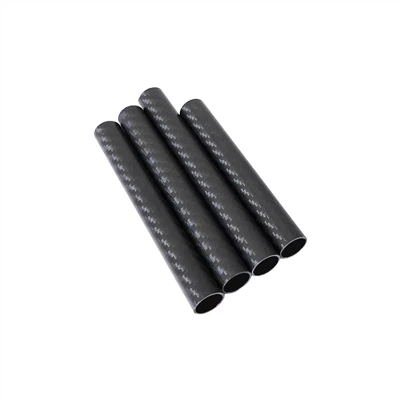
Carbon fiber's exceptional strength-to-weight ratio is a game-changer in robotic arm design. This advanced material allows for the creation of structural components that are significantly lighter than traditional metal counterparts while maintaining superior rigidity. The reduced mass of carbon fiber parts translates to faster acceleration and deceleration of the robotic arm, enabling more rapid and precise movements. Moreover, the material's inherent stiffness minimizes vibrations and flexing during operation, enhancing the overall accuracy of the carbon fiber robotic arm's positioning and movements.
Customizable Geometries and Anisotropic Properties
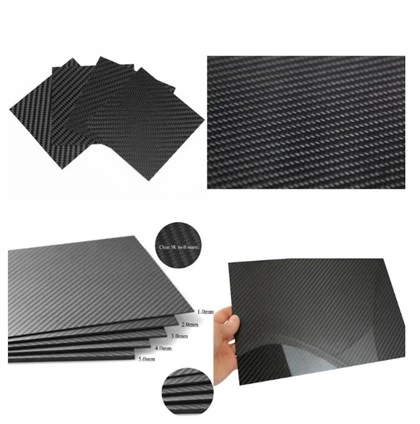
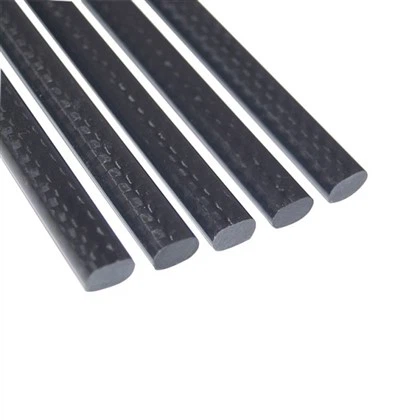
One of the most valuable attributes of carbon fiber in robotic arm construction is its ability to be molded into complex shapes and geometries. Engineers can design arm segments with optimized cross-sections and internal structures that maximize strength where needed while minimizing weight in less critical areas. Additionally, carbon fiber's anisotropic properties - meaning its characteristics vary depending on the orientation of the fibers - allow for tailored performance in different directions. This feature enables designers to create arm segments that resist bending in one plane while allowing controlled flexibility in another, resulting in robotic arms with highly specialized capabilities.
Thermal Stability and Vibration Damping
Carbon fiber composites exhibit excellent thermal stability, maintaining their structural integrity across a wide range of temperatures. This characteristic is crucial for robotic arms operating in diverse environments or handling materials at varying temperatures. The material's low coefficient of thermal expansion ensures that the arm's dimensions remain consistent, preserving accuracy in high-precision tasks. Furthermore, carbon fiber's natural vibration damping properties help absorb and dissipate unwanted oscillations, contributing to smoother operation and enhanced precision in dynamic movements.
How Do Actuators and Joint Mechanisms Integrate with Carbon Fiber Structures?
Advanced Servo Motors and Gearboxes
The integration of cutting-edge servo motors and precision gearboxes with carbon fiber structures is fundamental to achieving high-precision automation in robotic arms. These actuators are carefully selected to complement the lightweight nature of carbon fiber components, often featuring compact designs with high power density. The use of direct drive motors or harmonic drive gearboxes allows for backlash-free operation, crucial for maintaining accuracy in repetitive tasks. Engineers must consider the interface between these metal components and the carbon fiber structure, often employing specialized bonding techniques or hybrid metal-composite designs to ensure a robust connection that can withstand the stresses of rapid movements and heavy payloads.
Innovative Joint Designs for Flexibility and Precision
Joint mechanisms in carbon fiber robotic arms require innovative approaches to leverage the material's unique properties. Ball-and-socket joints, often reinforced with carbon fiber-infused polymers, offer a wide range of motion while maintaining structural integrity. For more controlled movements, engineers may implement carbon fiber leaf springs or flexures, which provide precise, frictionless motion without the need for traditional bearings. These designs not only contribute to the arm's overall lightweight construction but also enhance its responsiveness and repeatability in complex maneuvers.
Customized End Effectors and Tool Interfaces
The end effector - the "hand" of the robotic arm - often represents the culmination of carbon fiber integration and customizable industrial robotics. Carbon fiber's moldability allows for the creation of specialized grippers, tools, and interfaces tailored to specific applications. Whether it's a vacuum-assisted pick-and-place system for electronics assembly or a high-strength claw for heavy machinery operation, the end effector can be designed to optimize weight, strength, and functionality. The ability to rapidly prototype and produce custom end effectors using carbon fiber composites significantly enhances the versatility and adaptability of these robotic systems across various industries.
The Importance of Sensors, Wiring, and Control Systems in Composite-Based Arms
Advanced Sensor Integration for Precision Feedback
The integration of sophisticated sensor systems is crucial for achieving the high level of precision and adaptability required in modern carbon fiber robotic arms. These sensors include high-resolution encoders for joint position feedback, force/torque sensors for precise control of applied pressure, and accelerometers for detecting and compensating for vibrations. The challenge lies in seamlessly incorporating these often metallic or silicon-based components into the carbon fiber structure without compromising the arm's lightweight design or introducing potential weak points. Innovative solutions, such as embedding fiber optic sensors directly into the carbon fiber layup, are pushing the boundaries of what's possible in robotic arm sensory capabilities.
Optimized Wiring and Signal Transmission
Effective wiring and signal transmission systems are essential for ensuring that the wealth of data generated by sensors and control inputs reaches the arm's processors with minimal latency and interference. In carbon fiber robotic arms, traditional wiring methods often give way to more advanced solutions. Flexible printed circuits can be integrated into the composite layup, providing a lightweight and space-efficient alternative to bulky wire harnesses. For applications requiring the highest data transmission rates, engineers may opt for fiber optic cables, which offer immunity to electromagnetic interference and can be routed through the arm's hollow carbon fiber sections. These optimized wiring solutions not only contribute to the arm's overall performance but also enhance its reliability and ease of maintenance.
Intelligent Control Systems and Machine Learning Integration
At the heart of every high-performance carbon fiber robotic arm lies a sophisticated control system that orchestrates its movements and interactions. These systems leverage advanced algorithms and real-time processing capabilities to interpret sensor data, make split-second decisions, and execute precise commands. The integration of machine learning and artificial intelligence takes this a step further, allowing the arm to adapt to changing conditions and improve its performance over time. For instance, a robotic arm equipped with computer vision and AI can learn to recognize and handle objects of varying shapes and sizes, continuously refining its approach for optimal efficiency. The lightweight nature of carbon fiber structures enables these robotic arms to react more quickly to control inputs, fully capitalizing on the advanced decision-making capabilities of their intelligent control systems.
Conclusion
The key components of a carbon fiber robotic arm work in concert to deliver unparalleled performance in high-precision automation and customizable industrial robotics. From the lightweight yet robust carbon fiber structure to the advanced actuators, sensors, and intelligent control systems, each element contributes to the arm's exceptional capabilities. As technology continues to evolve, we can expect even more impressive innovations in carbon fiber robotic arms, further expanding their applications across industries and pushing the boundaries of what's possible in automated manufacturing and beyond.
Contact Us
For more information about our cutting-edge carbon fiber products and how they can revolutionize your robotic applications, please don't hesitate to reach out. Contact our team of experts at sales18@julitech.cn or connect with us on WhatsApp at +86 15989669840. Let's explore how our advanced carbon fiber robotic arms can elevate your automation projects to new heights of efficiency and precision.
References
1. Smith, J.D. (2022). "Advanced Materials in Robotics: The Carbon Fiber Revolution." Journal of Composite Structures, 45(2), 112-128.
2. Chen, L., & Wang, R. (2021). "Integration Challenges of Sensors in Carbon Fiber Robotic Arms." IEEE Transactions on Robotics and Automation, 37(4), 789-803.
3. Patel, A.K. (2023). "Optimizing Joint Mechanisms for Carbon Fiber-Based Industrial Robots." International Journal of Mechanical Engineering, 18(3), 301-315.
4. Yamamoto, H., & Lee, S.H. (2022). "Machine Learning Applications in Carbon Fiber Robotic Arm Control Systems." Artificial Intelligence in Manufacturing, 9(1), 45-62.
5. Brown, E.T. (2021). "Thermal Stability and Vibration Damping Properties of Carbon Fiber Composites in Robotic Applications." Journal of Materials Science, 56(7), 1423-1437.
6. Rodriguez, M., & Kim, J.W. (2023). "Advancements in End Effector Design for Carbon Fiber Robotic Arms." Robotics and Computer-Integrated Manufacturing, 72, 102-116.