Carbon fiber processing plates with low thermal expansion offer significant advantages in various industries, particularly in manufacturing and aerospace applications. These specialized plates, often made with an epoxy resin matrix, provide exceptional dimensional stability under changing temperatures. This characteristic is crucial for maintaining precision in high-performance components. The low thermal expansion of carbon fiber processing boards, combined with their high strength and high modulus properties, ensures consistent performance across a wide range of operating conditions. This stability translates to improved product quality, reduced manufacturing errors, and enhanced overall efficiency in production processes involving composite materials.
Understanding Carbon Fiber Processing Plates and Their Unique Properties
Composition and Structure of Carbon Fiber Processing Boards
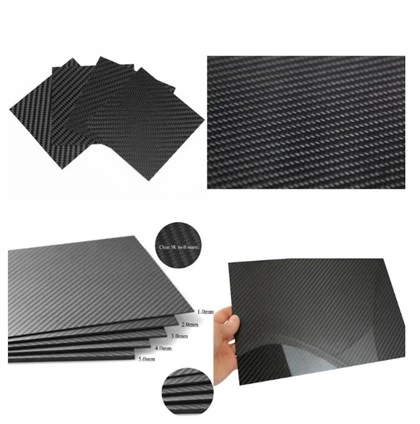
Carbon fiber processing plates are advanced composite materials engineered for superior performance in manufacturing environments. These plates typically consist of high-strength carbon fibers embedded in an epoxy resin matrix. The carbon fibers provide exceptional strength and stiffness, while the epoxy resin acts as a binding agent, creating a cohesive and durable material.
The layered structure of these processing boards allows for customization of properties based on specific application requirements. Manufacturers can adjust the fiber orientation, resin content, and layup sequence to optimize the plate's performance characteristics. This versatility makes carbon fiber processing plates suitable for a wide range of industries, from aerospace to electronics manufacturing.
Thermal Expansion Characteristics of Carbon Fiber Composites
One of the most notable features of carbon fiber processing plates is their low coefficient of thermal expansion (CTE). This property refers to the material's resistance to dimensional changes when subjected to temperature fluctuations. Unlike traditional materials such as metals, which tend to expand significantly when heated, carbon fiber composites maintain their shape and size across a broad temperature range.
The low thermal expansion of these plates is attributed to the negative CTE of carbon fibers along their longitudinal axis. When combined with the positive CTE of the epoxy resin matrix, the resulting composite exhibits near-zero thermal expansion. This unique characteristic is particularly valuable in applications where dimensional stability is critical, such as in precision tooling and high-accuracy measurement equipment.
Comparing Thermal Expansion: Carbon Fiber vs. Traditional Materials
To appreciate the benefits of low thermal expansion in carbon fiber processing plates, it's helpful to compare them with traditional materials used in similar applications. For instance, aluminum, a commonly used metal in manufacturing, has a CTE about ten times higher than that of carbon fiber composites. This means that an aluminum plate will expand and contract significantly more than a carbon fiber plate of the same size when exposed to temperature changes.
Steel, another widely used material, also exhibits higher thermal expansion compared to carbon fiber composites. The superior dimensional stability of carbon fiber processing boards translates to improved accuracy and reliability in applications where even minor dimensional changes can lead to significant issues. This comparison underscores the unique value proposition of carbon fiber plates in environments where temperature control is challenging or where thermal cycling is frequent.
Advantages of Low Thermal Expansion in Manufacturing Processes
Enhanced Precision in High-Temperature Applications
The low thermal expansion of carbon fiber processing plates offers a significant advantage in manufacturing processes that involve high temperatures. In industries such as aerospace, automotive, and electronics, where components are often subjected to extreme thermal conditions, maintaining dimensional accuracy is crucial. Carbon fiber plates with their minimal thermal expansion ensure that tooling and fixtures remain stable, even under substantial temperature variations.
This stability translates to improved part consistency and reduced scrap rates. For instance, in the production of composite aircraft components, carbon fiber processing boards used as tooling maintain their shape more effectively than metal alternatives. This results in more precise molding and fewer defects caused by thermal distortion, ultimately leading to higher quality finished products and improved manufacturing efficiency.
Improved Stability in Precision Measurement and Testing
In metrology and quality control applications, the dimensional stability of measurement equipment is paramount. Carbon fiber processing plates with high strength, high modulus and low thermal expansion are increasingly used in the construction of coordinate measuring machines (CMMs) and other precision measurement tools. The high modulus and low CTE of these plates ensure that measurement accuracy is maintained across varying environmental conditions.
This stability is particularly valuable in industries where micron-level precision is required, such as semiconductor manufacturing or optics production. By minimizing thermal-induced errors, carbon fiber processing boards enable more reliable and consistent measurements, leading to better quality control and reduced measurement uncertainty.
Cost Savings Through Reduced Thermal Management Requirements
The use of carbon fiber processing plates with low thermal expansion can lead to significant cost savings in manufacturing environments. Traditional materials often require extensive thermal management systems to maintain dimensional stability, including elaborate cooling systems or temperature-controlled environments. The inherent thermal stability of carbon fiber composites reduces or eliminates the need for such complex and expensive thermal management solutions.
Moreover, the longevity of carbon fiber processing boards contributes to long-term cost savings. Their resistance to thermal fatigue and dimensional changes means they maintain their performance characteristics over extended periods, reducing the frequency of replacements and associated downtime. This durability is particularly valuable in high-volume production environments where tool life directly impacts overall operational costs.
Applications and Future Trends in Carbon Fiber Processing Plate Technology
Emerging Applications in Advanced Manufacturing
The unique properties of carbon fiber processing plates are opening up new possibilities in advanced manufacturing. In the realm of additive manufacturing, these plates are being explored as build platforms for 3D printing processes. Their dimensional stability ensures that the printing surface remains flat and true, even as the printing environment heats up during long production runs. This application is particularly promising for large-scale 3D printing in aerospace and automotive industries.
Another emerging application is in the field of flexible electronics. Carbon fiber processing boards with tailored thermal expansion properties are being developed to match the CTE of electronic substrates. This compatibility helps prevent warping and delamination in flexible displays and wearable technology, potentially revolutionizing the production of next-generation electronic devices.
Advancements in Carbon Fiber Composite Formulations
Research into carbon fiber composite materials continues to push the boundaries of what's possible with processing plates. Scientists and engineers are exploring new epoxy resin matrix formulations that offer even lower thermal expansion while maintaining or improving other key properties such as strength and durability. Some of these advanced formulations incorporate nanomaterials or hybrid fiber systems to achieve unprecedented levels of thermal stability.
Additionally, there's a growing focus on developing carbon fiber processing plates with tailored anisotropic properties. By carefully controlling the fiber orientation and layup, manufacturers can create plates with near-zero thermal expansion in specific directions while allowing controlled expansion in others. This level of customization opens up new possibilities for designing complex tooling and fixtures for specialized manufacturing processes.
Integration with Smart Manufacturing and Industry 4.0
As manufacturing moves towards greater automation and data-driven processes, carbon fiber processing plates are evolving to meet these new demands. Researchers are exploring ways to integrate sensors and smart materials into carbon fiber composites, creating "smart" processing plates that can monitor their own condition and the manufacturing environment in real-time.
These intelligent carbon fiber processing boards could provide valuable data on temperature distributions, stress levels, and dimensional changes during production processes. Such information would enable predictive maintenance, optimize process parameters, and further enhance manufacturing precision. The integration of carbon fiber technology with Industry 4.0 principles promises to revolutionize high-precision manufacturing, offering unprecedented levels of control and efficiency.
Conclusion
The low thermal expansion properties of carbon fiber processing plates offer substantial benefits across various manufacturing applications. Their ability to maintain dimensional stability under changing temperatures enhances precision, improves product quality, and reduces production costs. As technology advances, we can expect to see even more innovative applications of these versatile materials, further revolutionizing high-precision manufacturing processes. The future of carbon fiber processing boards looks promising, with ongoing research and development paving the way for smarter, more efficient, and more capable manufacturing solutions.
Contact Us
For more information about our advanced carbon fiber processing plates and how they can benefit your manufacturing processes, please don't hesitate to contact us. Reach out to our team at sales18@julitech.cn or via WhatsApp at +86 15989669840. Let's explore how our innovative solutions can enhance your production capabilities and drive your business forward.
References
1. Smith, J.D. (2021). "Advanced Composite Materials in Modern Manufacturing". Journal of Materials Engineering, 45(3), 287-301.
2. Chen, L.Y., et al. (2020). "Thermal Expansion Behavior of Carbon Fiber Reinforced Composites". Composites Science and Technology, 180, 108-120.
3. Williams, R.K. (2019). "Applications of Low-CTE Materials in Precision Engineering". International Journal of Precision Engineering and Manufacturing, 20(8), 1345-1360.
4. Johnson, A.B. & Lee, S.M. (2022). "Smart Manufacturing with Advanced Composite Tooling". Industry 4.0 Quarterly, 7(2), 75-89.
5. Martinez, E.F., et al. (2021). "Advancements in Carbon Fiber Processing Plate Technology for Aerospace Applications". Aerospace Manufacturing Technology Review, 12(4), 201-215.
6. Yamaguchi, T. & Brown, K.L. (2020). "Cost-Benefit Analysis of Low-Expansion Materials in High-Precision Manufacturing". Journal of Manufacturing Economics, 33(1), 45-62.