Choosing the right carbon fiber manufacturer can make a big difference when developing custom composite parts. For standard products such as carbon fiber plates, tubes, or rods, it is usually easy to find several suppliers that can meet the basic requirements. Custom parts are different. Once the design involves complex shapes, tight tolerances, special layups, or demanding mechanical performance, the supplier's manufacturing experience becomes much more important.
A capable carbon fiber manufacturer should be able to control the process from material selection to final inspection. This includes the carbon fiber grade, resin system, fiber orientation, laminate structure, molding process, curing conditions, machining, dimensional control, and quality inspection. Problems in any of these areas can affect the strength, weight, surface finish, or dimensional accuracy of the finished part.
Carbon fiber composites also cannot be evaluated in the same way as isotropic metals. CFRP is anisotropic, so its mechanical properties depend heavily on fiber direction and laminate design. ASTM D3039/D3039M, for example, takes factors such as specimen preparation, lay-up, stacking sequence, conditioning, test environment, void content, and reinforcement volume fraction into account when evaluating tensile properties.
For buyers sourcing custom carbon fiber parts, price should not be the only factor. A lower quotation may look attractive at the beginning, but inconsistent material quality, poor dimensional control, or limited production capability can create much higher costs later.
The better approach is to evaluate whether the carbon fiber manufacturer can actually handle your part from prototype to production. Look at its material capabilities, manufacturing processes, quality control system, equipment, engineering support, and experience with similar components. This gives you a much clearer idea of whether the supplier is suitable for long-term production.
Why Does Choosing the Right Carbon Fiber Manufacturer Matter?
The performance of a custom carbon fiber component is determined by the complete manufacturing system, not by the carbon fiber material alone.
A carbon fiber part normally consists of reinforcement fibers embedded in a polymer matrix. The fibers provide much of the load-carrying capability, while the resin transfers loads between fibers, maintains the laminate structure, and contributes to environmental and thermal performance.Two components can therefore use the same nominal carbon fiber grade and still have very different mechanical properties.The difference may come from fiber orientation, resin content, void content, curing conditions, laminate thickness, surface defects, machining damage, or manufacturing consistency.
This is why an experienced carbon fiber manufacturer should be involved early in the development process. The manufacturer can identify potential production problems before tooling is created or large quantities are ordered.
For example, a component originally designed for aluminum may not be directly converted to carbon fiber without modification. Aluminum is generally isotropic, while CFRP is directional. A carbon fiber design may require a specific fiber orientation to place reinforcement along the primary load path.
The same principle applies to machining. Carbon fiber composite materials can be machined to tight dimensional requirements, but machining parameters must be selected according to the laminate construction. Excessive cutting forces can contribute to edge damage and delamination.
NASA's current Advanced High-Rate Composite Manufacturing facility specifically focuses on manufacturing-process development, robotic automation, process sensing, modeling, testing, precision, and repeatability. This reflects a broader industry principle: composite performance depends not only on material selection but also on manufacturing-process control.
For a buyer, this means supplier evaluation should cover five areas:
- Material capability
- Composite manufacturing processes
- Engineering and design support
- Inspection and quality control
- Production scalability
A supplier that performs well in all five areas is usually a stronger candidate than one that competes primarily on price.
What Manufacturing Processes Should a Carbon Fiber Manufacturer Offer?
There is no single manufacturing process that is ideal for every carbon fiber component.A capable carbon fiber manufacturer should select the process according to part geometry, mechanical requirements, production volume, dimensional requirements, and target cost.
Pultrusion
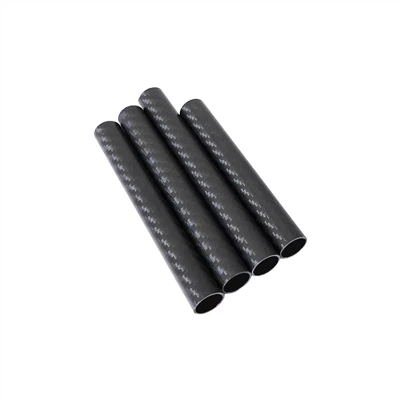
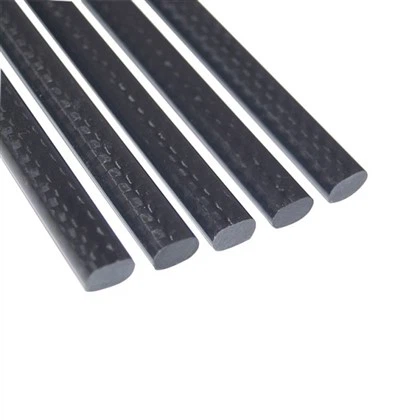
Pultrusion is well suited to continuous profiles with relatively constant cross-sections. Carbon fiber rods, tubes, flat strips, and structural profiles can be manufactured using continuous reinforcement pulled through a resin and forming system.
The major advantage is process consistency over long lengths.
Filament Winding
Filament winding is commonly used for cylindrical or rotational components. Continuous fibers are placed over a mandrel at controlled angles.
Fiber angle is particularly important because it influences axial, hoop, and torsional performance.
Compression Molding
Compression molding is suitable for repeatable production of molded carbon fiber components. It can be attractive when production volumes justify dedicated tooling.
The process is especially useful for parts with repeatable geometry and relatively high production demand.
Prepreg and Autoclave Processing
Prepreg consists of reinforcement that has been pre-impregnated with a controlled resin content. Autoclave curing can provide controlled pressure and temperature conditions for high-performance laminate manufacturing.
This approach is common in demanding applications where laminate quality and process control are critical.
CNC Machining
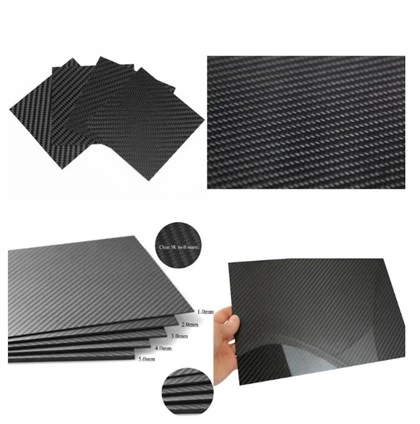
CNC machining is important when custom carbon fiber plates, brackets, housings, fixtures, or complex structural components require precise final geometry.
A manufacturer should understand how machining affects composite laminates. Cutting direction, tool geometry, cutting parameters, workholding, and tool wear can all influence edge quality.
A professional carbon fiber manufacturer should therefore explain why a process is recommended rather than simply offering whichever equipment happens to be available.
| Manufacturing Process | Suitable Components | Main Advantage | Main Consideration |
|---|---|---|---|
| Pultrusion | Rods, tubes, profiles | Continuous production and dimensional consistency | Mainly constant cross-sections |
| Filament winding | Tubes, shafts, cylindrical structures | Controlled fiber orientation | Geometry restrictions |
| Compression molding | Brackets, housings, molded parts | Repeatable production | Tooling investment |
| Prepreg layup | High-performance laminates | Controlled fiber/resin system | Higher process complexity |
| Autoclave | Advanced structural parts | Controlled pressure and temperature | Higher processing cost |
| CNC machining | Plates, brackets, precision parts | Flexible geometry | Tool wear and edge damage |
The right process should be determined during technical review rather than after the quotation has already been accepted.
How Should You Evaluate a Carbon Fiber Manufacturer's Custom Part Capability?
Custom manufacturing is where the difference between a general composite supplier and an experienced carbon fiber manufacturer becomes particularly visible.
A custom component normally begins with an engineering drawing, 3D CAD model, sample, specification, or application requirement. The manufacturer then needs to translate that information into a production process.
This translation requires engineering judgment.
For example, the drawing may specify an overall thickness of 3 mm, but it may not define the laminate sequence. For a composite component, the manufacturer may need to determine whether the structure should use unidirectional carbon fiber, woven fabric, or a combination of orientations.
A typical laminate might contain 0°, ±45°, and 90° plies. Each orientation contributes differently to axial, shear, and transverse performance.
The manufacturer should also examine:
- Load direction
- Fiber orientation
- Laminate thickness
- Corner radii
- Fastener holes
- Inserts
- Bonding surfaces
- Machining allowances
- Tooling access
- Surface requirements
- Dimensional tolerances
- Operating temperature
- Chemical exposure
- Moisture exposure
This is especially important for custom carbon fiber parts manufacturing.
How Important Is CNC Machining Capability When Choosing a Carbon Fiber Manufacturer?
CNC machining is often underestimated when buyers evaluate a carbon fiber manufacturer.
Many custom carbon fiber components are manufactured first as a plate, laminate, molded blank, or tube and then machined into the final geometry.
This creates an important manufacturing chain:
Composite manufacturing → curing → blank inspection → CNC machining → deburring → final inspection
Each stage can affect the final component.
Carbon fiber reinforced polymer is different from conventional aluminum or steel during machining. The material contains hard reinforcing fibers embedded in a comparatively softer polymer matrix. Cutting therefore needs to account for fiber orientation and laminate structure.
Poor machining can result in:
- Edge fraying
- Delamination
- Fiber pull-out
- Surface damage
- Dimensional variation
- Excessive tool wear
- Local overheating
- Dust contamination
A competent carbon fiber CNC machining manufacturer should therefore have appropriate tooling and machining procedures.
The manufacturer should also understand that a very tight tolerance is not automatically better. Tight tolerances increase manufacturing cost and may require additional inspection. The tolerance should be linked to the functional requirement of the component.
For example, a non-critical external surface may not require the same tolerance as a mounting hole or bearing interface.
This is where design-for-manufacturing support becomes valuable.
A manufacturer can review the drawing and distinguish between:
Critical dimensions: dimensions that directly influence assembly or performance.
Reference dimensions: dimensions used primarily for information.
Cosmetic requirements: appearance-related requirements that do not necessarily affect structural performance.
A good specification prevents unnecessary manufacturing cost while protecting the dimensions that matter.
How Can You Compare Two Carbon Fiber Manufacturers?
Comparing suppliers solely by unit price is rarely sufficient for custom composite components.
A better approach is to compare technical capability, quality risk, tooling cost, lead time, production capacity, and engineering support.
Suppose Supplier A offers a lower unit price but requires extensive subcontracting for machining and inspection. Supplier B has a slightly higher price but performs composite manufacturing, CNC machining, inspection, and quality documentation internally.
The second supplier may offer a lower overall project risk even if the initial quotation is higher.
A useful supplier scorecard can include:
| Evaluation Factor | Suggested Weight | What to Evaluate |
|---|---|---|
| Material capability | 15% | Fiber, resin, prepreg, fabric options |
| Manufacturing processes | 20% | Pultrusion, winding, molding, curing |
| Engineering support | 15% | DFM, laminate review, prototyping |
| Quality system | 15% | Documentation, traceability, inspection |
| CNC capability | 10% | Equipment, tooling, tolerance capability |
| Production capacity | 10% | Prototype-to-volume scalability |
| Lead time | 5% | Material, tooling, production schedule |
| Commercial competitiveness | 10% | Total project cost |
The exact weighting should change according to the application.
For a decorative carbon fiber component, appearance and cost may receive more weight.
For an aerospace or robotic structural component, engineering, testing, traceability, and dimensional control may be more important.
NASA's composite manufacturing research similarly emphasizes precision, repeatability, process data, modeling, and testing rather than treating manufacturing as a single isolated operation.
What Questions Should You Ask a Carbon Fiber Manufacturer Before Ordering?
Before placing an order, buyers should ask questions that reveal the supplier's actual technical capability.
Material questions
Which carbon fiber grades are available?
Which resin systems are available?
Can material batches be traced?
Can material substitutions be controlled?
Can the supplier provide material documentation?
Process questions
Which processes are performed in-house?
What are the maximum component dimensions?
Can the supplier manufacture prototypes?
Can prototype processes be transferred to volume production?
What curing equipment is available?
Engineering questions
Can the supplier review CAD drawings?
Can it recommend fiber orientation?
Can it identify machining risks?
Can it assist with tooling design?
Can it suggest design modifications?
Quality questions
What inspection equipment is available?
How are critical dimensions measured?
Can dimensional reports be supplied?
Can mechanical testing be arranged?
What standards are used?
Production questions
What is the normal prototype lead time?
What is the normal production lead time?
What production capacity is available?
What is the minimum order quantity?
How are engineering changes controlled?
The quality of these answers can tell you more about a carbon fiber manufacturer than a marketing brochure.
A technically mature supplier normally asks questions in return.
If a supplier immediately provides a price without asking about material grade, quantity, tolerance, application, drawings, or performance requirements, the quotation may not be based on a sufficiently complete technical assessment.
Why Work With an Experienced Custom Carbon Fiber Manufacturer?
For more than a decade, composite manufacturing has evolved from relatively simple carbon fiber profiles and decorative components into highly engineered products used across aerospace, robotics, new energy vehicles, industrial equipment, sports equipment, medical equipment, and electronic applications.
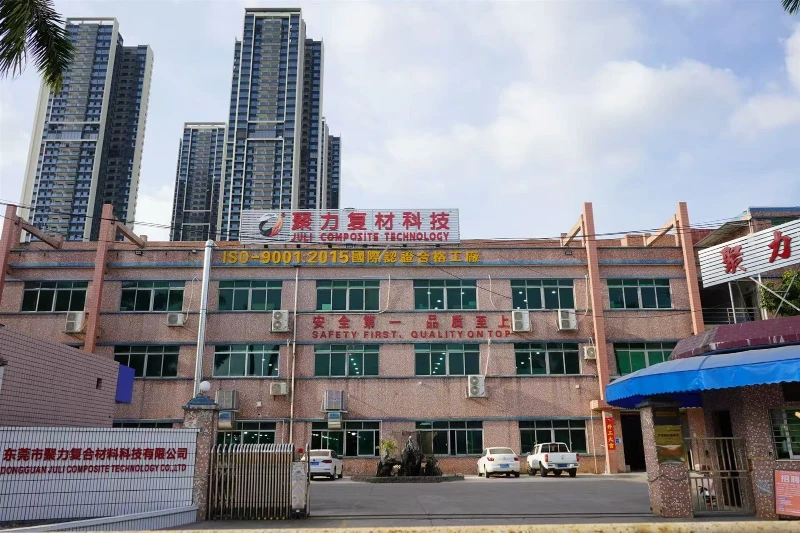
Juli operates a composite manufacturing facility in Dongguan, China, with approximately 10,088 m² of production space and 100+ employees. Its manufacturing capabilities cover multiple composite processes, including pultrusion, filament winding, tube rolling, compression molding, autoclave processing, and CNC machining.
This combination allows custom carbon fiber components to move through material processing, forming, curing, machining, and inspection within an established manufacturing system.
For buyers who already have drawings, samples, CAD files, or application requirements, the most effective starting point is to provide the technical specification and expected quantity. The manufacturer can then evaluate material selection, manufacturing process, tolerances, tooling, production requirements, and lead time.
The objective is not simply to manufacture a carbon fiber part. It is to manufacture the right carbon fiber part, with the right material, process, dimensions, and quality requirements for its intended application.