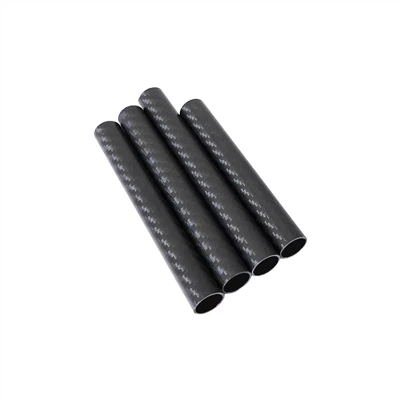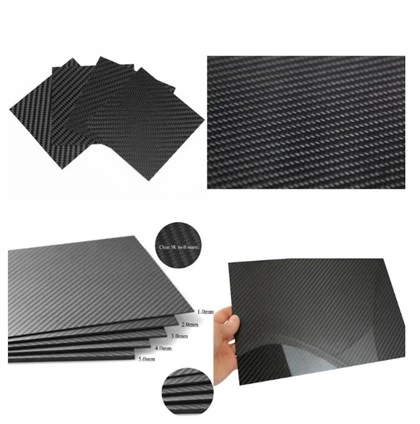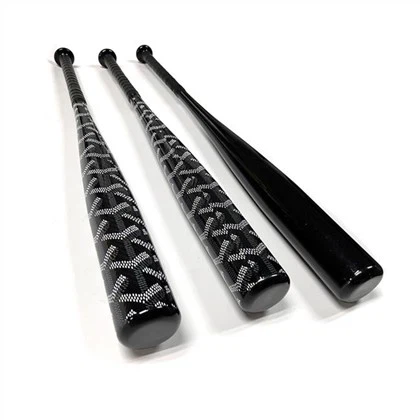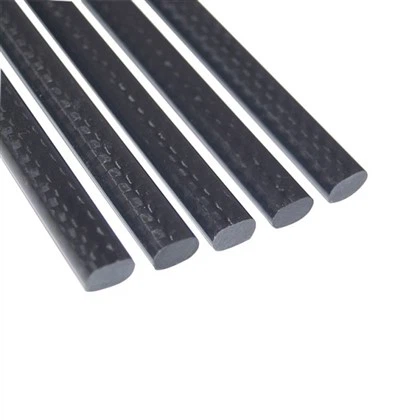
Looking to order custom carbon fiber flat bars tailored precisely to your specifications? At Dongguan Juli Composite Materials Technology Co., Ltd., we specialize in crafting high-quality carbon fiber products that meet your exact needs. Whether you require specific dimensions, unique finishes, or specialized performance characteristics, our advanced manufacturing processes - pultrusion, molding, autoclave, and winding - ensure unparalleled precision and durability. Our team collaborates across disciplines, leveraging cutting-edge technology to deliver innovative solutions for industries worldwide. From aerospace to automotive, our carbon fiber flat bars are designed to elevate your projects with their exceptional strength and lightweight properties. Ready to get started? Let's bring your vision to life with bespoke carbon fiber solutions.
Unlocking the Potential of Carbon Fiber Flat Bars in Your Projects
Why Choose Carbon Fiber Flat Bars Over Traditional Materials?
Carbon fiber flat bars stand out as a superior alternative to conventional materials like steel, aluminum, or wood, thanks to their remarkable properties. One of the most compelling advantages is their high strength-to-weight ratio, which allows for robust structural integrity without the burden of excessive mass. This makes them ideal for applications where minimizing weight is paramount, such as in aerospace components, high-performance sports equipment, and lightweight automotive parts. Unlike metals, carbon fiber resists corrosion, ensuring longevity even in harsh environments. Additionally, its inherent stiffness provides excellent dimensional stability, reducing flex and deformation under load. By opting for carbon fiber flat bars, you're investing in a material that combines durability, efficiency, and adaptability, setting your projects apart from the competition.
Exploring the Manufacturing Techniques Behind Carbon Fiber Flat Bars
The quality of carbon fiber flat bars hinges on the precision of the manufacturing process, and at Dongguan Juli Composite Materials Technology Co., Ltd., we employ a suite of advanced techniques to deliver exceptional results. Pultrusion, one of our core methods, involves pulling carbon fibers through a resin bath and then a heated die, creating continuous, uniform flat bars with consistent strength and finish. Molding allows us to craft bars with intricate shapes and tailored properties, while autoclave processing enhances the material's compactness and resilience by curing it under high pressure and temperature. Winding, on the other hand, is perfect for creating bars with enhanced torsional strength. Each technique is chosen based on your project's specific demands, ensuring optimal performance.
Customization Options to Meet Your Unique Specifications
Every project is distinct, and so are the requirements for carbon fiber flat bars. That's why we offer extensive customization options to align with your exact specifications. Need a specific thickness, width, or length? We can produce flat bars in virtually any dimension, ensuring a perfect fit for your application. Surface finishes can also be tailored, from smooth, glossy coatings for aesthetic appeal to textured surfaces for enhanced grip or bonding. We also adjust the resin matrix and fiber orientation to fine-tune mechanical properties like tensile strength, stiffness, or impact resistance. Whether you're designing a cutting-edge drone frame or reinforcing industrial machinery, our bespoke solutions ensure your carbon fiber flat bars perform flawlessly in their intended role.
The High Strength-to-Weight Ratio Advantage in Modern Applications
How Lightweight Design Enhances Performance Across Industries?
The high strength-to-weight ratio of carbon fiber flat bars is a game-changer across a multitude of industries, enabling designs that were once thought impossible. In aerospace, reducing weight translates directly to fuel efficiency and increased payload capacity, making carbon fiber an indispensable material for structural components. In the automotive sector, lightweight flat bars contribute to faster, more agile vehicles with improved energy efficiency, particularly in electric models where battery weight is a concern. Sports equipment, such as bicycle frames and tennis rackets, benefits from enhanced maneuverability and reduced fatigue for athletes. By integrating carbon fiber flat bars, engineers can achieve robust, lightweight designs that elevate performance without compromising on safety or durability.
Balancing Durability and Efficiency with Carbon Fiber
While lightweight design is a key benefit, the durability of carbon fiber flat bars ensures they don't sacrifice strength for efficiency. The material's exceptional tensile strength - often surpassing that of steel - means it can withstand significant stress and strain without fracturing. This resilience is particularly valuable in applications exposed to dynamic loads, such as wind turbine blades or robotic arms. Moreover, carbon fiber's fatigue resistance ensures long-term reliability, even under repeated stress cycles. By leveraging this balance of durability and efficiency, industries can reduce maintenance costs, extend product lifespans, and minimize environmental impact through lighter, more sustainable designs. Carbon fiber flat bars truly embody the synergy of strength and elegance in material science.
Real-World Examples of Strength-to-Weight Optimization
The practical benefits of carbon fiber's high strength-to-weight ratio are evident in numerous real-world applications. In the construction of drones, carbon fiber flat bars are used to create rigid, lightweight frames that enhance flight time and payload capacity. In marine engineering, they reinforce yacht masts and hulls, providing strength without adding unnecessary bulk, thus improving speed and fuel efficiency. Even in medical technology, carbon fiber flat bars are employed in prosthetics, offering amputees lightweight, durable limbs that mimic natural movement. These examples underscore how carbon fiber's unique properties can be harnessed to solve complex engineering challenges, delivering solutions that are both efficient and enduring.
Versatile Applications of Carbon Fiber Flat Bars Across Industries
Innovative Uses in Aerospace and Automotive Sectors
The versatile applications of carbon fiber flat bars make them a cornerstone of innovation in high-tech industries like aerospace and automotive. In aerospace, these bars are integral to constructing airframes, wings, and interior components, where their lightweight nature and rigidity reduce fuel consumption while maintaining structural integrity. In the automotive realm, carbon fiber flat bars are used in chassis reinforcement, suspension systems, and body panels, enhancing vehicle performance and safety. Electric vehicle manufacturers, in particular, rely on carbon fiber to offset battery weight, extending range and efficiency. The adaptability of carbon fiber flat bars allows engineers to push the boundaries of design, creating vehicles and aircraft that are faster, safer, and more sustainable.
Enhancing Performance in Sports and Recreation Equipment
Beyond industrial applications, carbon fiber flat bars play a pivotal role in the sports and recreation sector, where performance and precision are paramount. In cycling, they are used to construct ultra-light frames and handlebars, giving athletes a competitive edge through reduced weight and increased stiffness. Archery bows benefit from carbon fiber's rigidity, improving accuracy and arrow speed. Even in water sports, carbon fiber flat bars are incorporated into paddle shafts and kayak reinforcements, offering strength without compromising maneuverability. The versatility of carbon fiber in these contexts lies in its ability to be molded into precise shapes, tailored to the specific demands of each sport, thereby enhancing athlete performance and enjoyment.
Emerging Trends in Industrial and Medical Applications
The scope of carbon fiber flat bars extends into emerging fields, where their versatile applications are driving innovation. In industrial settings, they are increasingly used in robotic arms and conveyor systems, where their lightweight yet sturdy nature improves operational efficiency and reduces energy consumption. In renewable energy, carbon fiber flat bars reinforce wind turbine blades, enabling longer, more efficient designs that capture more wind energy. In the medical field, carbon fiber is revolutionizing orthotics and prosthetics, providing patients with lightweight, durable solutions that enhance mobility and comfort. These emerging trends highlight the adaptability of carbon fiber flat bars, positioning them as a material of choice for future-focused industries seeking to innovate and excel.
Conclusion
Carbon fiber flat bars offer a transformative solution for projects demanding strength, efficiency, and adaptability. With their high strength-to-weight ratio and versatile applications, they empower industries to achieve groundbreaking designs, from aerospace to medical technology. At Dongguan Juli Composite Materials Technology Co., Ltd., we're committed to delivering custom carbon fiber flat bars that meet your exact specifications, ensuring your projects thrive. Ready to elevate your designs with cutting-edge carbon fiber solutions? Let's make it happen.
Contact Us
Contact us today at sales18@julitech.cn or WhatsApp us at +86 15989669840 to discuss your custom carbon fiber flat bar needs and start your project journey.
References
1. Soutis, C. (2005). "Carbon Fiber Reinforced Plastics in Aircraft Construction." Materials Science and Engineering: A.
2. Holmes, M. (2017). "Advanced Composites in Automotive Applications." Reinforced Plastics Magazine.
3. Zhang, H., & Li, X. (2019). "Pultrusion Process Optimization for Carbon Fiber Composites." Journal of Composite Materials.
4. Gibson, R. F. (2016). Principles of Composite Material Mechanics. CRC Press.
5. Campbell, F. C. (2010). Structural Composite Materials. ASM International.
6. Mallick, P. K. (2007). Fiber-Reinforced Composites: Materials, Manufacturing, and Design. CRC Press.