In the realm of high-performance composites, carbon fiber tie rods have become a critical component in applications such as aerospace, civil engineering, and precision mechanical transmission, thanks to their lightweight, high strength, and corrosion resistance. Whether it is used in oilfield sucking rods, wind turbine blade spar caps, or bridge structure reinforcement systems, its quality will directly affect the safety and service life of the overall system. However, due to the high complexity of the carbon fiber pultrusion process itself, the quality level of products on the market varies significantly. How to evaluate the quality of carbon fiber tie rods in a scientific and systematic way has become a professional ability that engineers and procurement personnel must master.
This article will analyze the manufacturing process, mechanical properties, defect identification, and testing and verification, and provide a set of practical and valuable quality assessment guidelines.
How does the pultrusion process determine quality?
To judge the quality of carbon fiber tie rods, one must first understand their core manufacturing process-pultrusion. The process itself is like the "genes" of the carbon fiber tie rod, determining the material's internal structure and performance limits. High-quality carbon fiber tie rods are not simply a mixture of fibers and resin, but rather the result of the precise control of temperature, impregnation, tension, and speed working together.
Production typically begins at the yarn rack, where hundreds of continuous carbon fiber rovings are drawn out and kept straight and untwisted by a specially designed guiding system. This step is crucial because even the slightest twist or misalignment of the fibers can significantly weaken the axial strength of the tie rod. The fibers are then impregnated in a resin bath. For high-quality tie rods, the resin's temperature and viscosity must be strictly controlled to ensure complete penetration of each monofilament; insufficient impregnation can lead to "dry spots," potential stress concentration points that may ultimately cause structural failure.
After impregnation, the fiber bundle enters a heated metal mold, where it undergoes gelation, curing, and final shaping. Temperature gradient control of the mold is crucial to the entire process. If the inlet temperature is too high, the surface resin will cure prematurely, encapsulating the uncured internal material and causing internal cracking or bubbles. If the temperature is too low, insufficient curing at demolding will result in insufficient hardness and reduced creep resistance. Simultaneously, the drawing speed must be matched to the resin curing rate. Excessive speed will generate significant residual stress, causing the tie rod to warp or crack during use.
Therefore, the supplier's process control capabilities are the primary consideration when evaluating the quality of carbon fiber tie rods. Advanced manufacturers use real-time monitoring systems to record key parameters such as mold temperature, tensile tension, and resin viscosity to ensure consistency in every meter of finished product. Carbon fiber tie rods manufactured with rigorous process control typically exhibit higher density uniformity, laying a solid foundation for their superior mechanical properties.
What are the key mechanical performance indicators?
Mechanical properties are the key performance indicators for evaluating the quality of carbon fiber tie rods. For structural engineers, appearance is secondary; the crucial factor is the accuracy of test data and its compliance with specifications. The three core parameters for judging the quality of carbon fiber tie rods are: tensile strength, tensile modulus, and fiber volume fraction.
Tensile strength
The most prominent advantage of carbon fiber tie rods is their extremely high axial tensile strength. According to standards such as ASTM D7205, the tensile strength of standard modulus products should typically be greater than approximately 2000 MPa; products used in high-end applications such as aerospace can exceed 2500 MPa. Significantly lower strength usually indicates insufficient fiber content, fiber damage, or poor resin interfacial bonding.
Tensile modulus
This indicator reflects the stiffness of a material, that is, its ability to resist axial deformation. The modulus of ordinary standard modulus carbon fiber is typically between 120 and 140 GPa; high modulus materials can reach approximately 230 GPa or even higher. The stability of the modulus is equally important: the modulus fluctuation of high-quality products should be controlled within ±5% to ensure design repeatability and accuracy.
Fiber volume fraction (FVF)
Carbon fiber bears the main load, while resin is mainly used for force transmission and shaping. The FVF of industrial-grade tie rods is usually controlled at 60%–70%. When the FVF is below about 55%, the mechanical efficiency will be significantly reduced; while exceeding 75% may indicate insufficient impregnation and is prone to interlaminar shear failure.
Furthermore, the glass transition temperature (Tg) is also a key indicator of temperature resistance: the higher the Tg, the stronger the ability of the tie rod to maintain mechanical stability under high-temperature conditions. In summary, rigorously interpreting and cross-validating these parameters (combining specifications and field conditions) is an essential step in evaluating whether carbon fiber tie rods meet engineering requirements.
How to identify common appearance and internal defects?
While mechanical data is the most convincing, visual inspection remains an effective method for quickly screening the quality of carbon fiber tie rods. The surface condition of the tie rod often reflects potential internal quality issues, and experienced inspectors can usually identify most defects by sight, touch, and sound.
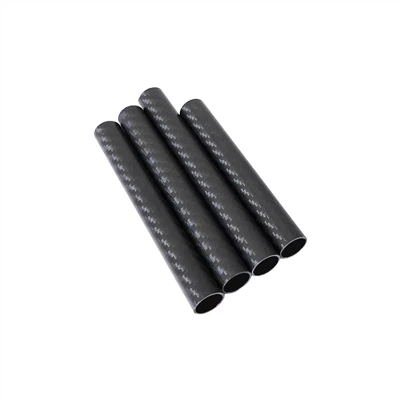
There are various types of cosmetic defects in pultrusion products. The surface finish should be observed first. The surface of a high-quality carbon fiber tie rod should be smooth and uniform, with a consistent luster, and the fiber texture should be faintly visible but not exposed. If there is "fiber whitening" (exposed fibers), it usually means that the surface resin is too thin or severely worn, which can easily lead to accelerated aging and degradation of performance due to moisture absorption.
Secondly, check for "bubbles" or "pits". These defects are mostly due to raw material moisture, volatiles, or release agents not being completely discharged during the curing process, often corresponding to internal voids, which are the starting point for potential failure.
Cracks are a zero-tolerance defect for carbon fiber tie rods. Longitudinal cracks are mostly caused by thermal stress during the cooling stage, while transverse cracks are commonly seen when the pultrusion speed is too fast, causing the resin to break before it is fully cured. Cracks of any form will significantly weaken the fatigue resistance of the tie rod and should be rejected immediately.
Color difference is also a signal that needs attention. Although the carbon fiber itself is black, if there is obvious whitening, spots or uneven color bands in the resin area, it often means that the resin is not rich enough, there are bubbles or insufficient impregnation, reflecting poor process control.
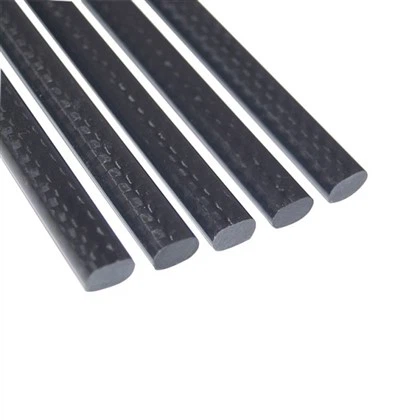
For internal defects, a simple tapping method can be used as an auxiliary method for judgment. Dense, high-quality carbon fiber tie rods will produce a crisp sound when tapped; if the sound is dull, there may be delamination or a large number of pores. Cross-sectional inspection is also crucial: the cross-section of a high-quality carbon fiber tie rod should be dense and uniform, without obvious pores or dry fiber bundles; if a layered structure or a "dry core" in the center is present, it indicates that the resin has not been sufficiently impregnated, which is a typical problem of insufficient impregnation.
According to ASTM D4385 (Classification of Appearance Defects in Pultruded Products of Thermosetting Reinforced Plastics), these appearance problems can be standardized for evaluation. For carbon fiber tie rods that perform critical structural functions, any appearance defect that affects performance should be rejected.
Conclusion
The quality assessment of carbon fiber tie rods is a systematic process involving materials science, processing technology, and testing technology. From the precise control of temperature, tension, and pultrusion speed in the manufacturing process to the rigorous control of mechanical properties such as tensile strength and modulus; from meticulous inspection of appearance defects to the identification of internal flaws using non-destructive testing methods, every step directly affects the reliability of the final product. High-quality carbon fiber tie rods must possess high fiber volume fraction, low porosity, complete curing, and a flawless appearance. For purchasing personnel and engineers, relying on reliable test data, adhering to authoritative standards such as ASTM, and employing comprehensive evaluation methods is the only reliable way to ensure that the selected products can fulfill critical structural tasks. With continuous advancements in manufacturing technology and testing methods, the performance boundaries and quality standards of carbon fiber tie rods will continue to improve, driving the wider and deeper application of composite materials in more fields.