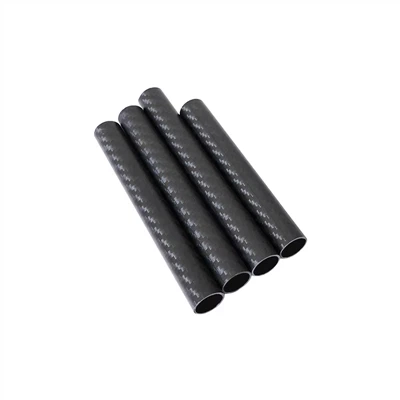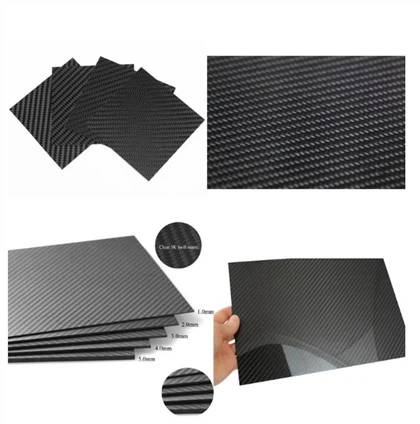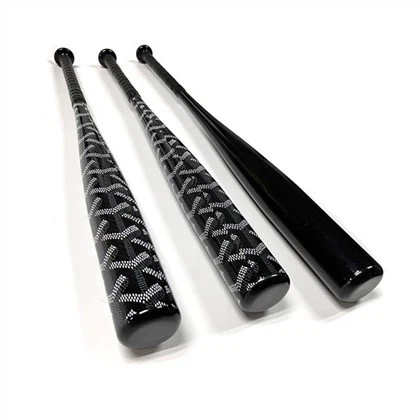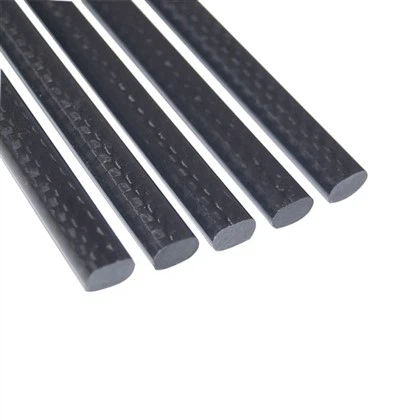
Carbon fiber, a material marvel renowned for its exceptional strength-to-weight ratio, has long transcended the traditional aerospace and automotive industries, becoming an indispensable advanced material in the electronics field. Carbon fiber tubing, in particular, with its superior structural integrity and unique electrical properties, is becoming a key functional component in various electronic devices, driving electronic engineering towards lighter weight, higher efficiency, and greater reliability.
The structural and electrical principles of carbon fiber
Carbon fibers are primarily composed of carbon atoms arranged in a hexagonal lattice, giving the material significant anisotropy-meaning its physical and electrical properties vary depending on the measurement direction. The manufacturing process involves the pyrolysis of precursor materials such as polyacrylonitrile (PAN), and careful control of the degree of graphitization directly affects the electrical behavior of the tube.
The electrical conductivity of carbon fiber derives from the presence of delocalized π electrons in its graphite-like structure. These electrons can migrate freely between carbon layers, resulting in excellent electrical conductivity. However, through surface treatments, coating design, or internal structural manipulation, carbon fiber can also be tuned to possess insulating properties. This tunability makes carbon fiber a truly versatile material, allowing for flexible switching between conductive and insulating applications. The choice between conductive and insulating applications depends on a deep understanding of these fundamental materials science principles.
The conductivity of carbon fiber tubes in electronic devices: The inherent conductivity of carbon fiber tubes makes them an excellent candidate for applications requiring efficient electronic transmission and electromagnetic shielding. Unlike traditional metallic conductors, carbon fiber significantly reduces structural weight while maintaining excellent electrical performance. This characteristic is particularly important in the current trend of miniaturization and high portability in modern electronic products. Through rational structural design and composite processes, carbon fiber tubes can provide higher mechanical strength and anti-interference capabilities while ensuring stable electrical performance, laying the material foundation for next-generation high-performance electronic devices.
Key conductive applications of carbon fiber tubes in the electronics field
Electromagnetic interference shielding
One of the most prominent applications of conductive carbon fiber tubes is electromagnetic interference (EMI) shielding. Electronic equipment is highly susceptible to external electromagnetic noise, leading to performance degradation or even system failure. The continuous conductive network formed within the carbon fiber efficiently absorbs and reflects electromagnetic waves, thus preventing the propagation of interference. In applications with extremely high signal integrity requirements, such as high-precision medical diagnostic instruments and high-frequency communication systems, the use of carbon fiber shells or internal structures can significantly improve electromagnetic shielding effectiveness. Studies have shown that carbon fiber composites can achieve EMI shielding efficiency (SE) of 20–70 dB over a wide frequency range, effectively suppressing electromagnetic radiation and making them extremely valuable in applications requiring a "clean electromagnetic environment."
Thermal management and heat dissipation
In addition to its excellent electrical conductivity, carbon fiber also possesses outstanding thermal conductivity along its fiber axis, making it an ideal material for thermal management of electronic devices. Carbon fiber tubes can be designed as lightweight heat sinks, effectively dissipating heat from heat-generating elements, preventing overheating, and extending device lifespan.
Compared to traditional aluminum or copper heat sinks, carbon fiber composites significantly reduce weight while maintaining high thermal conductivity. Some pitch-based carbon fibers even have thermal conductivity exceeding 1000 W/m·K, far surpassing most metallic materials. This high thermal conductivity-to-weight ratio makes it a highly attractive alternative in portable devices and aerospace electronic systems.
Current-carrying and interconnection applications
While carbon fiber cannot completely replace copper wires used for high-current transmission, it offers unique advantages in lightweight current paths and advanced interconnect structures. Carbon fiber tubing possesses excellent conductivity, fatigue resistance, and corrosion resistance, making it ideal for low- to medium-current environments, especially in applications where weight and mechanical strength are equally critical.
Current research is actively exploring its potential in flexible electronics and wearable devices, leveraging the flexibility and conductivity of carbon fiber to develop lighter and more durable electrical interconnect solutions.
Antenna and waveguide technology
The interaction properties of carbon fiber with electromagnetic waves make it highly promising for antenna and waveguide design. Carbon fiber tubes not only possess excellent electrical conductivity and customizable geometries, but also offer lightweight construction and high structural stiffness.
In aerospace and telecommunications applications, these properties enable carbon fiber antennas to maintain dimensional stability and frequency consistency in complex environments, ensuring reliable and accurate signal transmission.
Please refer to the table below for different applications:
| Conductive Application | Description | Key Advantage of Carbon Fiber |
| EMI Shielding | Protecting sensitive electronics from electromagnetic interference. | High shielding effectiveness, lightweight. |
| Thermal Management | Dissipating heat from electronic components. | Excellent thermal conductivity, reduced weight. |
| Current Paths | Lightweight electrical conduits. | Corrosion resistance, high strength-to-weight ratio. |
| Antennas | Components for signal transmission/reception. | Customizable shapes, structural rigidity, lightweight. |
| Sensors | Detecting changes in physical parameters. | High sensitivity, good electrical response. |
What are the main advantages of using carbon fiber tubing for thermal management in compact electronic devices compared to traditional materials?
Thermal management remains a critical design challenge in electronic products, especially portable and high-performance compact devices. Carbon fiber tubing, with its superior specific thermal conductivity and lightweight properties, is emerging as an ideal alternative to traditional metal heat dissipation materials.
Compared to traditional heat sink materials such as aluminum or copper, carbon fiber not only possesses thermal conductivity comparable to or even surpassing that of metals, but also significantly reduces weight. Pitch-based carbon fiber, in particular, boasts a thermal conductivity exceeding 1000 W/m·K along its fiber axis, far exceeding that of copper (approximately 400 W/m·K), yet with only half or even less density. This means designers can create lighter and more efficient heat dissipation systems, drastically reducing overall weight without sacrificing thermal performance.
In smartphones, laptops, drones, and aerospace electronics, using carbon fiber tubing instead of metal heat sinks can significantly reduce device weight while maintaining or even improving cooling efficiency. Furthermore, carbon fiber materials can be precision-molded into complex, custom shapes to optimize airflow and heat transfer paths within enclosed spaces. This structural design flexibility allows it to perfectly adapt to the heat dissipation needs of compact spaces.
The high stiffness of carbon fiber tubing also provides additional structural support for the device, achieving a balance between lightweight design and mechanical strength. Overall, the combination of high thermal conductivity, low density, design freedom, and structural reinforcement makes carbon fiber an ideal material for addressing the thermal challenges of modern electronic devices, laying the material foundation for next-generation lightweight and high-performance electronics.
How effective is carbon fiber in EMI shielding? What factors affect the EMI shielding performance of carbon fiber composite materials?
Carbon fiber composites are ideal materials for protecting sensitive electronic components from external electromagnetic noise due to their excellent electromagnetic interference (EMI) shielding efficiency. Their shielding effect is typically measured in decibels (dB), representing the attenuation intensity of electromagnetic radiation. The EMI shielding performance of carbon fiber composites is influenced by several key factors, including conductivity, fiber structure, volume fraction, thickness, matrix properties, and the continuity of the conductive network.
The electrical conductivity and graphitization degree of fibers
The inherent conductivity of carbon fiber is the primary factor determining EMI shielding performance. Carbon fibers with high graphitization and fewer defects have higher conductivity, enabling the formation of more stable and efficient conductive paths, thereby enhancing the ability to absorb and reflect electromagnetic waves.
Fiber structure and volume fraction
The arrangement of carbon fibers in composite materials (such as woven fabric, unidirectional layers, or chopped fiber distribution) and their volume fraction have a significant impact on the shielding effect. The more complete the three-dimensional conductive network formed between the fibers, the stronger the EMI shielding effect. Studies show that when the volume fraction of carbon fibers in the epoxy resin matrix reaches about 30%, a shielding efficiency (SE) of over 30 dB can be achieved over a wide frequency range, which is sufficient to meet most electronic protection requirements.
Composite material thickness
The thickness of the shielding layer is positively correlated with the EMI attenuation effect. Thicker carbon fiber composite materials can provide a longer electromagnetic wave propagation path, thereby enhancing the absorption and reflection effects and achieving higher shielding efficiency.
Influence of matrix material
Although the resin matrix is typically an insulator, its properties can still indirectly affect EMI performance. The resistivity, interfacial adhesion, and curing characteristics of the matrix all alter the contact resistance between carbon fibers, thus affecting the effectiveness of the overall conductive network. Appropriate optimization of the matrix formulation can further improve the consistency and stability of electromagnetic shielding.
Continuity of the conductive path
The integrity of the conductive network is crucial for ensuring shielding performance. If voids, uneven fiber distribution, or fiber breaks exist in the composite material, "electromagnetic leakage windows" will form along the conductive path, reducing overall shielding efficiency. Therefore, high-precision manufacturing processes (such as uniform dispersion, vacuum impregnation, and high-pressure curing) are essential to ensuring continuous fiber distribution and tight interfacial bonding.
Conclusion
The application of carbon fiber tubing in electronic devices represents the forefront of innovation, driven by its unique and adaptable electrical properties. Whether leveraging its superior conductivity for EMI shielding and thermal management, or its carefully designed insulation capabilities for structural isolation and dielectric strength, carbon fiber offers transformative solutions. Through precise material selection, processing techniques, and composite material design, a delicate balance between conductivity and insulation allows engineers to push the boundaries of device performance, efficiency, and miniaturization. As electronics continue to advance in complexity and integration, the role of advanced materials like carbon fiber will only become more prominent, enabling the next generation of smart, powerful, and lightweight devices.
References
Zeng X., Kong R., Cui M., and Yang Y. (2018). Advanced thermal management materials: carbon fiber reinforced composites. Advanced Materials Technology, 3(8), 1800109.
Jin, BS, Li, DH, and Jin, YS (2010). Electro- and electromagnetic interference shielding properties of carbon fiber reinforced polymer composites. Composites Part B: Engineering, 41(7), 517-522.
Pillai, S., Van der Heijden, P., Peijs, T., and Teunissen, J. (2014). The role of carbon fiber in advanced composites for aerospace applications. Composites Science and Technology, 95, 1-13.