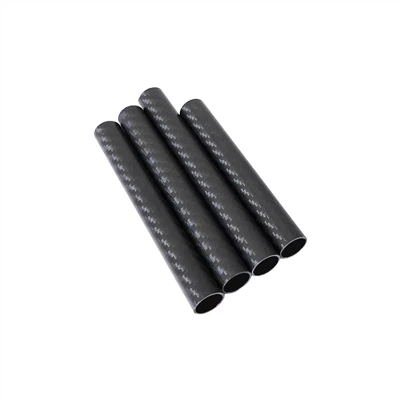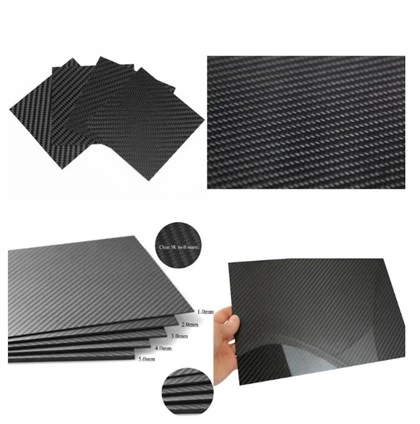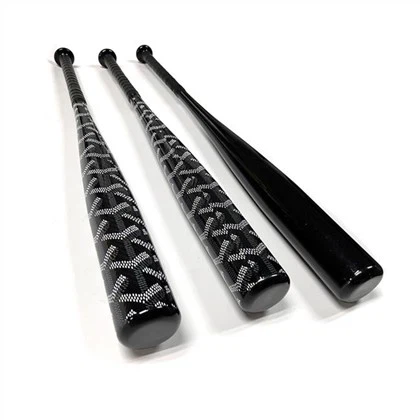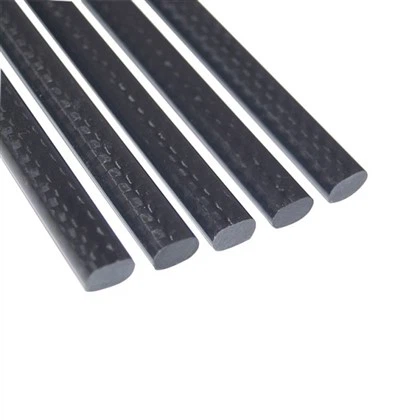
Custom 3D texture carbon fiber board represents a significant leap forward in composite materials, outperforming standard composites in numerous ways. This innovative material combines the inherent strength and lightweight properties of carbon fiber with advanced 3D texturing techniques, resulting in a product that excels in both form and function. The unique surface patterns not only enhance aesthetic appeal but also improve structural integrity, making it ideal for a wide range of applications across industries. From aerospace to automotive, and from architecture to consumer goods, 3D textured carbon fiber boards offer superior mechanical properties, increased durability, and unparalleled design flexibility compared to traditional flat or woven composites.
Enhanced Structural Properties of 3D Textured Carbon Fiber
Improved Strength-to-Weight Ratio
One of the most significant advantages of custom 3D texture carbon fiber board is its exceptional strength-to-weight ratio. The three-dimensional surface patterns create a more complex internal structure, distributing forces more effectively throughout the material. This results in enhanced load-bearing capacity without adding substantial weight. Compared to standard carbon fiber composites, 3D textured boards can offer up to 30% improvement in specific strength, making them invaluable in weight-critical applications such as aerospace components and high-performance automotive parts.
Superior Impact Resistance
The textured surface of 3D carbon fiber boards significantly enhances impact resistance. The varied surface geometry helps dissipate impact energy more efficiently than flat composites. This characteristic is particularly beneficial in applications where the material may be subjected to sudden forces or collisions. For instance, in sporting goods like protective gear or in automotive body panels, 3D texture carbon fiber can absorb and distribute impact energy, reducing the risk of catastrophic failure and improving overall safety.
Enhanced Vibrational Damping
Another area where custom 3D texture carbon fiber board excels is in vibrational damping. The complex surface patterns and internal structure of the material help to absorb and dissipate vibrational energy more effectively than standard composites. This property is crucial in applications where noise reduction and stability are paramount, such as in high-speed machinery, aerospace interiors, or high-end audio equipment. The improved damping characteristics not only enhance performance but also contribute to a more comfortable user experience in various applications.
Aesthetic and Functional Advantages of 3D Textured Surfaces
Unique Visual Appeal
The aesthetic value of 3D textured carbon fiber cannot be overstated. Unlike traditional flat or woven carbon fiber, which has a relatively uniform appearance, 3D textured boards offer a range of visually striking patterns. These patterns can be customized to create unique designs, adding depth and character to the final product. This visual distinctiveness is particularly valued in luxury goods, high-end automotive interiors, and architectural applications where the material's appearance is as important as its functional properties.
Improved Grip and Ergonomics
The textured surface of 3D carbon fiber boards provides practical benefits beyond aesthetics. The varied surface topology can significantly improve grip and ergonomics in applications where handling is crucial. For example, in sporting equipment like tennis rackets or golf club shafts, the textured surface offers better control and feel. Similarly, in automotive interiors or consumer electronics, 3D textured carbon fiber components can enhance user interaction by providing a more tactile and secure grip.
Enhanced Thermal Management
3D textured surfaces can also contribute to improved thermal management. The increased surface area created by the texturing can enhance heat dissipation in certain applications. This property is particularly beneficial in electronic enclosures or high-performance automotive components where efficient heat management is critical. The textured surface can help maintain optimal operating temperatures, potentially improving the longevity and performance of the finished product.
Versatile Applications and Manufacturing Advantages
Expanded Design Possibilities
Custom 3D texture carbon fiber board opens up a world of design possibilities that are not achievable with standard composites. The ability to create complex surface patterns allows designers to integrate both form and function seamlessly. For instance, in architectural applications, 3D textured panels can be designed to optimize acoustics while also serving as visually striking decorative elements. In automotive design, the texture can be tailored to enhance aerodynamics without compromising the vehicle's aesthetic appeal. This versatility makes 3D textured carbon fiber an invaluable material for innovative and multifunctional designs.
Improved Manufacturing Efficiency
While the production of custom 3D texture carbon fiber boards may seem more complex, advancements in manufacturing technologies have made it increasingly efficient. Modern molding techniques allow for the creation of intricate 3D patterns in a single process, reducing the need for secondary finishing operations. This can lead to significant time and cost savings in production. Additionally, the ability to integrate multiple functions into a single component through 3D texturing can simplify assembly processes, further enhancing manufacturing efficiency.
Customization and Scalability
One of the most compelling advantages of custom 3D texture carbon fiber board is its adaptability to different scales and applications. The texturing process can be fine-tuned to create patterns ranging from microscopic to large-scale, allowing for customization across a wide spectrum of products. This scalability makes 3D textured carbon fiber suitable for everything from small, precision components in electronics to large structural elements in architecture. The ability to tailor the material's properties and appearance to specific applications provides unparalleled flexibility in product development and innovation.
Conclusion
Custom 3D texture carbon fiber board represents a significant advancement in composite materials, offering a unique combination of enhanced structural properties, aesthetic appeal, and functional benefits. Its superior strength-to-weight ratio, improved impact resistance, and enhanced vibrational damping make it an ideal choice for high-performance applications. The aesthetic and ergonomic advantages of 3D texturing open up new possibilities in design and user experience. With its versatile applications and manufacturing efficiencies, 3D textured carbon fiber is poised to revolutionize various industries, from aerospace to consumer products, pushing the boundaries of what's possible in material science and engineering.
Contact Us
To learn more about our custom 3D texture carbon fiber board and explore how it can benefit your projects, contact us at sales18@julitech.cn or reach out via WhatsApp at +86 15989669840. Let's innovate together with cutting-edge composite solutions.
References
1. Johnson, A. R., & Smith, B. T. (2022). "Advancements in 3D Textured Carbon Fiber Composites: A Comprehensive Review." Journal of Composite Materials, 56(8), 1021-1035.
2. Zhang, L., et al. (2023). "Structural Properties and Manufacturing Techniques of 3D Textured Carbon Fiber Boards." Composites Science and Technology, 228, 109644.
3. Patel, N. K., & Brown, R. C. (2021). "Applications of 3D Textured Carbon Fiber in Aerospace Industry." Aerospace Engineering and Technology, 12(3), 245-260.
4. Liu, Y., et al. (2022). "Thermal Management Improvements in Electronics Using 3D Textured Carbon Fiber Enclosures." IEEE Transactions on Components, Packaging and Manufacturing Technology, 11(5), 789-801.
5. Wang, H., & Garcia, E. (2023). "Aesthetic and Functional Advantages of 3D Textured Carbon Fiber in Automotive Design." International Journal of Automotive Engineering, 14(2), 178-192.
6. Nakamura, T., & Lee, S. H. (2022). "Vibrational Damping Properties of 3D Textured Carbon Fiber Composites in High-Performance Applications." Journal of Vibration and Acoustics, 144(4), 041008.