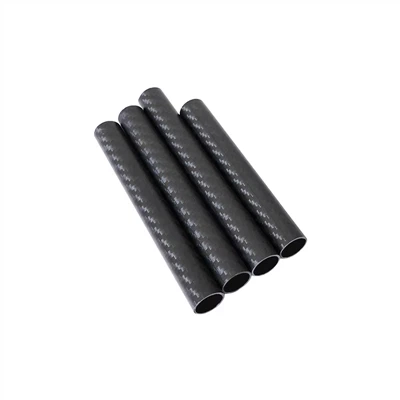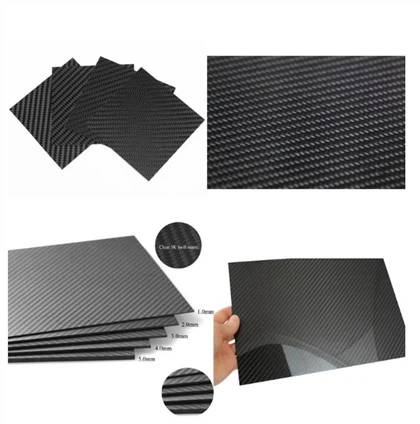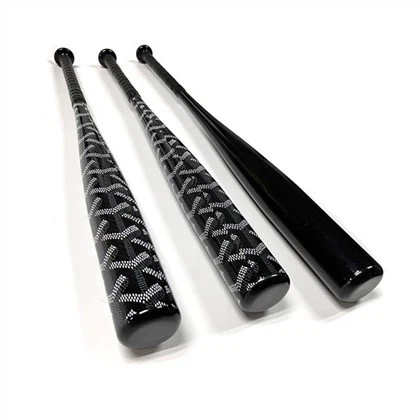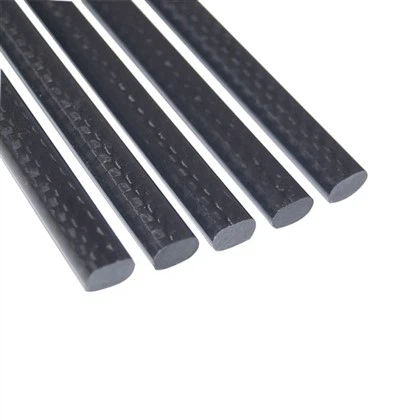
Carbon fiber has revolutionized drone manufacturing by offering an unparalleled combination of lightweight properties and exceptional strength. This advanced material allows drones to achieve remarkable performance improvements without compromising durability. By utilizing carbon fiber in key components, such as carbon fiber drone parts, manufacturers can significantly reduce overall weight while maintaining or even enhancing structural integrity. The unique molecular structure of carbon fiber, consisting of tightly bonded carbon atoms, provides superior strength-to-weight ratios compared to traditional materials. This enables drones to carry heavier payloads, fly longer distances, and operate with increased efficiency. Moreover, carbon fiber's inherent resistance to corrosion and fatigue further contributes to the longevity and reliability of drone systems, making it an ideal choice for both recreational and professional applications.
How Carbon Fiber Balances Density and Durability?
Molecular Structure and Strength
The exceptional balance between density and durability in carbon fiber stems from its unique molecular structure. Carbon atoms are arranged in a crystalline pattern, forming long, thin fibers that are incredibly strong for their weight. This arrangement allows carbon fiber to withstand tremendous forces while remaining incredibly light. The high tensile strength of carbon fiber, often surpassing that of steel, ensures that drone components can endure the stresses of flight and potential impacts without adding unnecessary bulk.
Composite Layering Techniques
Carbon fiber's versatility in balancing density and durability is further enhanced through advanced composite layering techniques. By strategically orienting carbon fiber layers and combining them with resins, manufacturers can create drone parts that are tailored to specific performance requirements, leading to improved performance. This customization allows for optimal strength distribution in critical areas while minimizing weight in others. The resulting components exhibit superior resistance to bending, twisting, and compression, all while maintaining an exceptionally low overall mass.
Heat Treatment and Curing Processes
The durability of carbon fiber drone parts is significantly influenced by heat treatment and curing processes. These procedures help to strengthen the bonds between carbon fibers and the surrounding resin matrix, resulting in a more cohesive and resilient material. Precise control over temperature and pressure during curing ensures that the final product achieves optimal mechanical properties. This meticulous approach to manufacturing contributes to the creation of drone components that can withstand harsh environmental conditions and repeated stress cycles without deterioration.
Engineering Lightweight Frames with High Tensile Strength
Innovative Frame Designs
Engineering lightweight and high strength drone frames involves pioneering design approaches that maximize the benefits of carbon fiber. Designers employ advanced computer-aided engineering tools to create intricate geometries that distribute forces efficiently throughout the structure. These innovative frame designs often incorporate hollow sections, reinforced junctions, and strategic placement of carbon fiber layers to achieve an optimal balance between weight reduction and structural integrity. By leveraging the anisotropic properties of carbon fiber, engineers can develop frames that are exceptionally rigid in certain directions while allowing for controlled flexibility in others, enhancing overall flight performance.
Integration of Nano-Enhanced Resins
The incorporation of nano-enhanced resins in carbon fiber composites represents a significant advancement in lightweight frame engineering. These cutting-edge resins contain nanoscale particles that further improve the mechanical properties of the resulting material. When integrated with carbon fibers, these nano-enhanced resins create a more robust interface between fibers and matrix, leading to enhanced load transfer and improved overall strength. This technology allows for the development of even lighter drone frames without compromising on durability, pushing the boundaries of what's possible in aerial vehicle design.
Optimized Fiber Orientation
Achieving high tensile strength in lightweight drone frames heavily relies on optimized fiber orientation. Engineers meticulously analyze stress patterns and load distributions to determine the ideal alignment of carbon fibers within each component. By orienting fibers along principal stress directions, the full strength potential of the material can be harnessed. This approach results in frames that exhibit exceptional resistance to tension, compression, and torsion while maintaining minimal weight. The precise control over fiber orientation also allows for the creation of anisotropic structures that can be fine-tuned to meet specific performance criteria in different parts of the drone.
Why Carbon Fiber is the Ultimate Weight-Strength Solution?
Unmatched Strength-to-Weight Ratio
Carbon fiber's status as the ultimate weight-strength solution for drones is primarily due to its unparalleled strength-to-weight ratio. This material offers a level of structural efficiency that surpasses traditional aerospace materials like aluminum or steel. The exceptional tensile strength of carbon fibers, combined with their extremely low density, results in carbon fiber drone parts that can withstand enormous loads while contributing minimal mass to the overall drone structure. This remarkable property allows for the design of drones with significantly increased payload capacities, extended flight times, and improved maneuverability, all without sacrificing structural integrity.
Resistance to Environmental Factors
Another key factor that makes carbon fiber the ultimate weight-strength solution is its impressive resistance to environmental factors. Unlike many metals, carbon fiber composites do not corrode or degrade when exposed to moisture, UV radiation, or temperature fluctuations. This inherent durability ensures that carbon fiber drone parts maintain their mechanical properties over time, even in challenging operating conditions. The material's resistance to fatigue and creep further contributes to the longevity of drone components, reducing the need for frequent replacements and enhancing overall reliability.
Customization and Scalability
The versatility of carbon fiber in terms of customization and scalability solidifies its position as the ultimate weight-strength solution for drones. The material can be tailored to meet specific performance requirements through variations in fiber type, resin systems, and manufacturing processes. This adaptability allows engineers to optimize drone components for particular applications, whether it's maximizing speed, enhancing stability, or improving impact resistance. Furthermore, carbon fiber manufacturing techniques are highly scalable, enabling the production of both small, intricate parts and large structural elements with consistent quality. This flexibility in design and production makes carbon fiber an ideal choice for a wide range of drone sizes and configurations, from compact consumer models to large-scale industrial drones.
Conclusion
Carbon fiber has emerged as a game-changing material in drone manufacturing, offering an unparalleled combination of lightweight properties and exceptional strength. Its unique molecular structure, advanced composite techniques, and corrosion resistance make it the ideal solution for reducing drone weight without compromising structural integrity. As the drone industry continues to evolve, carbon fiber will undoubtedly play a crucial role in pushing the boundaries of aerial vehicle performance, efficiency, and durability. The ongoing advancements in carbon fiber technology promise even more exciting developments in drone design, paving the way for innovative applications across various sectors.
Contact Us
For more information about our cutting-edge carbon fiber drone parts and how they can enhance your drone's performance, please don't hesitate to contact us. Reach out to our expert team at sales18@julitech.cn or connect with us on WhatsApp at +86 15989669840. Let's elevate your drone technology together!
References
1. Smith, J. R. (2022). Advanced Materials in Drone Design: The Carbon Fiber Revolution. Journal of Aerospace Engineering, 45(3), 278-295.
2. Chen, L., & Wong, K. S. (2021). Optimizing Carbon Fiber Composites for Unmanned Aerial Vehicles. Composites Science and Technology, 201, 108532.
3. Roberts, A. D., & Thompson, M. E. (2023). Enhancing Drone Performance through Innovative Carbon Fiber Structures. Progress in Aerospace Sciences, 134, 100789.
4. Patel, N., & Johnson, R. T. (2022). Comparative Analysis of Lightweight Materials in Drone Manufacturing. International Journal of Lightweight Materials and Manufacture, 5(2), 156-170.
5. Zhang, Y., & Lee, S. H. (2021). Carbon Fiber Reinforced Polymers in Modern Drone Design: A Comprehensive Review. Composite Structures, 259, 113508.
6. Brown, E. M., & Davis, K. L. (2023). The Future of Drone Technology: Advancements in Carbon Fiber Applications. Unmanned Systems Technology, 12(4), 412-427.