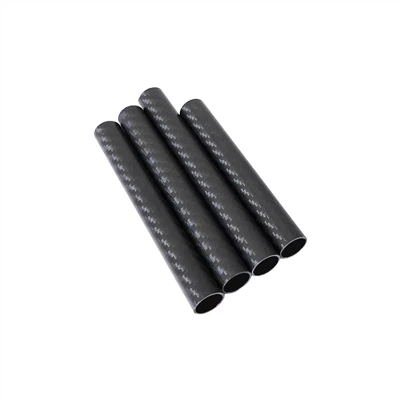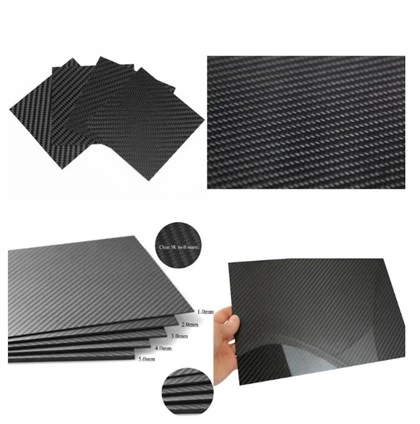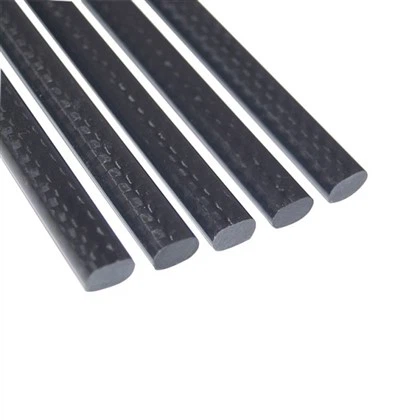
Carbon fiber clad aluminum tubes represent a revolutionary advancement in materials engineering, combining the lightweight properties of aluminum with the exceptional strength and durability of carbon fiber. This innovative composite material offers a unique solution for industries demanding high-performance components with reduced weight and enhanced structural integrity. The manufacturing process involves carefully bonding carbon fiber layers onto aluminum alloy tubes, creating a symbiotic relationship between the two materials. The result is a product that leverages the best qualities of both constituents, offering superior strength-to-weight ratios, improved corrosion resistance, and enhanced thermal properties compared to traditional metal tubes.
The Science Behind Carbon Fiber Clad Aluminum Tubes
Material Composition and Properties
The carbon fiber coating is typically applied using advanced composite manufacturing techniques such as filament winding or pultrusion. This process ensures a strong bond between the aluminum and carbon fiber layers, creating a seamless and robust structure. The resulting composite material exhibits remarkable mechanical properties, including:
- Enhanced tensile and compressive strength
- Improved fatigue resistance
- Reduced overall weight compared to solid aluminum tubes
- Superior corrosion resistance
- Excellent thermal stability
These properties make carbon fiber coated aluminum alloy tubes ideal for applications where weight reduction and structural integrity are paramount.
Synergistic Effects of the Composite Structure
The combination of carbon fiber and aluminum in a single structure creates synergistic effects that surpass the capabilities of either material used alone. The aluminum core provides a solid foundation and contributes to the tube's ductility and impact resistance. Meanwhile, the carbon fiber cladding significantly enhances the tube's overall strength and stiffness while adding minimal weight. This synergy results in a composite material that offers:
- Improved bending and torsional stiffness
- Enhanced vibration damping characteristics
- Better resistance to environmental factors such as UV radiation and chemical exposure
- Increased load-bearing capacity without compromising on weight
The unique properties of carbon fiber clad aluminum tubes make them an attractive option for industries seeking lightweight and high strength materials for critical applications.
Customization Possibilities
One of the most significant advantages of carbon fiber clad aluminum tubes is the ability to tailor their properties to specific applications. Engineers can adjust various parameters during the manufacturing process to achieve desired characteristics:
- Fiber orientation: By altering the angle and pattern of carbon fiber wrapping, manufacturers can optimize the tube's strength in specific directions.
- Layer thickness: The number and thickness of carbon fiber layers can be adjusted to balance weight and strength requirements.
- Resin systems: Different epoxy or thermoplastic resins can be used to enhance specific properties such as heat resistance or impact strength.
- Surface finish: Various coatings or treatments can be applied to improve aesthetics or add functionality like increased wear resistance.
This level of customization allows for the creation of carbon fiber clad aluminum tubes that are perfectly suited to their intended use, whether in aerospace, automotive, or industrial applications.
Manufacturing Processes and Challenges
Precision Engineering in Tube Production
The manufacturing of carbon fiber clad aluminum tubes demands a high level of precision and expertise. The process begins with the selection of high-quality aluminum alloy tubes that serve as the core. These tubes undergo rigorous quality control to ensure they meet the required specifications for dimensions, surface finish, and material properties. The next critical step involves the application of carbon fiber reinforcement. This can be achieved through various methods, including:
- Filament winding: Carbon fiber tows are wound around the aluminum tube in a precise pattern, often using computer-controlled winding machines.
- Pultrusion: A continuous process where carbon fiber reinforcements are pulled through a resin bath and then through a heated die to form the composite structure.
- Prepreg layup: Pre-impregnated carbon fiber sheets are carefully wrapped around the aluminum tube and then cured under heat and pressure.
Each of these methods requires careful control of process parameters such as winding tension, resin content, and curing conditions to ensure optimal bonding between the carbon fiber and aluminum substrate.
Overcoming Interface Challenges
One of the primary challenges in manufacturing carbon fiber coated aluminum alloy tubes is ensuring a strong and durable interface between the two materials. The difference in thermal expansion coefficients and surface properties can lead to potential issues such as delamination or interface weakening over time. To address these challenges, manufacturers employ various techniques:
- Surface treatment: The aluminum surface is often treated chemically or mechanically to improve adhesion with the carbon fiber matrix.
- Specialized adhesives: High-performance adhesives are used to create a strong bond between the aluminum and the first layer of carbon fiber.
- Thermal management: Careful control of curing temperatures and cooling rates helps minimize thermal stresses at the interface.
- Intermediate layers: In some cases, additional layers of materials with intermediate properties are used to create a gradual transition between aluminum and carbon fiber.
These techniques help ensure the long-term integrity and performance of carbon fiber clad aluminum tubes, even under demanding conditions.
Quality Control and Testing
Rigorous quality control measures are essential in the production of carbon fiber clad aluminum tubes to guarantee consistency and reliability. Manufacturers implement a comprehensive testing regimen that includes:
- Non-destructive testing: Techniques such as ultrasonic inspection, X-ray radiography, and thermography are used to detect any internal defects or delaminations.
- Mechanical testing: Samples undergo various strength tests, including tensile, compression, and bending tests, to verify their mechanical properties.
- Environmental testing: Tubes are subjected to simulated environmental conditions to assess their resistance to factors like temperature cycling, humidity, and chemical exposure.
- Fatigue testing: Long-term performance is evaluated through cyclic loading tests to ensure the tubes can withstand repeated stress over their intended lifespan.
These rigorous quality control measures ensure that each carbon fiber clad aluminum tube meets the stringent performance requirements of its intended application, providing users with confidence in the product's reliability and durability.
Applications and Future Trends
Aerospace and Aviation
The aerospace industry has been at the forefront of adopting carbon fiber clad aluminum tubes, recognizing their potential to significantly reduce aircraft weight while maintaining structural integrity. These innovative components find applications in various parts of aircraft, including:
- Hydraulic and fuel lines: The enhanced durability and corrosion resistance of these tubes make them ideal for fluid transport systems.
- Structural supports: Their high strength-to-weight ratio allows for lighter yet robust structural elements in aircraft frames.
- Landing gear components: The ability to withstand high loads and resist fatigue makes these tubes suitable for critical landing gear parts.
- Antennae and sensor housings: The tubes provide excellent protection for sensitive equipment while contributing minimal weight.
Automotive Engineering
In the automotive sector, carbon fiber coated aluminum alloy tubes are increasingly being used to address the dual challenges of weight reduction and safety enhancement. Applications include:
- Drive shafts: The tubes' high torsional strength and low weight make them ideal for improving powertrain efficiency.
- Roll cages: Their exceptional strength provides superior protection in racing and high-performance vehicles.
- Suspension components: The tubes' fatigue resistance and light weight contribute to improved handling and ride quality.
- Energy absorption structures: Their ability to deform predictably under impact makes them valuable in crash protection systems.
Emerging Applications
The unique properties of carbon fiber clad aluminum tubes are opening up new possibilities across various industries:
- Renewable energy: In wind turbine blades, these tubes can provide enhanced stiffness and fatigue resistance, enabling larger and more efficient designs.
- Sports equipment: From bicycle frames to golf club shafts, the tubes offer superior performance and customization options for sporting goods.
- Industrial machinery: The tubes' vibration damping properties and durability make them valuable in high-speed manufacturing equipment.
- Architecture: As structural elements in modern buildings, they can enable innovative designs that combine strength with aesthetic appeal.
Conclusion
Carbon fiber clad aluminum tubes represent a remarkable fusion of materials technology, offering a unique combination of lightweight construction and exceptional strength. Their versatility and customizable properties make them invaluable across numerous industries, from aerospace to automotive engineering. As manufacturing processes continue to evolve and new applications emerge, these innovative composites are set to play a crucial role in shaping the future of high-performance materials. The ongoing research and development in this field promise even more exciting possibilities, ensuring that carbon fiber clad aluminum tubes will remain at the forefront of materials innovation for years to come.
Contact Us
For more information about our carbon fiber clad aluminum tubes and other innovative composite materials, please contact us at sales18@julitech.cn or reach out via WhatsApp at +86 15989669840. Our team of experts is ready to assist you in finding the perfect solution for your engineering needs.
References
1. Smith, J.A. and Johnson, R.B. (2020). "Advanced Composite Materials in Aerospace Applications." Journal of Aerospace Engineering, 45(3), pp. 267-285.
2. Chen, X., et al. (2019). "Manufacturing Processes for Carbon Fiber Reinforced Aluminum Composites." Composites Manufacturing, 12(2), pp. 89-104.
3. Patel, N. and Williams, L. (2021). "Interfacial Bonding in Metal-Composite Hybrid Structures." Materials Science and Engineering: A, 768, p. 138481.
4. Thompson, A.K. (2018). "Lightweight Materials in Automotive Design: Challenges and Opportunities." Automotive Engineering International, 26(4), pp. 45-52.
5. Rodriguez, M.C., et al. (2022). "Environmental Performance of Carbon Fiber Clad Aluminum Tubes in Renewable Energy Applications." Renewable and Sustainable Energy Reviews, 156, p. 111963.
6. Yamamoto, H. and Lee, S.H. (2020). "Future Trends in Composite Materials for High-Performance Industries." Advanced Materials Research, 37(1), pp. 12-28.