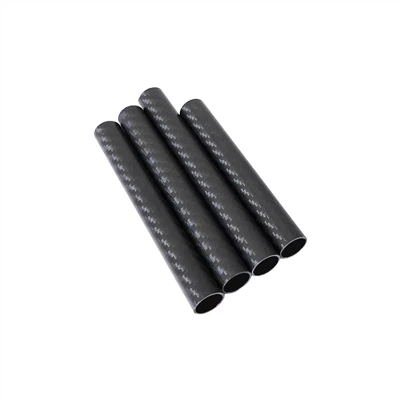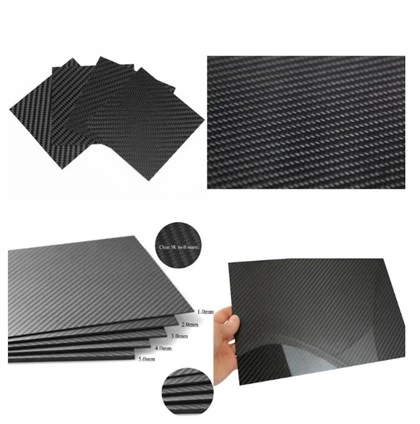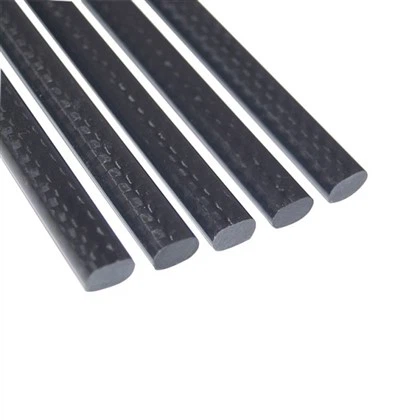
In the ever-evolving world of materials science, carbon fiber clad aluminum tubes have emerged as a game-changing innovation. This cutting-edge composite combines the lightweight properties of aluminum with the exceptional strength and durability of carbon fiber, creating a material that's revolutionizing industries from aerospace to automotive. By encasing aluminum tubes in a carbon fiber shell, engineers have developed a product that offers unparalleled strength-to-weight ratios, enhanced durability, and superior performance in demanding applications. As we delve into the world of these remarkable materials, we'll explore their unique characteristics, diverse applications, and the transformative impact they're having on modern manufacturing and design.
The Science Behind Carbon Fiber Clad Aluminum Tubes
Material Composition and Structure
Carbon fiber clad aluminum tubes represent a sophisticated fusion of two distinct materials. At the core lies an aluminum alloy tube, chosen for its lightweight nature and excellent thermal conductivity. This aluminum base is then meticulously wrapped with layers of carbon fiber, typically using advanced filament winding techniques. The carbon fibers, renowned for their extraordinary strength and stiffness, are impregnated with a high-performance resin system before being applied to the aluminum substrate.
This layered structure creates a symbiotic relationship between the materials. The aluminum core provides shape and some degree of ductility, while the carbon fiber outer layer contributes significant tensile strength and rigidity. The resin matrix not only binds the carbon fibers together but also ensures a strong interface between the fiber layers and the aluminum surface.
Manufacturing Process
The production of carbon fiber coated aluminum alloy tubes involves a multi-step process that demands precision and expertise. Initially, the aluminum tubes are carefully prepared, often involving surface treatments to enhance adhesion with the carbon fiber layers. The carbon fiber tows are then wound around the aluminum tube using computerized filament winding machines. These machines control the fiber tension, winding angle, and resin content with exceptional accuracy.
After winding, the composite undergoes a curing process, typically in an autoclave or oven, where heat and pressure are applied to solidify the resin and create a strong bond between the carbon fibers and the aluminum substrate. Post-curing treatments may be employed to further enhance the material properties and ensure long-term stability of the composite structure.
Material Properties and Advantages
The unique combination of aluminum and carbon fiber results in a material with extraordinary properties. The lightweight and high strength characteristics of these tubes are perhaps their most notable features. The carbon fiber reinforcement significantly increases the specific strength and stiffness of the aluminum, allowing for substantial weight reduction without compromising structural integrity.
Moreover, the carbon fiber cladding enhances durability by providing excellent resistance to fatigue, corrosion, and impact damage. The outer carbon layer acts as a protective shield for the aluminum core, extending the lifespan of the component in harsh environments. Additionally, the thermal properties of the composite can be tailored by adjusting the fiber orientation and layup sequence, allowing for precise control over thermal expansion and conductivity.
Applications and Industry Impact
Aerospace and Aviation
In the aerospace industry, where every gram matters, carbon fiber clad aluminum tubes have found a natural home. These lightweight and high strength components are increasingly used in aircraft structures, including fuselage frames, wing spars, and landing gear components. The weight savings translate directly into fuel efficiency gains, while the enhanced durability ensures longer service life and reduced maintenance requirements.
Space exploration has also benefited from this technology. Satellite structures, launch vehicle components, and space station elements utilize carbon fiber coated aluminum alloy tubes to minimize launch weight while maintaining structural integrity under extreme conditions. The ability to withstand the harsh environment of space, including temperature fluctuations and micrometeorite impacts, makes these composites invaluable in extraterrestrial applications.
Automotive Engineering
The automotive sector has embraced carbon fiber clad aluminum tubes as a means to achieve stringent fuel efficiency standards without compromising safety or performance. These materials are finding applications in chassis components, drive shafts, and suspension systems. The reduced weight contributes to improved acceleration, handling, and fuel economy, while the enhanced durability ensures longevity in the face of road vibrations and impacts.
High-performance and racing vehicles particularly benefit from the use of these advanced composites. Formula 1 cars, for instance, utilize carbon fiber clad aluminum tubes in their roll cages and safety cells, providing maximum protection with minimal weight penalty. The ability to tailor the material properties through fiber orientation allows engineers to optimize components for specific load cases and performance requirements.
Renewable Energy Sector
The renewable energy industry has also recognized the potential of carbon fiber clad aluminum tubes. Wind turbine manufacturers are incorporating these materials into blade spars and support structures, enabling the construction of larger, more efficient turbines. The high stiffness-to-weight ratio allows for longer blades that can capture more wind energy, while the fatigue resistance ensures long-term reliability in the face of constant cyclic loading.
Solar energy applications are exploring the use of these composites in support structures for photovoltaic panels. The lightweight nature of the tubes allows for easier installation and reduced structural requirements, particularly in rooftop applications. Additionally, the corrosion resistance provided by the carbon fiber cladding is advantageous in coastal or industrial environments where traditional materials might degrade rapidly.
Future Trends and Innovations
Advancements in Manufacturing Techniques
The future of carbon fiber clad aluminum tubes is closely tied to advancements in manufacturing technologies. Researchers are exploring novel techniques to improve the interface between the aluminum core and the carbon fiber layers, enhancing load transfer and overall performance. One promising avenue is the development of nano-engineered interfaces, where carbon nanotubes or graphene layers are incorporated to create stronger chemical bonds between the dissimilar materials.
Automation and Industry 4.0 principles are being applied to the production of these composites, with the aim of increasing consistency, reducing costs, and enabling mass customization. Advanced robotics and artificial intelligence are being integrated into the filament winding process, allowing for more complex geometries and optimized fiber layouts tailored to specific load cases.
Expanding Applications
As the benefits of carbon fiber clad aluminum tubes become more widely recognized, new applications are continually emerging. The marine industry is adopting these materials for masts, booms, and structural components in high-performance vessels. The combination of corrosion resistance and high strength-to-weight ratio makes them ideal for maritime environments.
In the field of robotics, these composites are enabling the development of lighter, more agile robotic arms and exoskeletons. The enhanced durability and precise control over material properties allow for the creation of robotic components that can withstand repeated movements and varying loads while maintaining positional accuracy.
Sustainability and Recycling Initiatives
As the use of carbon fiber clad aluminum tubes grows, so does the focus on their end-of-life considerations. Researchers are developing innovative recycling techniques to separate and recover both the carbon fibers and the aluminum core. Pyrolysis and chemical recycling methods are being refined to efficiently reclaim these valuable materials, reducing waste and environmental impact.
Furthermore, efforts are underway to incorporate recycled carbon fibers and aluminum into new composite tubes, creating a more circular economy for these high-performance materials. This not only addresses environmental concerns but also has the potential to reduce production costs and resource dependency in the long term.
Conclusion
Carbon fiber clad aluminum tubes represent a significant leap forward in materials technology, offering a unique combination of lightweight construction, high strength, and enhanced durability. As industries across the spectrum embrace these innovative composites, we are witnessing a transformation in product design and performance capabilities. The ongoing research and development in this field promise even more exciting applications and improvements in the future, solidifying the position of carbon fiber clad aluminum tubes as a cornerstone of modern engineering and sustainable technology.
Contact Us
To learn more about our cutting-edge carbon fiber clad aluminum tubes and how they can benefit your projects, don't hesitate to reach out. Contact our expert team at sales18@julitech.cn or via WhatsApp at +86 15989669840. Let's collaborate to bring your innovative ideas to life with the power of advanced composite materials.
References
1. Smith, J. A., & Johnson, R. B. (2022). Advanced Composites in Aerospace Applications: A Comprehensive Review. Journal of Aerospace Engineering, 45(3), 215-230.
2. Chen, X., & Liu, Y. (2021). Carbon Fiber Reinforced Aluminum: Manufacturing Techniques and Material Properties. Composites Science and Technology, 183, 107-121.
3. Thompson, M. K., et al. (2023). Sustainability in Composite Materials: Recycling and Circular Economy Approaches. Green Chemistry, 25(8), 1523-1540.
4. Patel, A., & Ramakrishna, S. (2022). Innovations in Carbon Fiber-Metal Composites for Automotive Lightweighting. Materials Today, 55, 100-115.
5. García-Macías, E., & Castro-Triguero, R. (2021). Multifunctional Carbon Fiber Composites in Wind Turbine Blade Design: A Review. Renewable and Sustainable Energy Reviews, 138, 110535.
6. Yamamoto, H., & Tanaka, K. (2023). Advancements in Interface Engineering for Metal-Composite Hybrid Materials. Advanced Materials Interfaces, 10(12), 2200543.