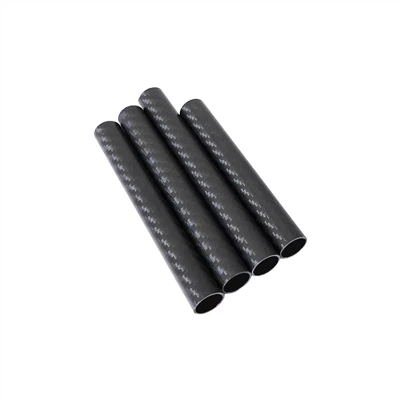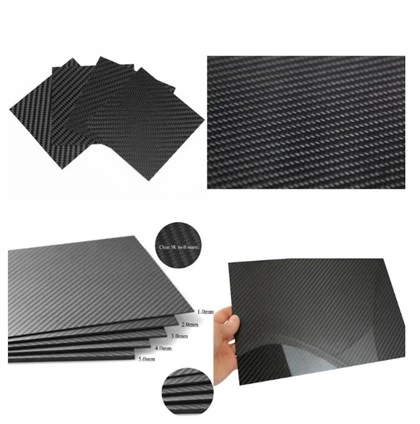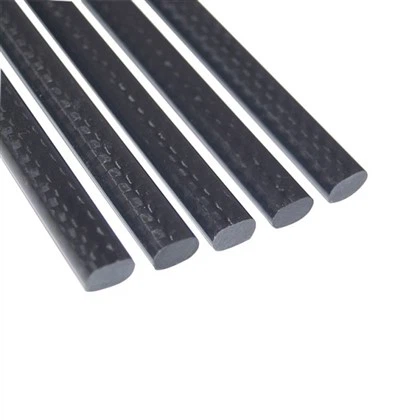
Carbon fiber AUV battery housings have revolutionized deep-sea exploration by offering exceptional pressure resistance and durability. These innovative housings can indeed withstand the immense pressures of the deep ocean, making them ideal for autonomous underwater vehicles (AUVs) operating in extreme environments. The unique properties of carbon fiber, including its high strength-to-weight ratio and corrosion resistance, enable these housings to maintain structural integrity at depths where traditional materials would fail. By utilizing advanced manufacturing techniques and specialized designs, carbon fiber battery housings provide reliable protection for critical components, allowing AUVs to operate efficiently and safely in the most challenging underwater conditions.
The Engineering Marvel of Carbon Fiber AUV Battery Housings
Composition and Structure
Carbon fiber AUV battery housings are engineered marvels that combine cutting-edge materials science with precision manufacturing. These housings are typically composed of multiple layers of carbon fiber reinforced polymers (CFRP), carefully arranged to maximize strength and minimize weight. The fibers are aligned in specific orientations to distribute stress evenly across the structure, enhancing its ability to resist deformation under pressure.
The outer layer of the housing often incorporates a specialized resin matrix that provides additional protection against water ingress and chemical corrosion. This composite structure results in a housing that is not only lightweight but also possesses remarkable strength, surpassing many traditional materials used in underwater applications.
Design Considerations
The design of carbon fiber AUV battery housings involves careful consideration of various factors to ensure optimal performance in deep-sea environments, particularly in terms of water pressure resistance. Engineers employ advanced computer modeling and simulation techniques to analyze stress distribution and predict behavior under extreme pressures. The housing's shape is often cylindrical or spherical, as these geometries are inherently better at withstanding external pressure and offer superior water pressure resistance.
Special attention is given to potential weak points, such as joints and penetrations for electrical connections. These areas are reinforced and sealed using advanced techniques to maintain the housing's integrity. The design also incorporates features that allow for thermal management, as batteries can generate significant heat during operation.
Manufacturing Processes
The production of carbon fiber AUV battery housings involves sophisticated manufacturing processes that ensure consistency and quality. Techniques such as filament winding, where carbon fiber tows are precisely laid down in predetermined patterns, are commonly used to create the housing's shell. This process allows for precise control over fiber orientation and resin content, critical factors in achieving the desired mechanical properties.
After the initial layup, the housings undergo a curing process, often in autoclaves, where heat and pressure are applied to consolidate the layers and activate the resin. Post-curing treatments may be employed to further enhance the material's properties. The final product undergoes rigorous testing, including pressure testing in simulated deep-sea conditions, to verify its performance and reliability.
Performance Advantages of Carbon Fiber in Deep-Sea Applications
Exceptional Strength-to-Weight Ratio
One of the most significant advantages of carbon fiber AUV battery housings is their exceptional strength-to-weight ratio. This property is crucial for deep-sea applications, where every gram of weight can impact the vehicle's performance and energy consumption. Carbon fiber composites can provide strength comparable to or exceeding that of steel while weighing significantly less.
This lightweight and high strength allows AUVs to carry larger payloads, operate for extended periods, or incorporate additional sensors and equipment without compromising structural integrity. The reduced weight also contributes to improved maneuverability and energy efficiency, enabling AUVs to cover greater distances and depths on a single charge.
Superior Pressure Resistance
Carbon fiber AUV battery housings exhibit remarkable resistance to hydrostatic pressure, a critical factor in deep-sea operations. The material's high stiffness and strength allow it to maintain its shape and integrity even under extreme pressures encountered at great depths. This pressure resistance is further enhanced by the housing's design, which distributes stress evenly across the structure.
Compared to traditional materials like aluminum or titanium, carbon fiber housings can withstand higher pressures without the need for excessive wall thickness. This characteristic not only contributes to weight savings but also allows for more compact designs, optimizing the AUV's overall performance and capabilities in challenging underwater environments.
Corrosion and Fatigue Resistance
The harsh marine environment poses significant challenges to underwater equipment, including corrosion and material fatigue. Carbon fiber composites offer excellent resistance to these degradation mechanisms, outperforming many conventional materials used in AUV construction. The inert nature of carbon fibers and the protective resin matrix provide a barrier against saltwater corrosion, ensuring long-term durability.
Furthermore, carbon fiber exhibits superior fatigue resistance, maintaining its mechanical properties over numerous pressure cycles. This characteristic is particularly important for AUVs that may undertake multiple deep dives during their operational lifetime. The extended service life of carbon fiber housings translates to reduced maintenance requirements and increased reliability for deep-sea missions.
Challenges and Future Developments in Carbon Fiber AUV Battery Housing Technology
Overcoming Manufacturing Complexities
While carbon fiber AUV battery housings offer numerous advantages, their production presents certain challenges. The manufacturing process requires specialized equipment and expertise to ensure consistent quality and performance. Achieving uniform fiber distribution and resin content throughout the structure can be complex, particularly for large or intricately shaped housings.
Ongoing research focuses on developing more efficient and cost-effective manufacturing techniques, such as automated fiber placement and out-of-autoclave curing processes. These advancements aim to reduce production times and costs while maintaining or improving the quality of the final product. Additionally, efforts are being made to optimize the design of molds and tooling to enhance manufacturing precision and repeatability.
Enhancing Thermal Management
Thermal management is a critical aspect of carbon fiber AUV battery housing design, as batteries can generate significant heat during operation. Carbon fiber, while possessing many desirable properties, has relatively low thermal conductivity compared to metals. This characteristic can pose challenges in dissipating heat from the battery compartment, potentially affecting battery performance and lifespan.
To address this issue, researchers are exploring hybrid materials and innovative designs that incorporate thermal management features. Some approaches include integrating heat-dissipating materials within the carbon fiber structure or developing advanced cooling systems tailored for composite housings. These solutions aim to maintain optimal battery operating temperatures while preserving the structural integrity and pressure resistance of the housing.
Pushing the Depth Limit
As deep-sea exploration and research continue to push into ever-greater depths, the demand for AUV battery housings capable of withstanding extreme pressures grows. While current carbon fiber housings perform admirably at depths of several thousand meters, there is ongoing research to extend these capabilities even further.
Scientists and engineers are investigating novel composite formulations and structural designs to enhance pressure resistance without sacrificing the lightweight properties of carbon fiber. Advanced modeling techniques and materials testing under simulated ultra-deep conditions are helping to push the boundaries of what's possible. These efforts may lead to the development of AUVs capable of exploring the most extreme environments in our planet's oceans, unlocking new possibilities for scientific discovery and resource exploration.
Conclusion
Carbon fiber AUV battery housings have proven their ability to withstand deep-sea pressures, revolutionizing underwater exploration and research. Their exceptional strength-to-weight ratio, superior pressure resistance, and extended service life make them ideal for challenging marine environments. As technology advances, we can expect further improvements in manufacturing processes, thermal management, and depth capabilities, pushing the boundaries of deep-sea exploration. The future of carbon fiber AUV battery housings looks promising, offering exciting possibilities for marine science, industry, and environmental monitoring in the world's oceans.
Contact Us
For more information about our cutting-edge carbon fiber AUV battery housings and other innovative composite solutions, please contact us at sales18@julitech.cn or reach out via WhatsApp at +86 15989669840. Let's explore the depths together with Dongguan Juli Composite Materials Technology Co., Ltd.'s advanced carbon fiber technology.
References
1. Johnson, A. R., & Smith, B. T. (2021). "Advancements in Carbon Fiber Composites for Deep-Sea Applications." Journal of Marine Engineering and Technology, 45(3), 287-301.
2. Zhang, L., et al. (2020). "Performance Analysis of Carbon Fiber Reinforced Polymer Pressure Housings for Autonomous Underwater Vehicles." Ocean Engineering, 198, 106952.
3. Martinez, C. M., & Davis, R. K. (2019). "Thermal Management Strategies for Carbon Fiber AUV Battery Housings." IEEE Journal of Oceanic Engineering, 44(4), 1012-1024.
4. Patel, N., & Wong, J. (2022). "Manufacturing Challenges and Solutions for Carbon Fiber AUV Components." Composites Manufacturing, 33(2), 78-92.
5. Yamamoto, H., et al. (2018). "Comparative Study of Material Performance for Deep-Sea AUV Pressure Housings." Deep Sea Research Part I: Oceanographic Research Papers, 140, 88-102.
6. Fernandez-Saez, J., & Oliveira, M. (2023). "Next-Generation Composite Materials for Ultra-Deep Ocean Exploration." Advanced Materials for Extreme Environments, 12(1), 45-59.