Carbon fiber has a reputation for being light, stiff, and high-performance. That reputation is well deserved. From aircraft components and automotive parts to robotic arms and drone frames, carbon fiber can deliver a level of stiffness-to-weight performance that is difficult to achieve with many conventional materials. But there is another side to the material. Carbon fiber is not automatically the best choice just because it is lighter or stronger in a particular direction.It can cost more to manufacture, it can be vulnerable to certain types of impact, and repairing a damaged composite component is not always straightforward. Temperature, fiber direction, joint design, and manufacturing quality can also change how a finished part performs. Those details matter when you're choosing a carbon fiber plate, carbon fiber tube, or carbon fiber rod. A component that works extremely well in one application may be a poor fit somewhere else. This guide looks at the practical downsides of carbon fiber, where they tend to appear, and what to consider before specifying the material for a project.
What Is Carbon Fiber and Why Is It So Popular?
Carbon fiber is a composite material made from carbon fibers held together by a polymer resin. The fibers carry much of the structural load, while the resin keeps the fibers in position and transfers loads between them. That sounds simple, but the finished material is more complicated than the basic definition suggests. The orientation of the fibers, the number and arrangement of layers, the resin system, and the manufacturing process all influence the final properties. A carbon fiber component is therefore best thought of as an engineered structure rather than just a piece of "carbon."
How Carbon Fiber Gets Its Strength and Stiffness
Individual carbon fibers are extremely strong and stiff relative to their weight. Manufacturers take advantage of those properties by aligning fibers with the directions in which a component is expected to carry loads. Imagine a lightweight beam that mainly bends in one direction. It makes sense to place a significant amount of reinforcement along the primary load path. A component subjected to loads from several directions needs a different laminate design. This is one of the reasons carbon fiber can perform so well. It is also one reason composite design requires more thought than simply selecting a material grade.
Common Carbon Fiber Products
Carbon fiber can be manufactured into many forms, but three products appear frequently in lightweight structural applications:
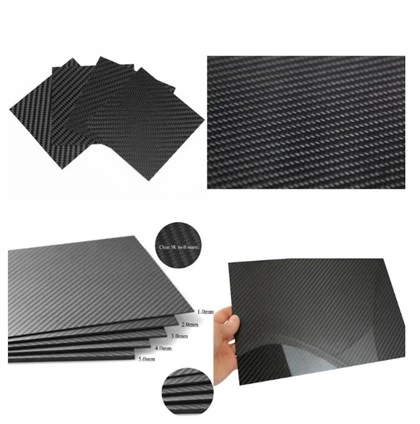
Carbon fiber plate for panels, brackets, mounting surfaces, and structural components

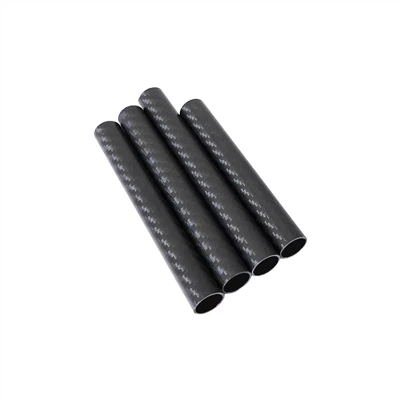
Carbon fiber tube for frames, shafts, booms, and tubular structures

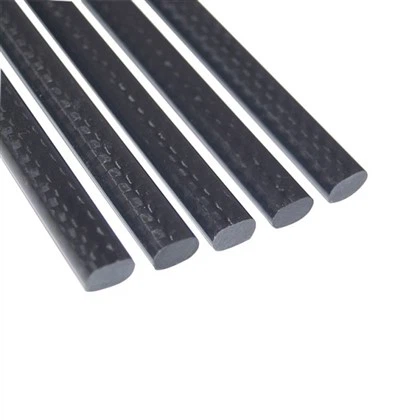
Carbon fiber rod for supports, tie rods, shafts, and lightweight structural members

You'll find these products in aerospace, automotive engineering, robotics, drones, sporting equipment, industrial machinery, and other applications where reducing weight matters. A carbon fiber tube used as a structural frame member, for example, may need a very different laminate from a carbon fiber tube intended primarily for torsional loads. Shape alone doesn't tell you how the component will perform.
What Are the Main Downsides of Carbon Fiber?
If you're asking what are the downsides of carbon fiber, there isn't just one answer. The material has several characteristics that can become disadvantages depending on the application.
- Carbon Fiber Can Be Expensive
Price is often the first concern. Carbon fiber components can cost more than comparable aluminum or steel parts because the cost isn't limited to the fibers themselves. Resin, tooling, layup, curing, machining, finishing, labor, and quality control all contribute to the final price. So, why is carbon fiber so expensive?Part of the answer lies in manufacturing. Producing a consistent composite component can require carefully controlled fiber placement and curing processes. A simple metal part may be machined relatively quickly, while a composite component may require additional preparation and processing before it is ready for use. Production volume matters, too. For a highly weight-sensitive aerospace or robotics application, paying more for a lighter and stiffer component may make sense. For a simple bracket where weight is barely a concern, the extra expense may be difficult to justify.
- Carbon Fiber Can Be Brittle
Carbon fiber's stiffness is one of its biggest selling points.It should not, however, be confused with ductility. A metal component can often bend or deform noticeably before it fails. A carbon fiber composite may behave quite differently under certain loading conditions. Fiber breakage, matrix cracking, or delamination can occur without the large permanent deformation you might expect from a ductile metal. That difference becomes important when impact is involved. A lightweight carbon fiber component designed primarily for stiffness may perform beautifully under its intended load but respond poorly to an unexpected localized impact. **Carbon fiber should not simply be treated as a lightweight replacement for steel or aluminum.** The expected failure modes and loading conditions need to be understood before making that substitution.
- Carbon Fiber Can Be Difficult to Repair
Repair is another area where composites and metals can feel very different. Suppose a carbon fiber tube is hit during transportation. There may be a visible mark on the surface. There may also be damage underneath that isn't obvious from a quick visual inspection.
Possible damage includes:
- Fiber breakage
- Resin cracking
- Delamination
- Localized impact damage
- Damage around holes or connection points
Whether the part can be repaired depends on the component, the type of damage, its location, and the structural requirements of the application. A cosmetic repair and a structural repair are not the same thing. For critical components, damage assessment may require specialized inspection methods and experienced technicians.
- Manufacturing Carbon Fiber Components Is More Complex
Carbon fiber performance is closely tied to manufacturing quality. Fiber orientation has to be controlled. The layup needs to follow the design. Resin needs to properly impregnate the reinforcement, and curing conditions have to be appropriate for the selected system.
Other details matter as well:
- Void content
- Surface finish
- Dimensional tolerances
- Fiber placement
- Cure conditions
- Machining quality
This is why two components that appear similar from the outside can perform differently. The material itself is only part of the performance equation.For custom components, manufacturing experience can be just as important as the nominal material specification.
- Carbon Fiber Has Temperature Limitations
There's a common misconception that carbon fiber automatically means high-temperature resistance. The carbon fibers themselves can withstand extremely high temperatures under the right conditions. The composite component, however, also contains a resin matrix, and the resin can become the limiting factor. At elevated temperatures, the resin's properties can change. Depending on the system, that can affect stiffness, strength, dimensional stability, and long-term performance. A carbon fiber component intended for a high-temperature environment therefore needs to be evaluated as a complete composite system. The resin system, operating temperature, duration of exposure, and required mechanical performance all matter. Simply knowing that a part is "carbon fiber" isn't enough.
- Carbon Fiber Is Anisotropic
This is one of the most important concepts to understand when comparing carbon fiber with conventional metals. Carbon fiber composites are often anisotropic, meaning their mechanical properties can vary with direction. The material can be exceptionally strong and stiff along the fiber direction. Its properties may be considerably different across that direction. Consider a carbon fiber plate. If most of the fibers run in one direction, the plate will generally perform particularly well when loaded along that direction. Rotate the load, and the structural behavior can change. The same principle applies to carbon fiber tubes and carbon fiber rods. For a tube, engineers may need to balance longitudinal, circumferential, and off-axis reinforcement. For a rod, axial performance may be excellent while transverse loading requires more careful consideration. The load path should always be part of the material selection process.
- Carbon Fiber Can Be Vulnerable to Impact and Hidden Damage
Impact damage deserves its own consideration because it can be easy to underestimate. A collision, dropped component, clamp that is tightened too aggressively, or localized load can damage a composite structure. Depending on the construction, the result could involve matrix cracking, delamination, or broken fibers. And not every problem will be visible. This matters particularly for structural carbon fiber plates and tubes. If the component is safety-critical, relying only on appearance may not provide enough information about its condition. The environment should therefore influence the design from the beginning. If a part is likely to experience repeated impacts, protective measures, inspection procedures, or a different material may be worth considering.
What Are the Downsides of a Carbon Fiber Plate?
A carbon fiber plate is a practical choice when a project needs a flat, lightweight component with high stiffness. It is commonly used for panels, brackets, mounting plates, equipment structures, and custom assemblies. That doesn't mean every plate application is a good candidate for carbon fiber.
Advantages of Carbon Fiber Plate
A well-designed carbon fiber plate can offer:
- Low weight * High stiffness
- Excellent stiffness-to-weight ratio
- Corrosion resistance
- Good dimensional stability
These properties can be especially valuable when every gram matters or when a structure needs to remain stiff without becoming unnecessarily heavy.
Potential Disadvantages of Carbon Fiber Plate
A carbon fiber plate can be more expensive than an aluminum plate. Machining also requires more care, particularly around drilled holes and cut edges. Other potential issues include:
- Impact sensitivity
- Edge damage
- Direction-dependent strength
- Difficult repairs
- Brittle failure under certain conditions
Drilling is a good example. Removing material from a composite can interrupt load-carrying fibers and create local stress concentrations. The hole itself may be perfectly round, but that does not mean the surrounding structure has been unaffected.
When Should You Avoid a Carbon Fiber Plate?
Carbon fiber plate may not be the right choice for a project where:
- The budget is extremely tight.
- The component needs substantial plastic deformation.
- Frequent uncontrolled impacts are expected.
- The operating temperature is outside the capability of the selected resin system.
- The load directions are uncertain.
Sometimes aluminum is simply the more practical answer.
What Are the Downsides of a Carbon Fiber Tube?
A carbon fiber tubecan be an efficient way to build a lightweight structural member. Tubular geometry works particularly well for applications involving bending and other structural loads. You'll see carbon fiber tubes in frames, shafts, booms, robotics, drones, and sporting equipment.
Advantages of Carbon Fiber Tubes
A properly designed tube can provide:
- High stiffness-to-weight ratio
- Low weight
- Good bending performance
- Corrosion resistance
The phrase "properly designed" is important here. Diameter, wall thickness, fiber orientation, laminate construction, and support conditions all affect performance.
Common Limitations of Carbon Fiber Tubes
Localized impact can damage the tube wall. Crushing can become an issue where clamps or other components apply concentrated loads. Drilling can interrupt fibers, and connection areas often require additional design attention.
Other limitations include:
- Localized impact damage
- Crushing
- Connection challenges
- Difficult machining
- Directional mechanical properties
- Repair complexity
If you're searching for the **best carbon fiber tube for lightweight applications**, don't start with weight alone. A tube that is lighter on paper isn't necessarily the right tube for the job.
What Are the Downsides of a Carbon Fiber Rod?
A carbon fiber rod is often chosen for lightweight supports, shafts, tie rods, and structural members where axial stiffness and low weight are valuable. Its simplicity can be deceptive.
Advantages of Carbon Fiber Rods
Carbon fiber rods can provide:
- Low weight * High axial stiffness
- Corrosion resistance
- Good fatigue performance in suitable applications
For a long support rod, reducing weight can make a noticeable difference to the overall system.
Limitations of Carbon Fiber Rods
The main concern is that a rod designed primarily for axial performance may not be equally suited to every type of loading. Transverse loads, bending, impact, and compression can change the design requirements significantly.
Potential limitations include:
- Transverse loading sensitivity
- Brittle behavior * Buckling
- Connection challenges
- Impact sensitivity
- Direction-dependent properties Buckling deserves particular attention for long rods.
A stronger material does not automatically solve a buckling problem. Rod length, diameter, stiffness, end conditions, and the way the load is applied all matter.
When Should You Choose Carbon Fiber?
Carbon fiber is worth considering when weight reduction has a meaningful effect on the final product.
It can make sense when:
- Every kilogram or gram matters.
- High stiffness-to-weight performance is required.
- Corrosion resistance is valuable.
- The application benefits from engineered fiber orientation.
- The additional manufacturing cost is justified.
When Is Aluminum the Better Choice?
Aluminum may be the better option when the project prioritizes:
- Lower initial cost
- Easy machining * Ductility
- Straightforward repair
- Frequent impact tolerance
- Simpler manufacturing
How Can You Reduce the Disadvantages of Carbon Fiber?
Most carbon fiber limitations can be managed more effectively when they are considered during design rather than after a component has been manufactured.
Choose the Right Fiber Orientation
Start with the loads. Where does the force enter the component? Where does it leave? Is the structure mainly carrying tension, compression, bending, or torsion? The laminate should reflect those answers.
Select the Appropriate Resin System
Don't choose the resin as an afterthought. Operating temperature, environmental exposure, manufacturing requirements, and mechanical performance can all influence the appropriate resin system. A composite designed for an indoor robotic mechanism may have very different requirements from one operating near an engine or other heat source.
Design Proper Connections and Joints
A strong composite can still have a weak connection. Think about fasteners, inserts, bonded areas, clamps, local reinforcement, and load transfer during the early design stage. This is particularly important for carbon fiber tubes and rods.
Account for Impact and Environmental
Conditions Consider the environment honestly. Will the component be dropped? Clamped? Exposed to vibration? Used outdoors? Subjected to elevated temperatures? Those questions can change the recommended design.
Work With an Experienced
Carbon Fiber Manufacturer Custom composite parts are rarely a case of simply sending a drawing and selecting a material from a list. A manufacturer with practical carbon fiber experience can help evaluate fiber orientation, laminate structure, dimensions, resin selection, manufacturing processes, machining, and connection requirements.
For companies developing carbon fiber solutions for lightweight structures, this kind of early collaboration can prevent costly design changes later.
Conclusion
Carbon fiber can be an exceptional engineering material. Its low weight, high stiffness, corrosion resistance, and design flexibility make it valuable in applications where conventional materials may struggle to deliver the required performance. But those benefits come with trade-offs. The downsides of carbon fiberinclude higher cost, sensitivity to certain impacts, repair complexity, manufacturing requirements, temperature considerations, and directional mechanical behavior. None of these automatically disqualifies carbon fiber. They simply need to be part of the design conversation. The same applies to a carbon fiber plate, carbon fiber tube, or carbon fiber rod. The best option depends on how the component will actually be loaded and used. If you're developing a lightweight structural component, don't start by asking only, "How strong is carbon fiber?" Ask a more useful question: What does this particular component need to do, and under what conditions? Once the load, environment, dimensions, connections, manufacturing requirements, and budget are understood, it becomes much easier to decide whether carbon fiber is genuinely worth using.
Contact Us
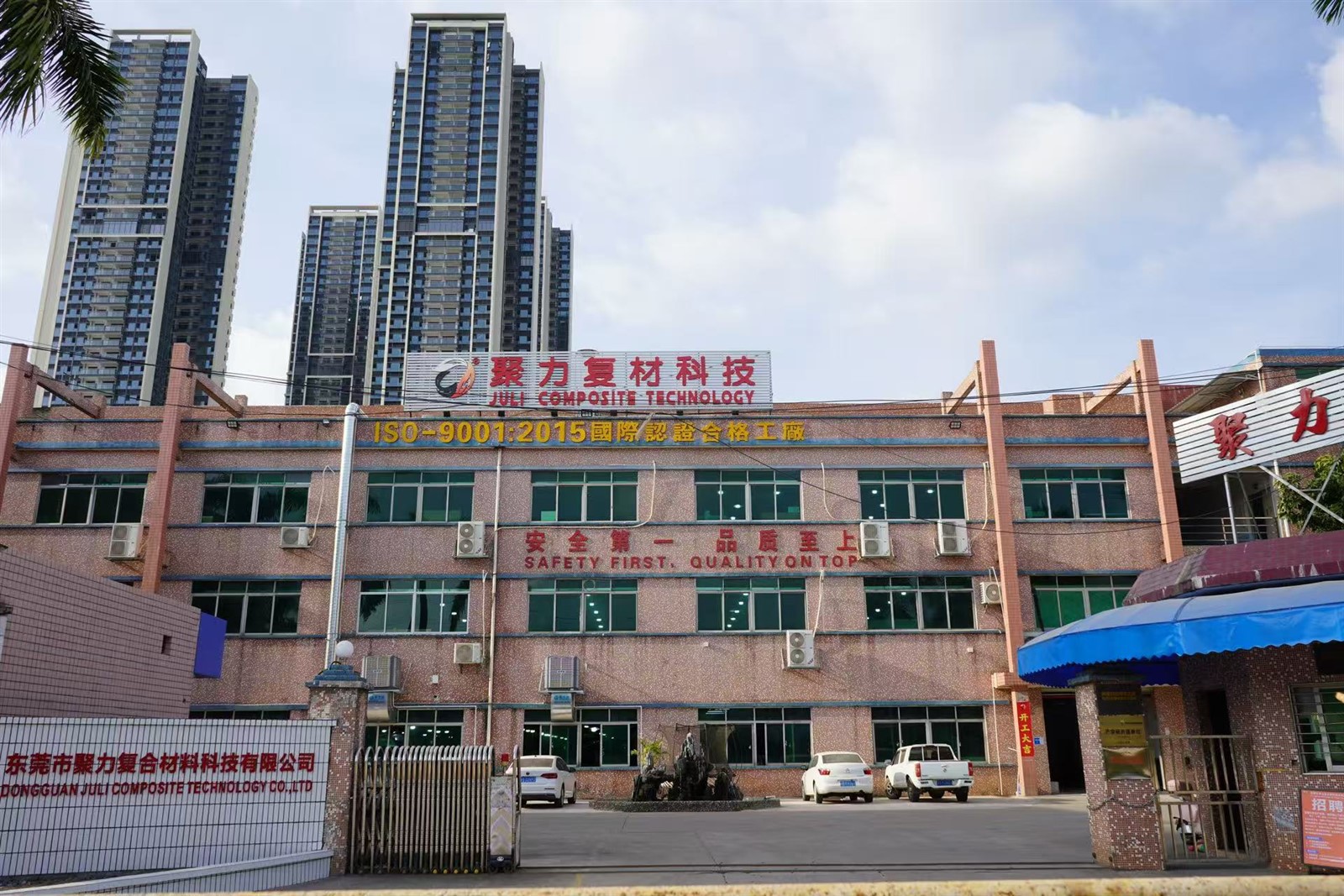
For custom carbon fiber components and lightweight structural solutions, Juli Carbon Fiber Products can help assess product requirements and develop solutions tailored to the specific needs of the application. You can contact us via email: sales18@julitech.cn or WhatsApp: +86 18822947075.