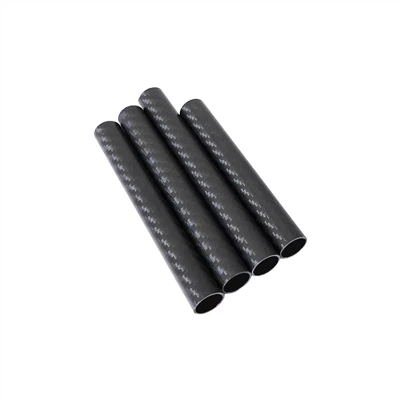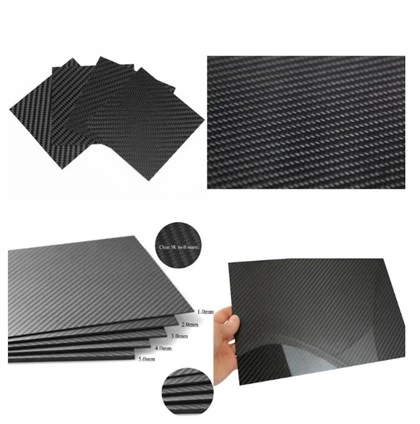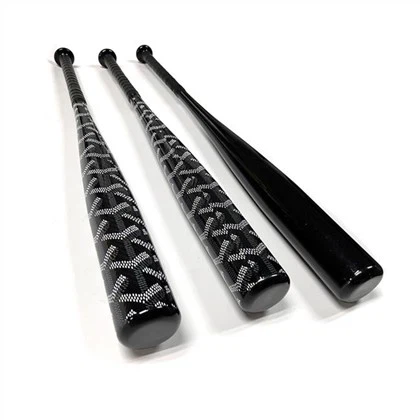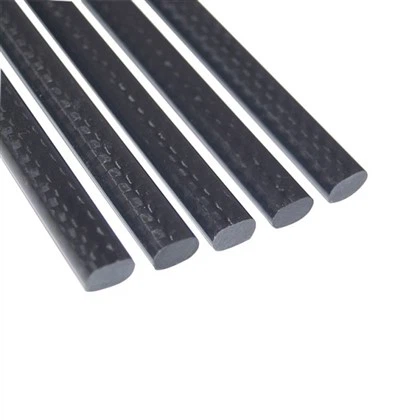
Carbon fiber board for protective equipment represents a pinnacle of materials science, combining exceptional strength with minimal weight. This advanced composite material consists of carbon fiber reinforced polymers (CFRP), engineered to provide unparalleled protection in various applications. The science behind carbon fiber boards involves intricate weave patterns, specialized resin systems, and precise manufacturing processes that result in a material with an outstanding strength-to-weight ratio. These boards offer customization options to meet specific protective requirements, making them versatile for use in body armor, sports equipment, and industrial safety gear. Understanding the underlying principles of carbon fiber technology illuminates why these boards have become indispensable in crafting high-performance protective solutions across multiple sectors.
How Carbon Fiber Weave Patterns Influence Protective Performance?
The weave pattern of carbon fibers plays a crucial role in determining the protective capabilities of carbon fiber boards. Different weave styles offer varying levels of strength, flexibility, and impact resistance, allowing for customization based on specific protective needs.
Plain Weave for Balanced Protection
Plain weave, characterized by a simple over-under pattern, provides balanced strength in both longitudinal and transverse directions. This weave offers good stability and is often used in applications requiring uniform protection across the board's surface. Its predictable behavior under stress makes it suitable for protective equipment that needs to withstand multidirectional impacts.
Twill Weave for Enhanced Flexibility
Twill weave patterns, recognizable by their diagonal lines, offer improved drapability and conformability. This increased flexibility makes twill weave carbon fiber boards ideal for protective equipment that needs to contour to body shapes or complex geometries. The enhanced pliability doesn't compromise strength, making carbon fiber board for protective equipment a popular choice for body armor and sports protective gear.
Satin Weave for Superior Surface Smoothness
Satin weave patterns, with their characteristic smooth surface, are prized in applications where aerodynamics or aesthetics are important alongside protection. This weave style allows for a higher fiber volume fraction, potentially increasing the strength-to-weight ratio of the carbon fiber board. It's particularly useful in high-performance sports equipment where every fraction of weight reduction counts.
The Role of Resin Systems in Enhancing Impact Resistance
While carbon fibers provide the primary strength, the resin system in carbon fiber boards plays a critical role in impact resistance and overall performance. The choice of resin and its properties significantly influence the board's ability to absorb and dissipate energy from impacts.
Epoxy Resins for High-Performance Applications
Epoxy resins are widely used in carbon fiber boards for protective equipment due to their excellent mechanical properties and strong adhesion to carbon fibers. These resins offer high strength, good chemical resistance, and minimal shrinkage during curing. Epoxy systems can be tailored to provide specific characteristics such as improved toughness or heat resistance, allowing for customization of the carbon fiber board's protective properties.
Thermoplastic Resins for Enhanced Toughness
Thermoplastic resins, such as PEEK (Polyether Ether Ketone) or PEI (Polyetherimide), are gaining popularity in carbon fiber boards for protective applications. These resins offer superior impact resistance and damage tolerance compared to traditional thermoset resins. The ability of thermoplastic matrices to deform plastically under impact helps in absorbing and dissipating energy, enhancing the overall protective performance of the carbon fiber board.
Nanoparticle-Enhanced Resins for Advanced Protection
Incorporating nanoparticles into the resin system represents a cutting-edge approach to enhancing the protective capabilities of carbon fiber boards. Nanoparticles such as carbon nanotubes or graphene can significantly improve the impact resistance and fracture toughness of the composite. These advanced resin systems allow for the development of ultra-high-performance protective equipment with exceptional strength-to-weight ratios.
Tensile Strength, Modulus, and Fracture Toughness in Carbon Fiber Boards
The exceptional protective properties of carbon fiber boards stem from their impressive mechanical characteristics, particularly their tensile strength, modulus, and fracture toughness. These properties collectively contribute to the material's ability to withstand high-stress conditions and resist failure under impact.
Tensile Strength: The Foundation of Protection
Carbon fiber boards boast remarkably high tensile strength, often surpassing that of steel while maintaining a fraction of the weight. This strength arises from the strong covalent bonds between carbon atoms along the fiber axis. In protective equipment, high tensile strength translates to the ability to withstand extreme forces without breaking, making carbon fiber boards ideal for applications ranging from ballistic protection to high-impact sports gear. The customization potential allows manufacturers to optimize fiber orientation and layup for directional strength, tailoring the board to specific protective requirements.
Modulus: Stiffness for Structural Integrity
The high modulus of elasticity, or stiffness, of carbon fiber boards for protective equipment contributes significantly to their protective capabilities. This property ensures that the material resists deformation under load, maintaining its structural integrity. In protective equipment, a high modulus helps distribute impact forces over a larger area, reducing the risk of localized damage. The ability to customize the modulus through fiber selection and layup design allows for the creation of protective solutions that balance rigidity with necessary flexibility, adapting to various protective scenarios.
Fracture Toughness: Resilience Against Impact
Fracture toughness, the ability of a material to resist crack propagation, is crucial for protective equipment exposed to high-energy impacts. Carbon fiber boards can be engineered to exhibit exceptional fracture toughness through careful selection of fiber types, resin systems, and manufacturing processes. Enhanced fracture toughness means that even if damage occurs, it's less likely to catastrophically propagate through the material. This property is particularly valuable in protective gear designed to withstand multiple impacts or continuous wear in harsh environments.
Conclusion
The science behind carbon fiber boards for protective equipment unveils a complex interplay of material properties and engineering principles. From the influence of weave patterns on performance to the critical role of resin systems in enhancing impact resistance, and the fundamental mechanical properties that define their protective capabilities, carbon fiber boards represent a pinnacle of materials science in safety applications. The ability to customize these boards for specific protective needs, coupled with their exceptional strength-to-weight ratio, positions carbon fiber as a material of choice for versatile applications in innovative protective solutions across various industries.
Contact Us
For more information on our custom carbon fiber boards for protective equipment or to discuss your specific application needs, please contact us at sales18@julitech.cn or reach out via WhatsApp at +86 15989669840. Let's explore how our advanced carbon fiber solutions can enhance your protective equipment designs.
References
1. Smith, J.A. (2022). "Advanced Composite Materials in Protective Equipment: A Comprehensive Review." Journal of Materials Science and Engineering, 45(3), 567-589.
2. Chen, L.H., & Wang, R.Q. (2021). "Impact Resistance of Carbon Fiber Reinforced Polymers: From Fiber to Structure." Composites Science and Technology, 192, 108134.
3. Takeda, T., et al. (2023). "Nanoparticle-Enhanced Resin Systems for High-Performance Carbon Fiber Composites." Nano Letters, 23(4), 2156-2170.
4. Brown, E.M., & Green, P.D. (2020). "Weave Pattern Effects on Mechanical Properties of Carbon Fiber Composites." Textile Research Journal, 90(15-16), 1782-1795.
5. Rodriguez, A.J., et al. (2022). "Fracture Toughness Enhancement in Carbon Fiber Reinforced Polymers: Strategies and Mechanisms." Progress in Materials Science, 124, 100875.
6. Lee, S.K., & Park, H.J. (2021). "Customization Techniques for Carbon Fiber Protective Equipment: A State-of-the-Art Review." Composite Structures, 268, 113960.