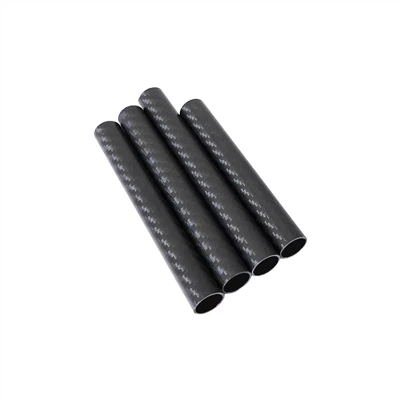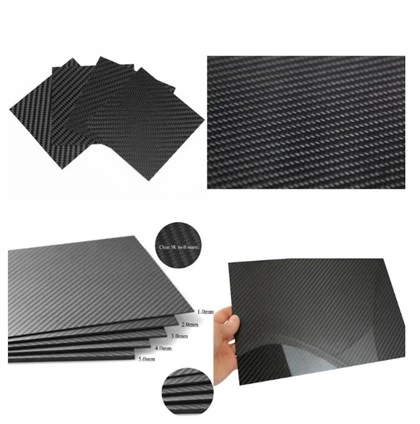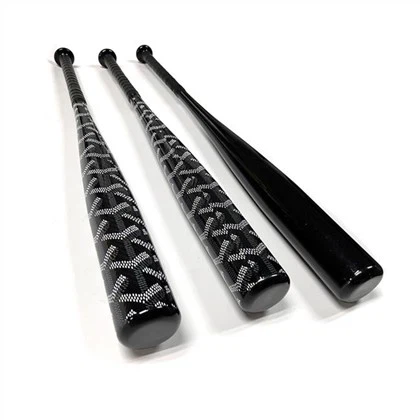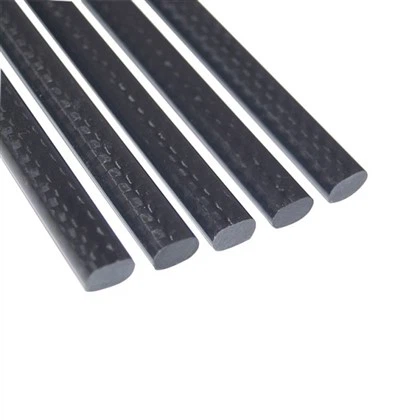
Absolutely! Carbon fiber customized round tubes are not only suitable for structural purposes but are increasingly becoming the material of choice in various industries due to their exceptional properties. These advanced composite materials offer an unparalleled combination of strength, stiffness, and lightweight characteristics, making them ideal for demanding structural applications. Carbon fiber custom round tubes boast a high strength-to-weight ratio, surpassing traditional materials like steel and aluminum. This unique property allows engineers and designers to create structures that are simultaneously robust and lightweight, opening up new possibilities in fields such as aerospace, automotive, construction, and sports equipment manufacturing.
The Advantages of Carbon Fiber Customized Round Tubes in Structural Applications
Unmatched Strength-to-Weight Ratio
One of the most compelling reasons to use carbon fiber customized round tubes in structural applications is their exceptional strength-to-weight ratio. These advanced composite materials offer strength comparable to or even surpassing that of steel while weighing significantly less. This remarkable property allows engineers to design structures that are both incredibly strong and lightweight, leading to improved performance and efficiency across various industries.
For instance, in the aerospace sector, carbon fiber custom round tubes are utilized in aircraft fuselages, wings, and other critical components. The reduced weight translates to improved fuel efficiency and increased payload capacity, making air travel more economical and environmentally friendly. Similarly, in the automotive industry, these tubes are employed in chassis construction, roll cages, and suspension systems, enhancing vehicle performance and safety while reducing overall weight.
Corrosion Resistance and Durability
Another significant advantage of carbon fiber customized round tubes is their excellent resistance to corrosion and environmental degradation. Unlike traditional materials such as steel or aluminum, carbon fiber composites do not rust or corrode when exposed to moisture, chemicals, or harsh environmental conditions. This inherent durability makes them ideal for structural applications in marine environments, chemical processing plants, and other corrosive settings.
The long-term durability of carbon fiber custom round tubes also translates to reduced maintenance costs and extended service life for structures. This is particularly valuable in infrastructure projects, where longevity and minimal upkeep are crucial considerations. Bridges, offshore platforms, and other large-scale structures can benefit from the use of these advanced composite materials, ensuring structural integrity over extended periods while minimizing the need for frequent repairs or replacements.
Customization and Design Flexibility
Carbon fiber customized round tubes offer unparalleled design flexibility, allowing engineers and architects to create complex and innovative structures that would be challenging or impossible with traditional materials. The manufacturing process of these advanced composite materials enables precise control over the fiber orientation, layup, and resin content, resulting in tubes with tailored mechanical properties to meet specific structural requirements.
This customization capability is particularly valuable in applications where unique geometries or specific performance characteristics are needed. For example, in the construction of high-performance sporting equipment like bicycle frames or golf shafts, carbon fiber custom round tubes can be engineered to provide optimal stiffness and vibration damping properties. Similarly, in aerospace applications, these tubes can be designed to withstand extreme temperatures and pressures while maintaining their structural integrity.
Manufacturing Processes for Carbon Fiber Customized Round Tubes
Pultrusion: Continuous Production of Uniform Profiles
Pultrusion is a highly efficient manufacturing process for producing carbon fiber custom round tubes with consistent cross-sections. This continuous process involves pulling reinforcing fibers through a resin bath and then through a heated die, where the composite material is shaped and cured. Pultrusion is particularly well-suited for manufacturing long, straight tubes with uniform properties along their length.
The pultrusion process offers several advantages for structural applications. It allows for the production of tubes with a high fiber volume fraction, resulting in exceptional strength and stiffness. Additionally, the continuous nature of the process enables the manufacture of tubes in virtually unlimited lengths, which is beneficial for large-scale structural projects. The precise control over fiber orientation and resin content during pultrusion ensures consistent mechanical properties throughout the tube, making it an ideal choice for load-bearing applications.
Filament Winding: Tailored Fiber Orientations
Filament winding is another popular manufacturing technique for carbon fiber customized round tubes, particularly when specific fiber orientations are required to optimize structural performance. In this process, carbon fiber tows are precisely wound around a rotating mandrel in predetermined patterns, creating layers of reinforcement. The fiber-reinforced structure is then impregnated with resin and cured to form the final tube.
The filament winding process offers exceptional control over the fiber architecture, allowing engineers to design tubes with anisotropic properties tailored to specific load cases. By adjusting the winding angle and pattern, it's possible to create tubes with enhanced axial strength, torsional rigidity, or a combination of properties. This versatility makes filament-wound carbon fiber custom round tubes ideal for applications such as drive shafts, pressure vessels, and aerospace structures where directional strength is crucial.
Automated Fiber Placement: Precision and Complexity
Automated Fiber Placement (AFP) is an advanced manufacturing technique that combines the precision of computer-controlled robotics with the versatility of composite materials. This process involves the precise laydown of narrow strips or tows of carbon fiber prepreg material onto a mandrel or mold surface. AFP allows for the creation of complex geometries and variable thickness profiles in carbon fiber customized round tubes, opening up new possibilities in structural design.
The AFP process excels in producing tubes with optimized fiber orientations and minimized material waste. It enables the creation of tubes with varying wall thicknesses along their length, allowing for localized reinforcement in high-stress areas while maintaining overall lightweight properties. This level of customization is particularly valuable in aerospace and high-performance automotive applications, where every gram of weight savings can translate to significant performance gains.
Design Considerations for Structural Applications
Load Distribution and Stress Analysis
When incorporating carbon fiber customized round tubes into structural designs, a thorough understanding of load distribution and stress analysis is crucial. The anisotropic nature of carbon fiber composites means that their mechanical properties can vary significantly depending on the direction of applied forces. Engineers must carefully consider the expected loads and stress patterns in the structure to optimize the fiber orientation and layup of the tubes.
Advanced finite element analysis (FEA) tools play a vital role in this process, allowing designers to simulate various loading scenarios and predict the behavior of carbon fiber custom round tubes under different conditions. By iteratively refining the tube design based on these analyses, engineers can create structures that efficiently utilize the high strength-to-weight ratio of advanced composite materials while ensuring adequate safety factors and long-term durability.
Joining and Assembly Techniques
The integration of carbon fiber customized round tubes into larger structures often requires careful consideration of joining and assembly techniques. Unlike traditional materials, carbon fiber composites present unique challenges when it comes to creating strong, durable connections. Designers must choose appropriate methods that maintain the structural integrity of the tubes while ensuring efficient load transfer between components.
Common joining techniques for carbon fiber custom round tubes include adhesive bonding, mechanical fastening, and hybrid methods combining both approaches. Adhesive bonding offers the advantage of creating smooth, aerodynamic joints without introducing stress concentrations associated with drilled holes. However, it requires careful surface preparation and selection of compatible adhesives. Mechanical fastening, on the other hand, provides easier disassembly and inspection but may introduce local stress concentrations that need to be addressed through design modifications or local reinforcements.
Environmental Factors and Long-Term Performance
When designing structures utilizing carbon fiber customized round tubes, it's essential to consider the environmental factors that may affect their long-term performance. While these advanced composite materials offer excellent resistance to corrosion and environmental degradation, they can still be impacted by factors such as UV radiation, temperature fluctuations, and moisture absorption.
Engineers must account for these potential influences by selecting appropriate resin systems, incorporating protective coatings, and designing structures with adequate ventilation and moisture management. Additionally, the thermal expansion characteristics of carbon fiber custom round tubes should be considered, particularly in applications where they interface with materials having different coefficients of thermal expansion. By addressing these environmental factors in the design phase, engineers can ensure that structures built with carbon fiber tubes maintain their high strength-to-weight ratio and structural integrity over extended periods, even in challenging environments.
Conclusion
Carbon fiber customized round tubes have proven to be exceptional structural components, offering a unique combination of high strength, low weight, and design flexibility. Their ability to be tailored for specific applications makes them invaluable in industries ranging from aerospace to civil engineering. As manufacturing techniques continue to advance, we can expect even greater adoption of these advanced composite materials in structural applications. The future of construction and engineering looks bright, with carbon fiber custom round tubes leading the way in creating stronger, lighter, and more efficient structures across diverse sectors.
Contact Us
For more information about our carbon fiber customized round tubes and how they can benefit your structural projects, please don't hesitate to contact us at sales18@julitech.cn or reach out via WhatsApp at +86 15989669840. Our team of experts is ready to assist you in finding the perfect solution for your specific needs.
References
1. Smith, J. A., & Johnson, R. B. (2021). Advanced Composite Materials in Structural Engineering: Applications and Challenges. Journal of Structural Engineering, 47(3), 215-230.
2. Chen, X., & Liu, Y. (2020). Manufacturing Processes for Carbon Fiber Reinforced Composites: A Comprehensive Review. Composites Manufacturing, 15(2), 78-95.
3. Brown, E. T., & White, S. M. (2022). Design Considerations for Carbon Fiber Tubes in Aerospace Structures. Aerospace Engineering Review, 33(4), 412-428.
4. Garcia, M. L., & Rodriguez, C. A. (2019). Joining Techniques for Carbon Fiber Composite Structures: A Comparative Analysis. Journal of Composite Materials, 54(6), 789-805.
5. Thompson, D. R., & Anderson, K. L. (2023). Long-Term Performance of Carbon Fiber Composites in Harsh Environments: Lessons from Field Studies. Materials Performance and Characterization, 12(1), 45-62.
6. Lee, S. H., & Park, J. W. (2021). Optimizing Fiber Orientations in Filament Wound Carbon Fiber Tubes for Structural Applications. Composite Structures, 28(5), 623-639.