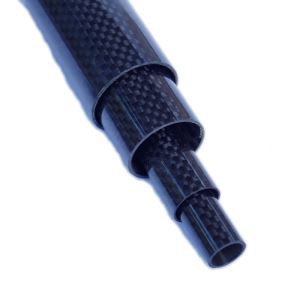


As a high-end product of modern navigation technology, carbon fiber sailing mast has been widely used in all kinds of sailing events and high-end leisure navigation fields.
The field of competitive events is the most concentrated application scenario of carbon fiber mast. From the America's Cup to the Volvo Ocean Race, boats in almost every top race feature carbon fiber masts. These events require extremely high performance of the mast, which is required to withstand extreme wind conditions, while maintaining a light weight to improve boat speed. Olympic class sailing competitions such as the 49er, Nacra 17, etc., also commonly use carbon fiber mast design. The application of carbon fiber masts is also gradually popularized in the field of high-end leisure navigation. Large cruising sailboats over 50 feet are increasingly opting for carbon fiber masts, on the one hand to improve sailing performance, and on the other hand to reduce mast weight to improve vessel stability and comfort. This type of user usually pursues the pleasure of sailing, but also pays attention to the technological content and luxury of the ship. Special application scenarios such as naval ships, research vessels and superyachts are also gradually adopting carbon fiber mast technology.
These applications often have special requirements for radar stealth performance, corrosion resistance and structural integration of the mast, and carbon fiber materials can well meet these needs. For example, some navy ships use carbon fiber masts to integrate radar and communications equipment, both reducing upper weight and improving stealth performance. From a functional point of view, the carbon fiber mast not only needs to support the rig system and withstand the various dynamic loads carried by the sail, but also needs to have precise bending characteristics to optimize the sail shape. Modern carbon fiber masts often integrate a variety of sensor lines, lighting systems and safety equipment, becoming an important part of the "smart" sailing boat.


Excellent strength and stiffness performance. This means that carbon fiber masts can achieve higher strength standards while being lighter. More importantly, the rigidity of carbon fiber is far better than that of metal materials. By adjusting the direction and order of the fiber lay-up, engineers can precisely control the bending characteristics of the mast in different directions, thereby optimizing the aerodynamic performance of the sail shape. This "adjustable stiffness" feature allows the crew to fine-tune the sail shape according to wind conditions for optimal propulsion efficiency. In terms of fatigue life, carbon fiber performs well. Metal materials will produce fatigue cracks under long-term alternating loads. In practice, the service life of high-quality carbon fiber masts can reach more than 20 years, and does not require frequent inspection and maintenance as metal masts. Corrosion resistance is another advantage of carbon fiber. The seawater environment has serious corrosion on the aluminum alloy mast, especially the electrochemical corrosion is easy to occur in the contact with stainless steel accessories. Carbon fiber is completely immune to salt water corrosion and does not require regular surface treatment. This feature is particularly suitable for use in tropical waters and on long cruises.
In terms of vibration damping characteristics, carbon fiber composite material has better internal damping performance than metal, which can effectively reduce the vibration and noise of the mast in the wind, and improve the comfort of the ship. This feature is particularly important on long distance cruises. In terms of aerodynamics, carbon fiber masts can be made slimmer, with less wind resistance and a higher surface finish. Modern racing carbon fibre masts often use airfoil sections to further optimise airflow. Despite the advantages, carbon fiber masts have some limitations, mainly the high initial cost and the weak resistance to impact damage. However, with professional use and proper maintenance, these shortcomings can be compensated for by long-term use cost and performance advantages.

Hot Tags: professional carbon fiber sailing mast, China, factory, suppliers, manufacturers, wholesale